The earpiece always hums with a faint, almost imperceptible static.
To the untrained observer, a protective detail looks like a synchronized dance of sunglasses and dark suits. It looks like power. But to the men and women standing shoulder-to-shoulder around a protectee, it is an exercise in managed paranoia. Every open window is a sniper’s nest. Every unvetted handshake is a potential blade. Every delayed motorcade is a countdown to catastrophe. Learn more on a connected issue: this related article.
The illusion of safety is maintained by one thing: operational security. Silence.
When that silence breaks, the illusion shatters. Further analysis by Reuters delves into similar perspectives on the subject.
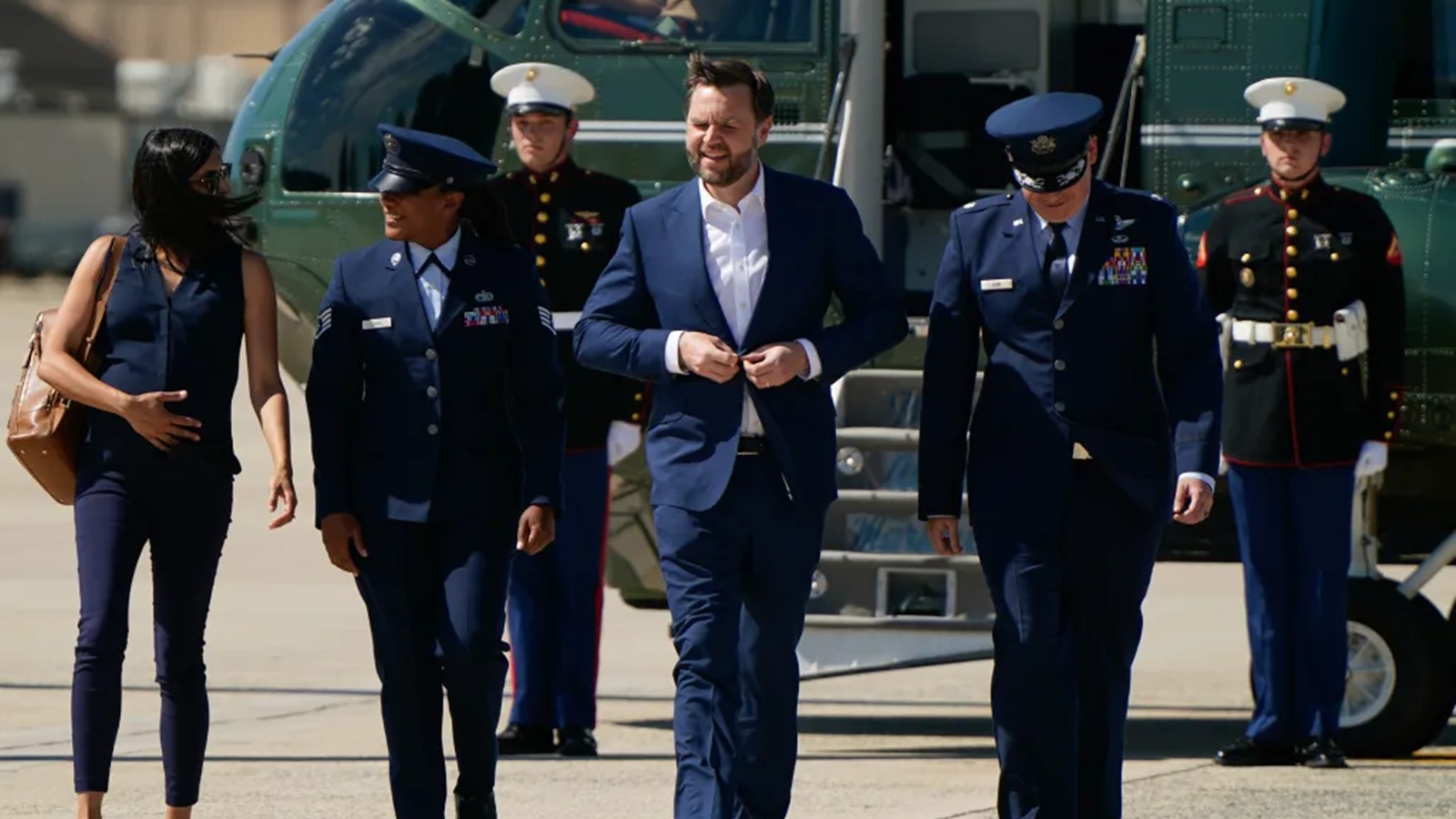
Recently, the United States Secret Service placed an agent assigned to JD Vance’s detail on administrative leave. The precipitating event was not a physical lapse. It was not a failure to dive in front of a bullet. It was a digital bleed. Trip details—the precise logistical choreography meant to keep the candidate alive—had been leaked.
To understand why a leaked itinerary is treated with the severity of a loaded weapon, we have to look past the bureaucratic language of "administrative leave." We have to look at the terrifying geometry of an assassination attempt.
The Geography of Vulnerability
Let’s introduce a hypothetical agent to ground this reality. We will call him Miller. Miller works the advance team.
Miller arrives in a city two weeks before the protectee does. He doesn’t look at the city the way a tourist does. He maps the trauma centers. He times the exact minute it takes a black SUV to reach the emergency room from the back exit of a hotel. He walks the planned motorcade route and logs every choke point—the narrow intersections where a vehicle cannot turn around, the overpasses where a dropped explosive could halt the convoy.
Miller builds a fortress out of time and space.
He dictates that the protectee will enter through the loading dock at exactly 7:14 PM, pause in a holding room, and walk onto the stage at 7:19 PM. This timeline is the armor. As long as no one outside the perimeter knows the timeline, bad actors are forced to guess. They are forced into the open.
A leaked itinerary strips away the armor.
When an agent leaks trip details, they are not just sharing a schedule. They are handing over Miller’s blueprints. They are telling an adversary exactly where to stand, exactly when to pull the trigger, and exactly which exit the detail will attempt to use for evacuation. It transforms a dynamic, unpredictable target into a sitting duck.
The Vance incident is chilling not just because of the political temperature of the moment, but because it highlights the rot inside the vault.
The Enemy Inside the Wire
We expect threats to come from the outside. We train for the lone wolf in the crowd, the coordinated assault on a perimeter, the mail-bomb sorted at a facility miles away. We build massive, sprawling apparatuses to detect external hostility.
But the Secret Service operates on a mission standard known internally as "zero-fail." You can thwart a hundred plots, but if you miss one, the history of the world fractures.
Achieving a zero-fail mission requires absolute trust among the inner circle. The agents guarding a high-profile figure like Vance are subjected to grueling background checks, polygraphs, and psychological evaluations. They are supposed to be the impermeable membrane between the protectee and the chaos of the outside world.
When a leak originates from within that membrane, the entire psychological foundation of the protective detail collapses.
Why do agents leak? It is a terrifying question because the answers are often violently mundane. Sometimes it is ideological friction, a dangerous game played by someone who resents the person they are sworn to protect. Sometimes it is the pursuit of clout, the quiet thrill of texting a journalist or a friend to prove proximity to power. Sometimes it is sheer, lazy carelessness—an unsecured email, a casual conversation overheard at a bar.
The motive barely matters. The bullet does not care if the schedule was leaked for money, spite, or simple stupidity.
The Digital Panopticon
The job of keeping a human being alive in public has never been harder.
In decades past, a leak required physical effort. A purloined memo, a whispered conversation in a parking garage. Today, the blueprint of a life can be transmitted to a thousand hostile actors with a single thumb-swipe.
We live in a culture that incentivizes oversharing. We broadcast our locations, our meals, our daily routines. But the Secret Service is asked to operate in complete contradiction to modern human behavior. They are asked to be ghosts.
When an agent on JD Vance’s detail fails to remain a ghost, it exposes a brutal truth about our institutions. No amount of funding, no amount of armored plating, and no amount of tactical training can override the fragility of human judgment. You can issue a man a Sig Sauer and a Level IV Kevlar vest, but you cannot permanently inoculate him against hubris.
Consider what happens next for the agents left on the detail.
They wake up the morning after the suspension, button their shirts, and check their radios. But a cold seed of doubt has been planted. They look at the crowds lining the streets, and then they look at each other. They have to wonder who else might be talking. They have to wonder if the route they are driving is actually a secret, or if someone in the crowd is simply checking their watch, waiting for the 7:14 PM arrival that was promised in a leaked text message.
They must do their jobs while standing on fractured ice.
The suspension of an agent is a necessary amputation to save the body. It removes the immediate infection. But it leaves a lingering, heavy silence in the earpiece. It is a reminder that the most dangerous weapon on the street isn't a rifle.
It is a secret, whispered to the wrong person, at the worst possible time.