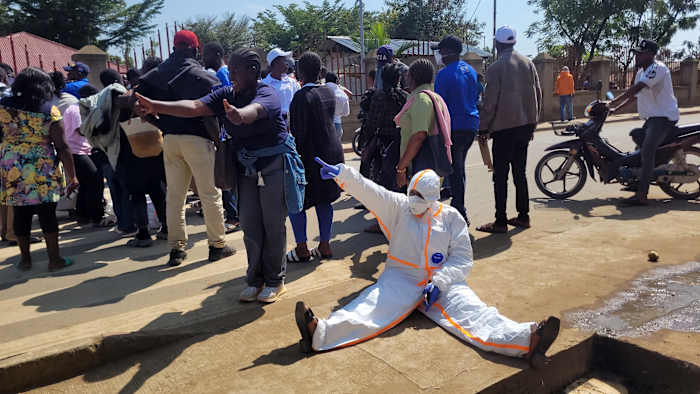
The Democratic Republic of Congo is currently battling the third-largest Ebola outbreak in history, driven by the dangerous Bundibugyo virus strain and crippled by an administrative paralysis that has left frontline doctors, nurses, and burial teams unpaid for months. As infections surge past the thousands with climbing fatalities, the crisis has evolved into a stark indictment of how bureaucratic systemic failure can sabotage an epidemiological response faster than any pathogen alone.
When the outbreak was officially declared in Ituri province, the response strategy followed a familiar international playbook. Yet, beneath the veneer of emergency coordination meetings, a financial chasm opened up. Frontline workers—ranging from epidemiological surveillance officers to the teams risking their lives managing safe burials—realized their hazard bonuses and base wages had vanished into a bureaucratic black hole. For a closer look into this area, we recommend: this related article.
The Anatomy of a Payment Breakdown
Why do wages fail to reach the boots on the ground during a public health emergency? The explanations offered by regional authorities usually point to logistical hurdles, such as the closure of local airstrips like Bunia airport, which restricts physical cash delivery. But this reasoning exposes a deeper structural vulnerability in international aid distribution.
Money pledged globally often gets bogged down in multi-tiered administrative verifications before it ever converts into local currency. While administrators audit spreadsheets, nurses are forced to pay out of pocket for transport to isolation wards. For additional context on this development, detailed reporting can also be found on Mayo Clinic.
[Global Donor Pledges]
       │
       ▼
[Multi-Tiered Bureaucratic Audits]
       │
       ▼
[Logistical Bottlenecks / Airport Closures]
       │
       ▼
[Zero Funds Reaching Frontline Medics]
When those funds stop flowing, the human cost is immediate. Walking off the job becomes the only remaining mechanism for workers to demand basic survival provisions. At treatment centers like Elikya in Bunia or facilities in Rwampara, protests have erupted into the streets with tires burned in frustration. These are not acts of political defiance. They are distress signals from professionals watching patients die while their own families starve.
Fighting the Bundibugyo Blind Spot
Compounding the economic breakdown is the biological reality of the pathogen itself. This outbreak involves the Bundibugyo strain, a less-frequently encountered iteration of the virus that lacks the widely stockpiled vaccines and targeted monoclonal antibody therapies deployed against its Zaire counterpart in past equatorial crises.
Clinical trials for experimental antivirals and treatments are scrambling to catch up to the curve, but therapeutic pipelines move slowly. Meanwhile, the World Health Organization has warned that official case counts drastically underestimate the scale of transmission.
- Invisible Patient Zero: Contact tracing remains incomplete because the initial transmission vector was never identified.
- Regional Insecurity: Armed conflict and informal mining operations in eastern Congo displace communities constantly, scattering potentially exposed populations into the forest.
- Distrust and Disinformation: Historic friction between local populations and centralized state authorities breeds skepticism toward response teams, occasionally flaring into physical attacks on clinics.
The Cost of Treating Responders as Expendable
Epidemiology relies on trust. If the community sees that the state treats its own health workforce as expendable—refusing to pay them while sending them into high-containment zones—community compliance collapses. Why should a local villager trust a contact tracer who has not been fed or paid by the government in months?
The crisis in Ituri province demonstrates that disease containment is ultimately a social contract. When the state fails to honor its side of that contract by protecting the welfare of its medical workforce, the virus exploits the resulting vacuum with brutal efficiency.
International agencies and national ministries continue to pledge corrective measures, promising that backpay is being processed and logistics are being unblocked. But for the nurses monitoring empty IV bags and the burial teams refusing to lift another stretcher until their accounts reflect their labor, promises do not mitigate exposure. The outbreak marches forward, fueled not just by a rare viral strain, but by the systemic abandonment of the people holding the line.