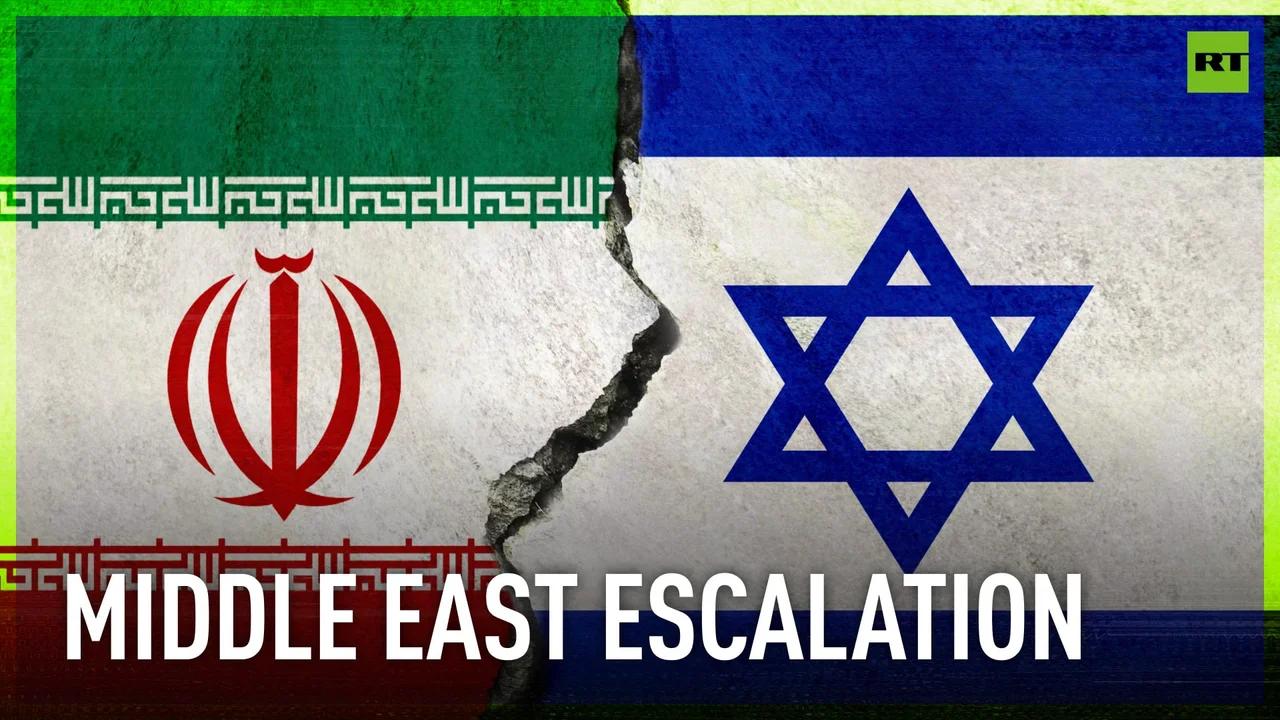
The claims surfacing from Tehran regarding a Delhi-bound humanitarian flight targeted by U.S. strikes represent a terrifying escalation in the already volatile Middle Eastern corridor. According to Iranian officials, a civilian aircraft carrying aid was caught in the crosshairs of American kinetic operations over Iraq. If verified, this incident moves beyond a simple tactical error; it signals a systemic collapse in the deconfliction protocols that are supposed to keep non-combatants safe in crowded battlefields. The U.S. military, for its part, maintains that its strikes are surgically targeted at militia infrastructure linked to the Islamic Revolutionary Guard Corps (IRGC). Somewhere between these two narratives lies a wreckage of truth that could reshape diplomatic relations between Washington, Tehran, and New Delhi.
The flight path between Iran and India is one of the most sensitive aerial arteries in the world. It serves as a lifeline for trade and, more recently, a conduit for regional aid. When a missile meets a fuselage in this airspace, the ripple effects are felt instantly in the situation rooms of three different capitals. Meanwhile, you can find similar developments here: The Calculated Silence Behind the June Strikes on Iran.
The Mechanics of a Mid-Air Crisis
Modern warfare relies on a high-tech handshake known as deconfliction. This is the process where military forces communicate with civil aviation authorities to ensure that "hot" zones are cleared of passenger and cargo planes before any munitions are fired. It is a fragile system. When it fails, the results are catastrophic.
In the reported strike near the Iraq-Syria border, the Iranian authorities allege that the U.S. ignored transponder signals and flight plans registered with regional air traffic control. The U.S. Central Command (CENTCOM) typically operates under strict Rules of Engagement (ROE) that require positive identification of a target before engagement. However, the rise of "loitering munitions" and rapid-response drone strikes has shortened the decision-making window for commanders on the ground. To explore the bigger picture, we recommend the recent analysis by NBC News.
A split second. That is all it takes for a sensor to misidentify the heat signature of a heavy transport plane as a military asset. If the Iranian aid flight was indeed operating in the same sector where U.S. drones were hunting militia targets, the proximity alone created a "kill box" scenario where the margin for error effectively vanished.
Washington’s Strategic Calculus and the Militia Problem
The U.S. has been engaged in a sustained campaign to degrade the capabilities of Iranian-backed groups in Iraq. These groups have launched dozens of attacks on American outposts, using increasingly sophisticated drones and rockets. For the Pentagon, the objective is clear: deterrence.
But deterrence has a high price. By striking targets in Iraq, the U.S. is operating in a grey zone of international law. The Iraqi government often finds itself caught between its security partnership with Washington and its political ties to Tehran. When a civilian flight—especially one labeled as humanitarian—is even remotely threatened by these operations, the U.S. loses the moral high ground. It transforms from a security guarantor into a regional destabilizer in the eyes of the global community.
The IRGC has been known to use civilian infrastructure to move personnel and sensitive equipment. This is a documented tactic. It creates a "human shield" effect in the sky. If the U.S. believed the flight was a Trojan horse carrying military hardware under the guise of aid, the decision to strike would have been a deliberate, albeit risky, choice. Yet, without presenting concrete evidence of such cargo, Washington faces a public relations nightmare that no amount of diplomatic "clarification" can easily fix.
The Indian Dilemma
New Delhi finds itself in a precarious position. As a rising global power, India has maintained a delicate balancing act, keeping strong strategic ties with the United States while continuing energy and trade partnerships with Iran. A flight bound for Delhi is not just an Iranian concern; it is an Indian one.
The Indian Ministry of External Affairs is notoriously cautious. They will wait for black box data and independent radar verification before issuing a blistering statement. However, the optics of Indian-bound aid being intercepted by American fire are disastrous for the "Major Defense Partner" status that Washington so frequently touts.
If the aid was intended for Indian-managed projects or was part of a broader regional stability effort, the strike represents a direct hit to Indian interests. It forces New Delhi to ask a hard question: Is the American presence in the Middle East protecting trade routes, or is it making them impassable?
The Failure of Intelligence or the Success of Propaganda
We must consider the possibility of an information operation. Iran is masterful at using "active measures" to paint the U.S. as a reckless aggressor. By claiming a humanitarian flight was targeted, Tehran can rally international sympathy and put pressure on the U.S. to curtail its drone program in Iraq.
Investigative rigor requires us to look at the flight tracking data. Most commercial and aid flights are visible on public platforms like FlightRadar24 unless they are operating with transponders off—a "dark flight" profile. If the plane was squawking its civilian code and following a standard air corridor, there is no technical excuse for a military strike. If it was off-course or silent, the narrative shifts toward a tragic case of misidentification.
The "why" behind the strike often matters less than the "how" it was allowed to happen. In the age of satellite surveillance and real-time data links, hitting the wrong plane is a sign of either gross negligence or a breakdown in the chain of command. It suggests that the automated systems designed to prevent such tragedies are being overridden by human urgency or flawed intelligence.
Shadow Wars and the Death of Neutrality
The Middle East is no longer a place where you can be a "neutral" bystander in the sky. The proliferation of surface-to-air missiles (SAMs) and the constant presence of combat UAVs have turned every flight into a gamble.
The U.S. strikes in Iraq are part of a broader "Shadow War" that has been simmering for years. This war is fought in the margins—on desert roads, in shipping lanes, and now, in the flight paths of civilian aircraft. When the battlefield expands to 30,000 feet, the concept of a "humanitarian corridor" becomes an illusion.
We saw this with the downing of PS752 over Tehran in 2020, where Iranian defenses mistakenly shot down a civilian airliner during a period of high tension with the U.S. Now, the roles may have reversed, or at least the accusations have. The common thread is a hair-trigger military posture that prioritizes "shoot first" over "verify always."
The Technological Blind Spot
There is a dangerous reliance on algorithmic targeting. We are told that AI and advanced sensor suites make war "cleaner." This is a lie sold by defense contractors. The reality is that these systems can be spoofed, or they can simply fail to account for the complexity of a crowded civilian airspace.
A drone operator sitting in a trailer in Nevada or a command center in Qatar sees the world through a "soda straw" view. They see a target, they see movement, and they see a set of coordinates. They do not see the boxes of medicine or the relief workers inside a plane miles away. They see a blip on a screen that matches a threat profile provided by an intelligence analyst who might be working with week-old data.
The Impact on Global Aid Logistics
If aid flights are no longer safe from superpower intervention, the entire architecture of international humanitarianism is at risk. NGOs and state agencies will be hesitant to fly into regions where the U.S. or its rivals are conducting active operations. This leads to "aid deserts" where the people who need help the most are cut off because the risk to the flight crew is too high.
The cost of insurance for these flights will skyrocket. The number of carriers willing to fly these routes will dwindle. In the end, the geopolitical posturing of two nations ends up starving a third population that has no stake in the conflict.
Accountability in the Age of Denial
The most frustrating aspect of these incidents is the lack of a clear, independent investigative body with the teeth to punish offenders. The UN is often toothless in the face of U.S. or Iranian intransigence. Investigations take years, by which time the political landscape has shifted, and the victims are forgotten.
To prevent a recurrence, there must be a total overhaul of the deconfliction process. This isn't about better radios; it's about a fundamental shift in how military operations are prioritized over civilian safety. Until there is a mandatory, real-time data link between military command centers and civil aviation authorities that cannot be overridden without multiple levels of civilian oversight, these "accidents" will continue to happen.
The U.S. cannot continue to operate with impunity in Iraqi airspace if it cannot guarantee the safety of those simply passing through. Similarly, Iran cannot use civilian aid as a shield for its regional ambitions without expecting its flights to come under intense scrutiny. Both sides are playing a high-stakes game of chicken with human lives as the chips.
The incident over Iraq is a warning shot for the entire industry. It tells us that the sky is no longer a sanctuary. It is a frontier where the rules are being rewritten by the people with the most missiles. If we don't demand a return to the sanctity of civilian flight paths, we are essentially accepting that every trip is a potential combat mission.
The wreckage, whether physical or diplomatic, will take years to clear. The trust, however, may never be recovered. When a "humanitarian" flight becomes a target, the word humanity loses all meaning in the context of modern statecraft. The next time a flight takes off from Tehran for Delhi, every passenger and every crew member will be looking out the window, not for their destination, but for the trail of a missile that isn't supposed to be there.
Stop looking for a clean resolution in a region defined by its scars. The only certainty is that as long as the U.S. and Iran use Iraq as their private boxing ring, the spectators in the sky will continue to pay the price.