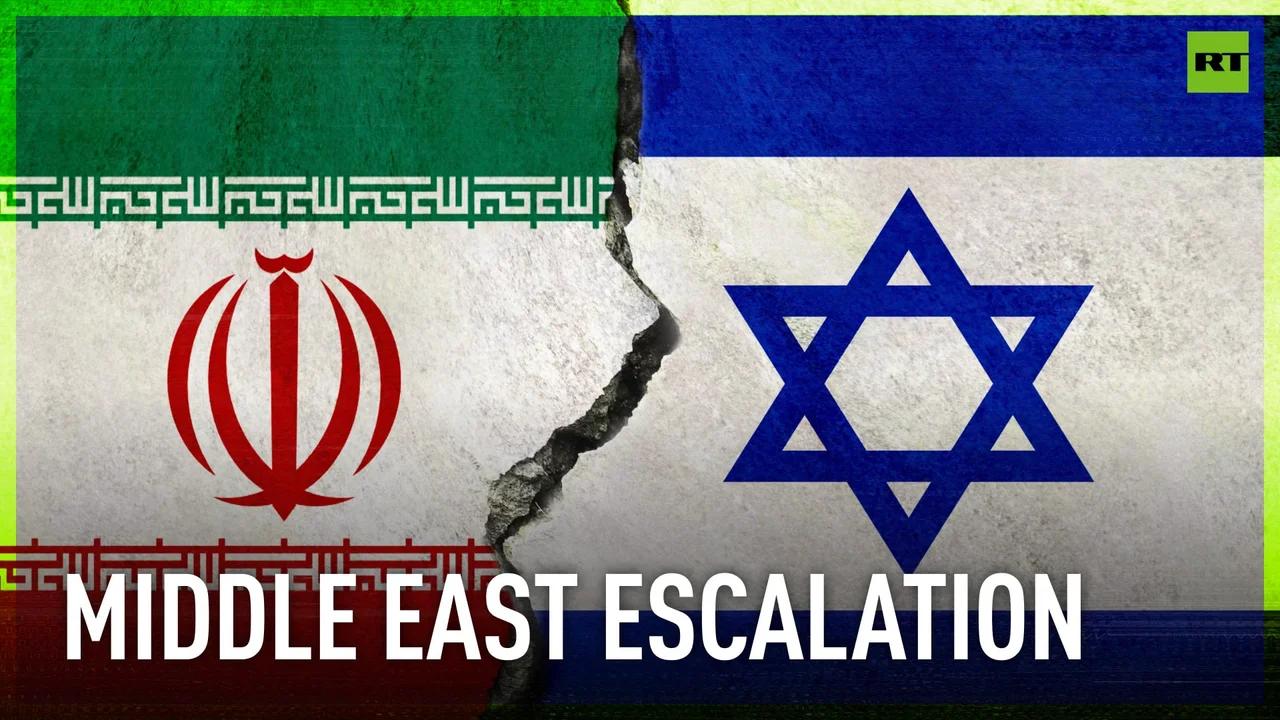
The geopolitical chessboard of the Middle East has shifted from the scorched earth of the Levant to the lecture halls of the West. While Benjamin Netanyahu signals an imminent and high-risk ground invasion of Southern Lebanon, Tehran has pivoted its rhetorical arsenal toward a new set of targets: Israeli and American academic institutions. This is no longer just a border skirmish or a regional proxy war. It is an expansion of the battlefield into the psychological and cultural infrastructure of the nations involved.
Iran’s recent threats to strike educational hubs represent a tactical shift in psychological warfare. By naming universities as legitimate military targets, the Islamic Republic is testing the limits of Western domestic stability. They are banking on the fact that threatening a laboratory or a library carries a different kind of political weight than threatening a missile silo. It is designed to provoke a specific brand of panic within the United States and Israel, hitting the very places where the next generation of leadership is groomed.
The Lebanon Gamble and the Ghost of 2006
Prime Minister Netanyahu’s vow to push the Israel Defense Forces (IDF) into Lebanon is a move dictated by internal political survival as much as national security. The northern border has become an open wound. With tens of thousands of Israeli citizens displaced by Hezbollah’s relentless rocket fire, the pressure on the Knesset to "do something" has reached a breaking point.
But the history of Lebanese incursions is written in blood and stalemate. The 2006 war proved that Hezbollah is not Hamas. They are a disciplined, well-armed, and deeply entrenched paramilitary force with a sophisticated tunnel network that rivals anything found in Gaza. An invasion of Lebanon would not be a surgical strike. It would be a meat grinder.
Hezbollah’s arsenal now includes precision-guided missiles capable of reaching Tel Aviv’s critical infrastructure. If Netanyahu crosses the Litani River, he isn't just fighting a militia; he is inviting a barrage that could paralyze the Israeli economy. The rhetoric of "total victory" used in Gaza does not translate to the rugged terrain of Southern Lebanon, where the topographical advantage belongs entirely to the defenders.
Tehran Plays the Long Game of Academic Intimidation
The Iranian threat against universities is a calculated piece of theater. It serves two purposes. First, it provides a narrative of "reciprocity" for the scientists and academics Iran has lost to assassinations over the last decade. Tehran has long accused the Mossad of picking off its nuclear physicists in broad daylight. By pointing the finger at Israeli universities—many of which are deeply integrated with the country’s defense research and development—Iran is signaling that the "ivory tower" immunity is over.
Secondly, the inclusion of American universities in this threat is a direct attempt to leverage the current domestic unrest in the United States. Iran sees the fractured state of American campuses, torn apart by protests and counter-protests, and realizes that the university is the most sensitive nerve in the American body politic. Even a credible threat, without a single shot fired, can force a massive, expensive, and disruptive security overhaul at major institutions, further straining the relationship between the public and the state.
The Failure of Deterrence and the New Front Lines
We are witnessing the total collapse of traditional deterrence. For decades, the "red lines" were clear. You didn't target schools, and you didn't initiate full-scale invasions without a clear exit strategy. Those rules have been shredded.
The US finds itself in an impossible position. Every shipment of munitions to Israel increases the heat on the Biden administration’s domestic flank. Meanwhile, every delay in support is viewed by Tehran and Hezbollah as a green light to escalate. This is the "escalation trap." If Israel doesn't respond to Hezbollah, the north is lost. If they do, they risk a regional conflagration that could draw in US assets and trigger the very strikes on Western soil that Iran is now threatening.
The Intelligence Gap
There is a glaring hole in the current discourse: the assessment of Iran's actual reach. While the IRGC (Islamic Revolutionary Guard Corps) possesses a formidable drone and missile program, their ability to strike a US university on American soil remains limited to cyber-attacks or lone-wolf radicalization. However, the threat itself is the weapon. In an era of hybrid warfare, the perception of danger is often more effective than the danger itself. It shuts down discourse, redirects funding, and creates a climate of fear that benefits authoritarian regimes.
The Logistics of a Lebanese Front
Should the IDF move north, the logistics alone are staggering. Unlike the siege of Gaza, a war in Lebanon involves a sovereign state with a (weak but present) national army and a much more complex international border.
- Terrain: The hilly, forested landscape of Southern Lebanon is a nightmare for armored divisions.
- Supply Lines: Hezbollah can be resupplied via Syria, creating a bottomless pit of attrition.
- Civilian Cost: Beirut is a global hub. A strike on Lebanese infrastructure would trigger an international diplomatic backlash far more severe than what has been seen in the Gaza conflict.
A War of Attrition Beyond Borders
The conflict is no longer localized. When a regime like Iran targets universities, they are attacking the concept of the "future." They are saying that no space is neutral and no person is a non-combatant. This is a strategy of total involvement. It forces the average citizen in New York, London, or Tel Aviv to realize that the war in the Middle East isn't something that happens "over there." It is something that can reach into their daily lives, their places of learning, and their sense of safety.
Netanyahu knows that a war in Lebanon might be the only way to keep his coalition together, but it is a gamble with the soul of his country. If the IDF becomes bogged down in a multi-year insurgency in the north, the social fabric of Israel—already strained by the judicial reform protests and the October 7th failures—could begin to unravel.
The strategy of the adversary is clear: wait for the West to exhaust itself. Iran doesn't need to win a conventional war. They only need to ensure that Israel and the US remain in a state of perpetual high-alert, bleeding resources and political capital on every front, from the banks of the Litani to the quads of the Ivy League.
The danger now is that rhetoric becomes reality through the sheer momentum of the threats. When you promise an invasion, your base demands it. When you threaten a strike, your enemies prepare for it. We are past the point of posturing; we are in the era of the inevitable consequence. The board is set, the pieces are moving, and the "ivory towers" are no longer safe from the reach of the desert storm.