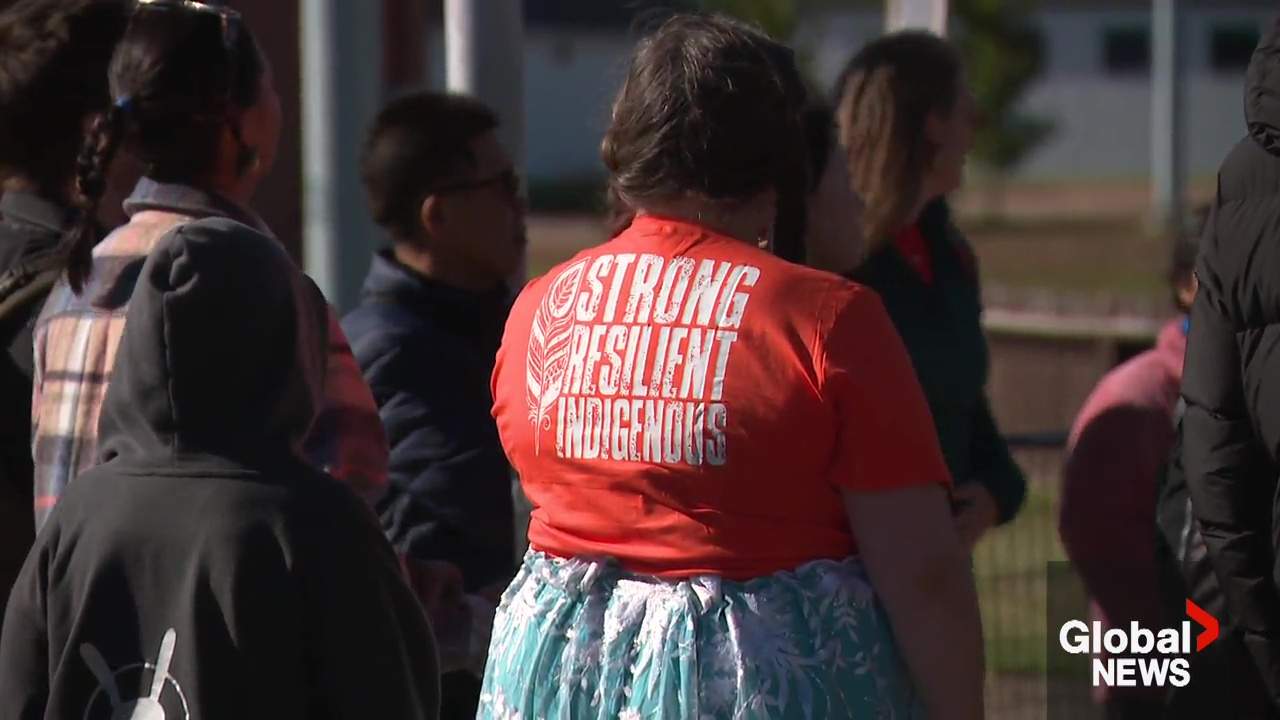
For decades, the standard playbook for historic sites facing national days of reflection has been painfully predictable. You drop ticket prices, hand out orange shirts at the turnstiles, bring in a traditional drum group for a morning ceremony, and pat yourselves on the back for driving foot traffic while claiming you are doing the heavy lifting of historical reckoning.
It is corporate box-checking masquerading as penance. And sites like Fort Edmonton Park stand right at the center of this polite charade. Learn more on a related issue: this related article.
Let us dispense with the feel-good marketing narrative right now. When a living history museum built around colonial expansion decides to host a day of recognition for residential school survivors, it creates a bizarre spatial paradox. You cannot authentically honor the victims of state-sanctioned cultural erasure inside a reconstructed fur-trading fort that romanticizes the very architecture of extraction. It is like hosting an anti-corruption summit inside a functioning casino.
I have watched heritage boards spend millions on interpretive plaques, apologizing for the past while completely insulating their current business models from any structural transformation. They want the moral halo of reconciliation without paying the operational price. Further analysis by Vogue delves into similar perspectives on this issue.
True decolonization in the heritage sector is not about hanging a banner over a 19th-century blacksmith shop. It requires dismantling the narrative hierarchy that places European settlement at the center of the story and pushes Indigenous survival to a footnote in a side gallery.
The Archive Illusion
Walk through any pioneer village in North America, and you are fed a very specific design of history. The cabins are neat, the trades are noble, and the expansion is inevitable. The Indigenous presence is treated as a chronological prelude—something that happened before the real history began, rather than a continuous, active resistance that ran parallel to it.
This is the archive illusion. Institutions curate a version of the past that makes modern visitors comfortable. They present history as a museum piece behind glass rather than an ongoing wound with open stitches.
When National Day for Truth and Reconciliation rolls around, these parks scramble to host workshops or panel discussions. But who are these panels for? They are overwhelmingly designed to comfort settler audiences, offering a safe, digestible dose of historical trauma that leaves everyone time for lunch at the period-accurate bakery.
If your reconciliation programming does not make your primary demographic slightly uncomfortable, it is not reconciliation. It is entertainment.
Real Accountability Costs Revenue
Let us talk about the economics of heritage tourism, because nobody else will. Forts, museums, and historical parks survive on attendance numbers, municipal grants, and corporate sponsorships. Rocking the boat too hard threatens the funding stream.
If you want to see what actual accountability looks like, look at the financial ledgers. How much of the gate revenue generated during reconciliation events flows directly back to Indigenous land defenders, language revitalization programs, or survivor support networks?
Usually, the answer is a tiny percentage, while the bulk stays in-house to cover marketing costs and administrative overhead. The institution monetizes the tragedy of others to polish its own public relations profile. That is not historical justice. That is extraction wrapped in an orange shirt.
I have seen organizations panic when cultural consultants demand real operational control over exhibits, fearing that challenging the pioneer narrative will alienate school boards and family passholders. They want the aesthetic of progress without the friction of actual change.
Dismantling the Pioneer Myth
The entire concept of the frontier hero needs to be systematically dismantled. Every narrative about rugged individualism and taming the wilderness is a deliberate erasure of the displacement required to make that wilderness empty.
When you frame history as a triumph over nature and native inhabitants, you bake structural racism into the family vacation. Children absorb these lessons through osmosis. They pet the heritage goats, watch the candle-dipping demonstration, and internalize the subtle message that progress belongs to the colonizer while indigenous peoples are historical artifacts.
To fix this, living history sites need to stop acting like neutral observers of the past. Neutrality in the face of historical violence is complicity.
What Actually Needs to Happen
If historic parks are serious about truth and reconciliation, they need to stop treating it as an annual calendar event and start treating it as an existential operational overhaul.
First, revenue sharing must become mandatory. A substantial, non-negotiable slice of every ticket sold during reflection periods must go straight to community-led initiatives chosen by local First Nations, bypassing institutional gatekeepers entirely.
Second, curatorial autonomy must be surrendered. Let Indigenous historians rewrite the interpretive maps from the ground up, even if it means tearing down beloved exhibits that glorify colonial administrators. If the historical narrative does not sting, you are doing it wrong.
Third, stop treating indigenous culture as an add-on performance. It should not be a morning guest slot sandwiched between the blacksmith demo and the horse-drawn carriage ride. It should frame the entire context of the site.
The heritage sector is terrified of losing its traditional audience. But clinging to sanitized nostalgia in the name of historical preservation is no longer a viable business model. It is an act of historical vandalism.
Stop handing out buttons. Open the books, hand over the mic, and let the comfortable myths burn.