Every time a tropical depression brushes the islands, the headlines scream about paradise on the brink. The lazy narrative writes itself. Communities still sweeping up the drywall dust from Hurricane Lala are suddenly told to stock up on bottled water and canned beans because another atmospheric buzzsaw is lurking over the horizon.
It makes for great cable news. It also completely misses why Hawaii suffers when storms hit.
I have spent the last fifteen years evaluating disaster response protocols across the Pacific basin. I have watched municipal leaders panic-buy sandbags while ignoring the root cause of every single infrastructure failure on Oahu and Maui. The problem is not the wind speed. The problem is a multi-billion-dollar real estate complex built on total historical amnesia.
People want to blame the weather. Blaming the weather is cheap. It absolves zoning boards, developers, and homeowners of accountability.
Let us look at what actually happens when a cyclone threatens Hawaii. The standard playbook rolls out. Grocery store shelves empty of Spam and white bread in forty-eight hours. Tourist boards scramble to issue reassurances that Waikiki is still open for Mai Tais. Emergency management agencies tell residents to hunker down.
Then the storm passes, power lines go down because utility companies refuse to underground cables, and everyone acts surprised that a tropical island chain in the middle of the Pacific gets windy.
This routine is embarrassing.
The Myth of Unprecedented Weather
Whenever a storm approaches, local meteorology reports lean heavily on words like unprecedented and historic. Stop buying it.
Pacific basin storm tracking data from the Central Pacific Hurricane Center shows a clear pattern of cyclical activity. The islands have weathered severe weather events for centuries. What is unprecedented is the sheer volume of non-engineered residential construction planted squarely in known flood zones and coastal high-hazard areas over the past four decades.
When Hurricane Iniki slammed Kauai in 1992, it caused three billion dollars in damage. It flattened poorly anchored roofs and sheared off cheap aluminum siding. Did builders pivot to heavy-gauge concrete framing, impact-resistant glazing, and deep-pile foundations?
Mostly, they did not. They rebuilt with the exact same cheap timber frames, crossed their fingers, and hoped for another thirty-year grace period.
I have walked through subdivisions on the Leeward coast weeks after a tropical system dropped standard rain totals. You see millions of dollars in drywall rotting in the Hawaiian sun not because the storm was a category five monster, but because the houses were built like suburban tract homes in Ohio rather than fortified outposts in a tropical marine environment.
When you build flimsy structures on a volcanic rock surrounded by warm water, you do not have a weather crisis. You have a design crisis.
Why FEMA is Fueling the Problem
Federal disaster relief programs incentivize stupidity.
Imagine a scenario where the federal government stopped bailing out waterfront homeowners who insist on rebuilding on eroding shorelines every single time a swell takes out their lanai.
Right now, the National Flood Insurance Program acts as a subsidized safety net for people who make terrible real estate bets. It socializes the risk of living in harm's way while privatizing the view. When a storm like Lala or its potential weekend successor rolls through, the federal checkbook opens up, repairs are made, and the cycle repeats.
Insurance executives know this. Local developers know this. Yet politicians keep pretending that the next seawall will hold back the Pacific.
It will not.
If you want to fix Hawaii's storm vulnerability, you have to make staying put expensive when the location is indefensible. Managed retreat is a dirty phrase in real estate marketing, but it is the only math that works over a fifty-year horizon. Continuing to pour concrete seawalls that destroy local surf breaks and accelerate beach erosion is the public policy equivalent of bailing out the Titanic with a bucket.
The Real Danger Hiding Behind the Wind Reports
While everyone stares at the satellite loop tracking wind vectors and pressure drops, the real threat is quietly compounding inland.
It is water. Specifically, runoff management.
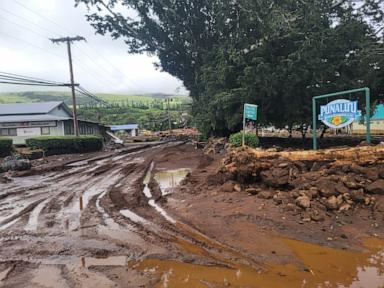
Hawaii's volcanic slopes shed water with terrifying efficiency. When developers pave over agricultural valleys for luxury subdivisions and resort complexes, they eliminate the natural sponge effect of the soil. A rain event that used to soak harmlessly into the water table now turns into a roaring torrent of red dirt and concrete debris rushing straight into coastal bays.
When locals worry about a weekend cyclone, they worry about roofs blowing off. They should be worrying about cesspools overflowing, municipal sewer lines backing up into residential neighborhoods, and topsoil choking coral reefs.
During Lala, municipal water treatment facilities came within inches of catastrophic failure not because the wind knocked out the turbines, but because antiquated storm drainage systems were overwhelmed by runoff from poorly planned upland developments.
The questions people keep asking miss this entirely.
People Also Ask: Should I evacuate if a hurricane warning is issued?
The honest answer: If your home was built after 1990 by a volume developer using standard stick-frame techniques on a low-lying coastal plain, yes. If your home is engineered to withstand one-hundred-and-fifty-mile-per-hour uplift forces with reinforced concrete tie-beams and roof straps, staying put is safer than clogging the single-lane evacuation routes that every island relies on.
People Also Ask: How can I stock my pantry for storm season?
The better question: Why are you relying on a supply chain that depends entirely on Matson container ships pulling into Honolulu harbor every few days? If a storm genuinely isolates the islands for a week, your five cans of tuna won't save you if your logistics chain is fundamentally fragile. True preparedness looks like decentralized solar generation, rainwater catchment retrofits, and community-level agricultural co-ops that don't fold when the docks close.
Stop Preparing for the Wrong Disaster
The obsession with weekend cyclone alerts is a distraction. It creates a culture of acute panic followed by chronic neglect.
We spend billions reacting to storms and pennies preparing for resilience.
Property owners need to stop waiting for government grants to harden their structures. Builders need to be legally barred from putting up standard mainland-style housing in high-risk zones. And residents need to stop treating hurricane season like an annual tradition of buying flashlights and beer, and start treating it as an audit of their structural and logistical independence.
The next storm is not an anomaly. It is a scheduled delivery from the climate system we have spent decades ignoring. Stop acting surprised when the package arrives.