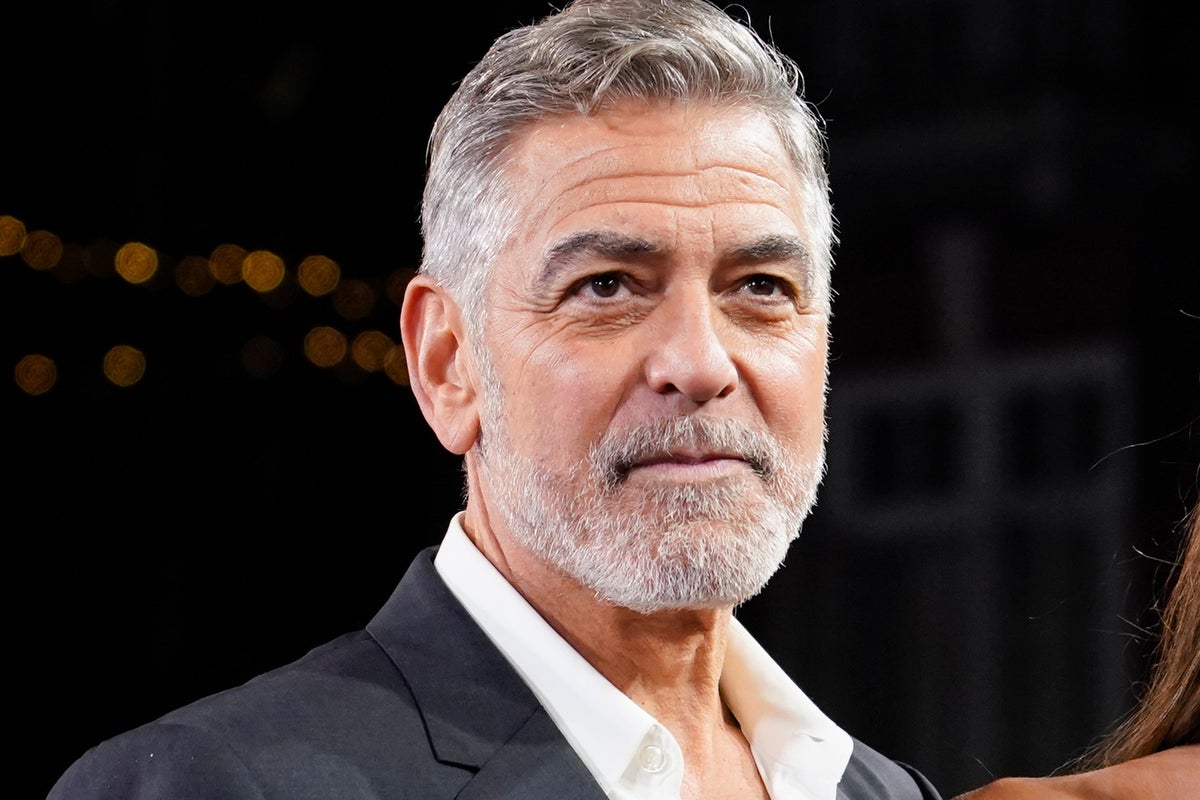
Every time a celebrity flees a burning hillside or a rising tide, the media treats it like a profound environmental parable. The headlines roll in with predictable melodrama. Wildfires force George Clooney and his family to pack up their idyllic Provençal estate, and the internet gasps in horror, interpreting the event as a tragic equalizer. Nature, we are told, cares not for Oscar winners. Climate change comes for us all, Hollywood royalty included.
It is a lazy narrative designed for maximum digital outrage and minimum cognitive effort.
I have spent two decades looking under the hood of high-net-worth asset management and ultra-prime real estate acquisition. I have watched billionaires and A-listers buy acreage in zones prone to ecological violence, treat local insurance markets like personal slush funds, and then act surprised when the geography behaves exactly as geography always has.
The standard media framing wants you to believe this is about climate apocalypse knocking on the door of the rich. The reality is far more mundane, and far more cynical: elite real estate has become a game of speculative arbitrage where physical risk is heavily subsidized by the public, and evacuation is just a minor inconvenience managed by private security details.
Stop crying for the displaced multi-millionaires of the Côte d'Azur. Let us look at what is actually happening behind the gates of Domaine de Canadel and why the entire celebrity property complex is built on a foundation of willful ignorance.
The Myth of the Accidental Victim
When a wildfire tears through the Var department in southern France, local firefighters do not deploy resources based on star power. At least, they are not supposed to. But anyone who understands rural municipal budgets in the Mediterranean knows that high-value enclaves command a disproportionate share of defensive infrastructure.
When George Clooney purchased his 425-acre estate in Brignoles for a reported eight million euros, he did not just buy a picturesque vineyard and an 18th-century mansion. He bought into a centuries-old ecosystem of brush fires, drought cycles, and mistral winds that have defined Mediterranean meteorology since the Roman Empire.
The lazy consensus in entertainment journalism treats every natural disaster in a celebrity hotspot as an unprecedented anomaly. It is not an anomaly. It is Tuesday in the Mediterranean basin.
For decades, developers and real estate brokers have sold celebrities a romanticized fantasy of rural European seclusion. They package the rustic charm while burying the ecological hazard report in the appendix of the notary files. Stars like Clooney, Brad Pitt, and Leonardo DiCaprio preach sustainability from the stages of international film festivals, yet their property portfolios read like a checklist of high-risk climate zones.
You cannot buy a sprawling estate in a drought-plagued, pine-needle-carpeted valley, strip away the local brush-clearing mandates because it ruins the aesthetic of your olive grove, and then act like a climate refugee when the inevitable spark catches.
The Economics of Disaster Tourism for the Rich
Let us talk about the financial mechanics of celebrity evacuations. When ordinary residents in southern France evacuate a wildfire zone, they face ruined livelihoods, lost crops, and insurance battles that drag on for years. They bear the actual economic friction of the catastrophe.
For a global icon, an evacuation order is a logistical inconvenience solved by a chartered helicopter and a stay at a five-star hotel in Paris or Lake Como. Their properties are structurally over-insured through syndicates in London and Zurich that specialize in high-net-worth risk underwriting.
Imagine a scenario where insurance premiums on ultra-prime properties actually matched their true actuarial risk. If the market priced in the 100 percent probability of recurring wildfires in Provence, annual policy costs would eat into the yields of these vanity vineyards. But that does not happen. Insurance pools are structured so that high-volume commercial risks and lower-risk urban portfolios cross-subsidize these billionaire luxury bunkers.
The celebrity property playbook relies on socializing the risk while privatizing the aesthetic pleasure. They extract social capital from owning a historic Provençal vineyard, while the local state apparatus absorbs the suppression costs when the brush catches fire.
Why Hollywood Real Estate Strategy Is Broken
Celebrities buy houses the way teenagers buy fast fashion: impulsively, driven by visual trends rather than structural integrity. They want the stone walls, the rolling hills, and the complete privacy. They do not want defensible space zoning, non-flammable roofing materials, or the concrete-and-steel fire breaks required to truly survive a crown fire.
I have seen media moguls spend millions restoring historic masonry only to surround it with highly combustible Aleppo pine trees because they look better in architectural magazines. It is aesthetic vanity masquerading as lifestyle curation.
When the smoke clears and the Clooney family returns to Brignoles, nothing will change. The vineyards will be replanted with insurance payouts. The brush will be cleared just enough to satisfy the local mayor before the overgrowth returns. The cycle repeats because there is no penalty for structural negligence at the top of the economic ladder.
The media wants you to focus on the human interest angle of a famous family fleeing the flames. They want you to feel a flicker of empathy for the Hollywood elite sharing in the collective dread of a warming planet.
Do not fall for it.
The rich are not sharing your vulnerability. They are simply visiting it between private flights, insulated by wealth, insurance, and public rescue teams. Until we stop treating celebrity real estate as environmental tragedy and start treating it as what it is—poor risk management wrapped in a glossy PR campaign—we will keep writing the exact same story every single summer.
Stop mourning the displaced celebrities of the French Riviera. They will be fine. Worry about the local farmers who cannot afford to rebuild when the smoke clears.