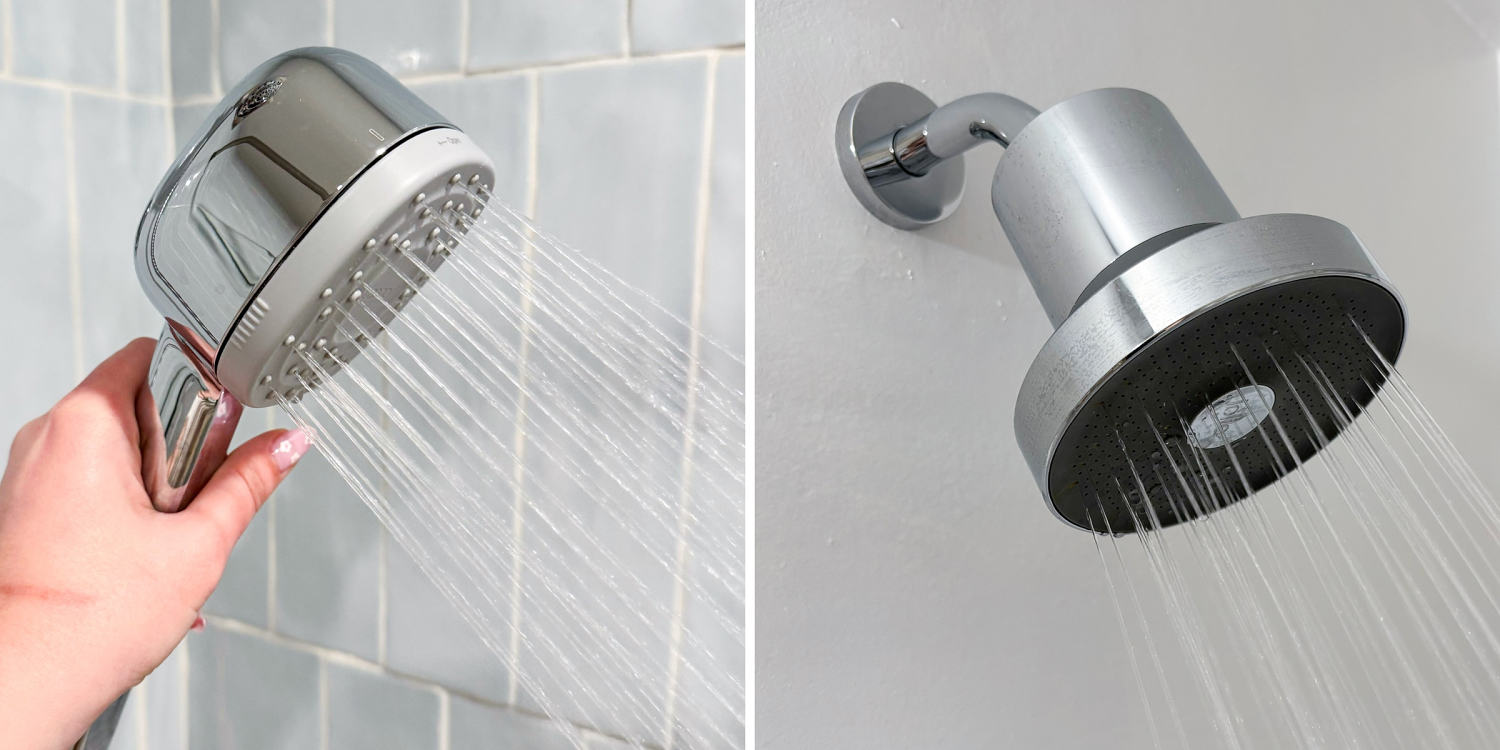
Municipal water infrastructure delivers chemically treated fluid optimized for pathogen eradication rather than dermal or follicular preservation. Residual disinfectants, particularly free chlorine and chloramines, alongside dissolved mineral matrices consisting predominantly of calcium and magnesium ions, interact adversely with human keratin structures and lipid barriers during showering. Filtered showerheads represent a decentralized remediation apparatus installed at the point of use to intercept these contaminants prior to dermal contact. Evaluating their functional utility requires moving past generalized consumer testimonials to examine filtration kinetics, media capacity thresholds, and thermodynamic trade-offs.
The Contaminant Matrix and Chemical Interaction Pathways
Municipal treatment plants utilize chlorine to neutralize biological threats. Upon reaching residential distribution points, this halogen persists as hypochlorous acid and hypochlorite ions. When exposed to the thermal energy of a hot shower, these compounds volatilize into gaseous phases, leading to inhalation exposure while simultaneously stripping the skin of its protective sebum layer. The physiological result is compromised epidermal moisture retention, manifesting as pruritus, erythema, and accelerated degradation of color-treated or structurally damaged hair fibers. Meanwhile, you can find similar events here: Inside the Tirana Dental Gold Rush That Is Upending European Healthcare.
Hard water introduces a parallel vector of degradation. Elevated concentrations of divalent cations bind with anionic surfactants found in soaps and shampoos, precipitating insoluble soap scum. This precipitate adheres to skin pores and hair shafts, creating a persistent surfactant film that impedes natural exfoliation and creates a tactile sense of residue.
Point-of-use filtration units attempt to decouple these chemical inputs from the user via specialized media beds. The primary mechanisms rely on granular activated carbon, kinetic degradation flux media, and specialized sub-micron sediment screens. To understand the bigger picture, check out the detailed article by Mayo Clinic.
Granular Activated Carbon and Adsorption Dynamics
Granular activated carbon functions through adsorption, a surface phenomenon where chemical species adhere to the internal porous network of the carbon particle. The surface area-to-mass ratio of activated carbon is immense, often exceeding 1,000 square meters per gram.
Free chlorine is removed through a destructive catalytic reduction reaction where carbon acts as an electron donor. Hypochlorous acid is converted into chloride ions, which are inert and water-soluble. However, the operational efficacy of granular activated carbon is dictated by empty bed contact time. Water must maintain sufficient residency duration within the media bed for adsorption kinetics to complete. In high-flow shower configurations exceeding two gallons per minute, contact time drops precipitously, reducing the theoretical removal efficiency of volatile organic compounds and residual disinfectants.
Kinetic Degradation Flux Media and Redox Reactions
To overcome the velocity limitations of carbon in high-flow environments, many architectural iterations incorporate kinetic degradation flux media, an alloy composed of high-purity copper and zinc. This material operates via an oxidation-reduction electrochemical process.
When water passes through the metallic matrix, electrons are transferred between the dissimilar metals. Free chlorine is oxidized into harmless, water-soluble chloride. Heavy metals such as lead, mercury, and copper are electrochemically bound to the media surface, plating out of the water stream through a displacement reaction.
Kinetic degradation flux media exhibits superior performance in hot water environments compared to carbon, as high temperatures accelerate the redox reaction rates rather than causing desorption. Furthermore, the localized oligodynamic environment created by the copper-zinc configuration discourages bacterial and mold proliferation within the stagnant water retained inside the housing unit between uses.
The Scaling Phenomenon and Mineral Sequestration Realities
A persistent misconception in consumer evaluations centers on water softening versus water filtration. True water softening requires an ion-exchange resin that replaces calcium and magnesium ions with sodium or potassium ions, permanently altering the hardness profile of the entire volume.
Filtered showerheads generally do not soften water. Instead, polyphosphate sequestering agents or catalytic media alter the crystal habit of calcium carbonate. By inhibiting the precipitation of calcite into rigid, adherent scale, these media force minerals to form aragonite or loose suspended precipitates that wash down the drain without bonding to fixtures or biological substrates.
The physical mechanics of this process are sensitive to temperature and flow velocity. When water velocity fluctuates or thermal spikes occur, the thermodynamic equilibrium shifts, occasionally allowing minor mineral precipitation to occur on the outermost nozzle tips. Regular mechanical purging or silicone-nobs designed for flexure are necessary architectural features to prevent permanent aperture clogging.
Operational Failure Modes and Economic Efficiency
Installing a filtration housing introduces systemic friction into the bathroom plumbing ecosystem. Every filtration medium creates a pressure drop across the bed. If the internal flow restrictor is poorly calibrated, the resulting pressure differential produces an unusable, anemic spray pattern. Conversely, removing the flow restrictor to compensate for the pressure drop violates municipal efficiency standards and accelerates media exhaustion.
Media exhaustion occurs along a predictable saturation curve. As active sites on granular activated carbon or kinetic degradation flux media become occupied, efficiency decays non-linearly. Unlike a binary switch, a depleted filter allows an increasing fraction of contaminants to bypass treatment.
The economic cost function of maintaining a filtered showerhead includes both the capital expenditure of the initial unit and the operational expenditure of periodic cartridge replacements. Cartridge longevity is a function of total water volume processed and baseline chemical concentration. Households supplied by municipal systems utilizing high chloramine levels will exhaust reduction media significantly faster than those served by surface water systems with lower baseline oxidant loads.
Evaluating the return on investment requires isolating specific physiological metrics. For individuals with chronic atopic dermatitis or severe structural hair porosity, the reduction in transepidermal water loss and the prevention of heavy metal deposition yield measurable improvements in dermatological health. For populations without pre-existing dermatological sensitivities, the chemical remediation offers marginal tangible benefits, shifting the value proposition toward sensory enhancement and aesthetic preservation of hair coloration.
Systemic Integration and Maintenance Protocols
Optimizing the performance of point-of-use water filtration requires a disciplined operational protocol.
The housing unit must be purged of stagnant water prior to use after periods of extended disuse, such as overnight dormancy, to eliminate microbial growth that accumulates in warm, damp environments.
Cartridge replacement schedules should be calculated based on cumulative shower minutes and household occupancy rather than arbitrary calendar intervals. A four-person household utilizing a standard 2.0 gallon-per-minute fixture will deplete a standard 10-ounce media bed in approximately ninety days. Exceeding this operational window transforms the filter from a remediation tool into a breeding ground for opportunistic heterotrophic bacteria, reversing the intended health benefits and introducing biological hazards superior to the chemical constituents being removed.
Future iterations of residential water filtration must address the integration of smart flow sensors that track actual contaminant load exhaustion rather than relying on time-based replacement proxies. Until real-time sensor integration becomes standard across consumer hardware, maximizing the efficacy of these systems remains dependent on matching the filtration media chemistry directly to the specific chemical profile of the local municipal water supply.