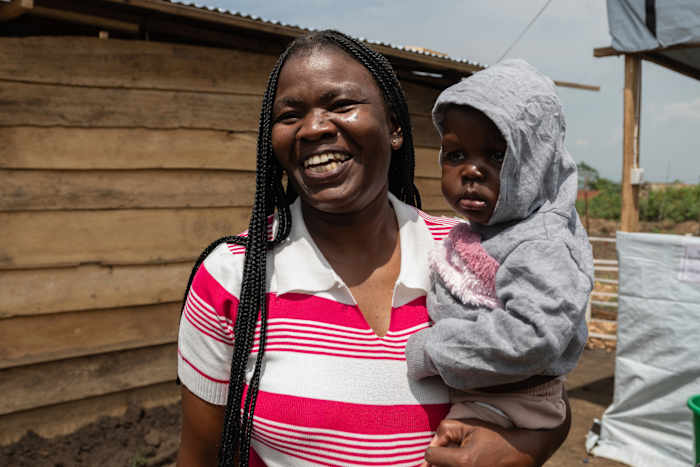
The international health community loves a miracle cure. When news broke out of the Democratic Republic of Congo that a 16-month-old boy and his mother survived Ebola, the media dropped everything to paint a masterpiece of human resilience and medical triumph. The headlines practically begged you to breathe a sigh of relief.
They told you that the experimental treatments worked. They told you the system worked. They told you that this rare success story is the blueprint for the future.
They lied.
Not because the mother and child didn't survive—their recovery is a genuine relief for their family. But the narrative built around their survival is dangerously flawed. By focusing on individual, high-tech medical miracles, global health agencies are blinding the public to a harsh reality: we are winning microscopic battles while utterly losing the structural war against hemorrhagic fevers.
Celebrating a single recovery in an active outbreak zone is like celebrating a functional sprinkler head in a building that is completely engulfed in flames. It feels good, but it misses the entire point of epidemic control.
The Mirage of the Technological Silver Bullet
The current consensus among mainstream health journalists and bureaucratic NGOs is that advanced therapeutics like monoclonal antibodies (mAb114 and REGN-EB3) have solved the Ebola problem. The logic seems straightforward: we have a drug, the drug lowers mortality, therefore the crisis is managed.
This is a classic rookie mistake in public health epidemiology. Having a drug in a laboratory or a secure clinical trial setting is not the same as managing a biohazard crisis in a conflict zone.
I have spent years analyzing health delivery systems in fractured states. I have watched Western organizations drop millions of dollars on ultra-cold-chain storage units and advanced therapeutics, only to see those resources sit uselessly in regional capitals because the road to the actual epicenter is controlled by armed militias.
The "lazy consensus" ignores three massive structural bottlenecks:
- The Trust Deficit: You can have a 100% effective cure, but if the local population believes the treatment centers are organ-harvesting operations run by outsiders, nobody shows up until they are already dying.
- The Delivery Chasm: Monoclonal antibodies require precise intravenous administration and continuous monitoring. In a village with no running water and sporadic electricity, "advanced administration" is a pipe dream.
- The Surveillance Failure: The 16-month-old survived because he was identified. But for every patient who makes it into an isolation unit, three others die in the bush, misdiagnosed as having malaria or typhoid, silently seeding the next cluster of infections.
When the World Health Organization or local ministries celebrate these isolated recoveries, they are engaging in public relations, not epidemiology. They are justifying their massive budgets by pointing to a single, photogenic success while the underlying systemic vulnerabilities remain completely untouched.
Dismantling the Public Health Myths
When people look at outbreaks in the Congo, their questions are shaped by flawed mainstream reporting. Let’s correct the record by answering the questions people actually ask, without the bureaucratic sugarcoating.
Why is Ebola still spreading if we have a vaccine?
The public believes that a vaccine equals eradication. It doesn’t. The Ervebo vaccine is highly effective, but its deployment is a logistical nightmare. It requires "ring vaccination"—vaccinating every contact of an infected person, and every contact of those contacts.
This strategy requires flawless contact tracing. In the North Kivu or Equateur provinces, tracking contacts means navigating dense jungle, active warfare, and deeply private communities. When a contact flees across a fluid border into Uganda or a major urban center like Goma, the ring breaks. The vaccine is a shield, but a shield is useless if you don't know which way the arrow is coming from.
Can a population develop herd immunity to Ebola?
No. Suggesting herd immunity for an infection with a historical case fatality rate hovering around 50% to 90% is medically absurd and ethically bankrupt. Ebola does not circulate like the common cold or influenza. It burns hot and fast through localized networks. It is a zoonotic spillover event; the virus lives in wild animal reservoirs (like fruit bats). Even if you miraculously vaccinated every human on the continent, the virus remains in the canopy, waiting for the next bushmeat hunter to make a single mistake.
The Brutal Math of Outbreak Economics
Let’s look at the financial reality of how we fight these diseases. The cost to save one life using high-tech intervention in an active outbreak zone is astronomical.
| Intervention Type | Cost Per Capita | Population Coverage | Systemic Impact |
|---|---|---|---|
| Monoclonal Therapeutics | Extremely High | Very Low (<5%) | Temporary; does not prevent transmission. |
| Ring Vaccination | High | Medium (Contacts only) | High for containment, zero for general health. |
| Basic Decentralized Triage | Low | High (Whole communities) | Permanent; builds baseline healthcare trust. |
By funneling resources into the top row of this table to secure media-friendly victories, we starve the bottom row.
Imagine a scenario where a regional clinic receives $50,000. If they spend it on maintaining a specialized Ebola isolation tent that remains empty 90% of the time, they are praised by international donors. Meanwhile, five miles away, children are dying of clean-water deficits and preventable dysentery. When Ebola actually hits that community, the residents look at the pristine, well-funded isolation tent with suspicion and resentment. They see a system that only cares about them when they carry a virus that threatens the West.
This mismatch creates a hostile environment for medical workers. It leads to the very violence and resistance that shuts down containment efforts in the first place.
Stop Funding Outbreak Tourism
If we want to stop these viruses from mutating and migrating, we have to stop treating outbreaks like a traveling circus that shows up with cameras when things get bloody and leaves as soon as the curve flattens.
The contrarian solution is simple, unglamorous, and deeply unpopular with corporate donors who want their logos on high-tech gear: De-escalate the technology and escalate the infrastructure.
We need to invest heavily in community-led surveillance systems that treat local traditional healers not as obstacles to be overcome, but as the primary line of defense. They are the ones who see the first cluster of unexplained deaths. If they are trained to recognize hemorrhagic symptoms and provided with basic personal protective equipment, the outbreak never reaches the point where a 16-month-old needs an experimental drug to survive.
The downside to this approach? It doesn't generate heartwarming press releases. It doesn't yield dramatic footage of a toddler walking out of a biohazard unit to a round of applause from workers in space suits. It just results in a quiet, boring absence of disease.
We have normalized a cycle of panic and neglect. We pour billions into panic mode, celebrate a few survival stories, declare victory, and then pull the funding until the next spillover occurs. This approach is broken. Relying on medical miracles to save us from systemic public health failures is a losing strategy. The next outbreak will not care about our feel-good stories. It will exploit the exact same cracked foundations we ignored while we were busy celebrating.