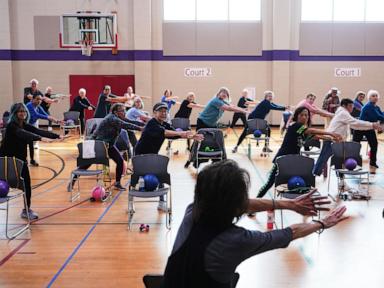
You walk into a local gym and see a senior fitness class led by a twenty-something instructor with boundless energy, a pristine athletic wardrobe, and a playlist featuring the latest club hits. The instructor yells out instructions like "squeeze that core" and "push through the burn."
It looks great on paper. But look closer at the participants. Half of them look lost, some are moving out of sync, and a few are subtly checking the clock.
Now contrast that with a class led by someone who actually remembers the Kennedy administration. The music jumps from a Doris Day singalong to a classic country track, then pivots into an old-school hip-hop rhythm. The instructor isn't barking orders; they're sharing an experience. The room isn't just a workout space. It's a party.
The fitness industry has a massive blind spot when it comes to older adults. Gyms often assume that any certified personal trainer can handle a senior class by simply slowing down the tempo and reducing the weights. That formula misses the point entirely. If you want older people to show up, stay active, and fight the natural decline of aging, you need leaders who understand their life experience. You need instructors who speak their language.
The Empathy Gap in Modern Fitness
Younger trainers possess incredible knowledge about anatomy, biomechanics, and contemporary workout trends. But they lack the lived experience of a body that has weathered decades of wear and tear.
When a 72-year-old instructor like Bengie Santos leads a class at the YMCA of Greater Seattle, she isn't just teaching a routine. She knows exactly how a knee feels after seventy years of walking, dancing, and living. She understands the psychological hurdle of walking into a gym when your balance feels compromised.
Harvard evolutionary biologist Daniel E. Lieberman, author of Exercised: Why Something We Never Evolved to Do is Healthy and Rewarding, points out that humans didn't evolve to exercise for the sake of burning calories. We evolved to move when it was necessary or socially rewarding. For older adults, the social reward is often the single most powerful incentive to overcome the natural resistance to physical activity.
A younger instructor might look at a senior class and see a group of clients needing physical optimization. An older peer looks at the same room and sees a community requiring connection. That shift in perspective changes everything about how a class runs.
The Problem with Standard Fitness Cues
Standard fitness terminology often alienates older participants. Phrases that work on corporate professionals or college athletes don't resonate with people in their 80s and 90s.
- "Engage your core" represents an abstract concept that means very little to a 91-year-old who just wants to sit down and stand up without losing balance.
- "No pain, no gain" is dangerous advice for someone managing osteoarthritis or recovering from surgery.
- "This is an easy modification" can inadvertently sound condescending to someone fighting hard just to stay upright.
Peer instructors naturally avoid these traps. They don't use stock fitness jargon. They explain movements through shared references, humor, and mutual understanding. They treat the session as a shared journey rather than a top-down lecture.
Why Music is More Than Background Noise
Music in a standard gym class acts as a metronome to keep everyone on beat. In a senior fitness class, music serves as a time machine.
Santos utilizes an eclectic mix of music ranging from Judy Garland and Louis Armstrong to country line dances and hip-hop. This isn't random. It's highly intentional. When she teaches smaller classes in senior living facilities—where residents range from 80 to 102 years old—music acts as a powerful cognitive trigger. Caregivers wheel residents into the room, and the moment the music starts, the atmosphere shifts.
Neurological research consistently shows that music from an individual's youth triggers deep emotional memories and stimulates brain activity in ways that spoken commands cannot match. When an older adult hears a familiar tune, their brain fires up, their mood elevates, and their body begins to move naturally. They aren't thinking about the physical labor of lifting weights; they're participating in a social event. Some even begin to waltz right in their chairs.
Peer Roles Create Sustainable Habits
Motivation to start a workout program is incredibly fragile, and it becomes even scarcer as physical mobility weakens. Harry King, an 83-year-old personal trainer based in Greenville, South Carolina, works primarily with clients aged 50 and older. He recognizes that his physical presence speaks louder than any motivational speech.
When an 83-year-old trainer stands in front of a client and demonstrates a movement, it shatters the excuse of age-related limitation. The thought process changes from "I can't do this" to "If he can do it at his age, why can't I?"
This peer-to-peer modeling builds immense trust. Older clients are often terrified of getting injured in the gym. They worry that a young, overzealous trainer will push them too hard, resulting in a torn muscle or a broken bone. Seeing an instructor who shares their demographic instantly reduces that anxiety. It provides a visible, living proof that safe, consistent exercise is possible at any stage of life.
The Social Component of Longevity
Exercise alone isn't enough for healthy aging; humans require social intimacy to thrive. Isolation is just as lethal to seniors as a sedentary lifestyle.
Consider the experience of Ann Kashiwa, a 91-year-old who takes multiple back-to-back classes with Santos. Kashiwa used the classes to maintain her physical strength and find a vital support network while navigating treatment for pancreatic cancer. The friendships forged during those workouts provided emotional stability during her darkest moments.
Another participant, 81-year-old Sharon Ruff, never exercised regularly before retiring from her teaching career because workouts simply weren't enjoyable. The combination of peer leadership and an engaging environment changed her entire perspective on fitness.
When an older instructor leads, they create an inclusive culture where people talk, laugh, and look out for one another. It transforms a gym from a place of intimidating machinery into a vibrant community center.
Reforming the Organizational Approach
Organizations like the YMCA of Greater Seattle are recognizing this reality by intentionally recruiting from within their own senior programs. They don't enforce an upper age limit on their fitness staff. Instead, they look for engaged participants who naturally inspire their classmates and help train them to become certified group leaders.
Tom Kleinecke, a 67-year-old gym member, noticed a stark difference after trying various classes. He observed that younger trainers often focus strictly on teaching the pre-planned routine, while peer leaders focus on inspiring the individuals in the room. Since working out with an older instructor, his endurance has skyrocketed, allowing him and his wife to spend their weekends out dancing.
If you run a fitness facility, a retirement community, or a wellness program, it's time to reevaluate your hiring strategies. Stop searching exclusively for young fitness graduates to teach your silver classes. Look at the people already sitting in the front row of your senior sessions. They possess the social intelligence, the life experience, and the cultural shorthand required to truly move their peers.
How to Build an Effective Senior Fitness Routine
If you're an older adult looking to start an exercise program, or if you're trying to help an aging parent find the right environment, look past the shiny equipment and focus on the leadership.
- Prioritize the Environment Over the Equipment: Find a facility where the instructor interacts directly with participants by name and encourages socialization before and after the session.
- Look for Relevant Role Models: Seek out classes led by instructors who understand aging firsthand or demonstrate deep empathy for mobility limitations.
- Insist on Musical Variety: Avoid classes that rely on monotonous, repetitive gym beats. Look for programming that uses culturally relevant music to stimulate cognitive engagement.
- Embrace the Imperfection: As Kleinecke rightly advises new participants, don't worry about being out of sync or looking uncoordinated. Nobody is judging you; everyone is simply watching the instructor and enjoying the music.
Physical fitness in the later decades of life shouldn't feel like a medical chore or a desperate attempt to stay young. It should be a celebration of what your body can still accomplish, surrounded by people who understand exactly where you've been. Turn down the generic gym music, find an instructor who knows the lyrics to your favorite classic tracks, and start moving.