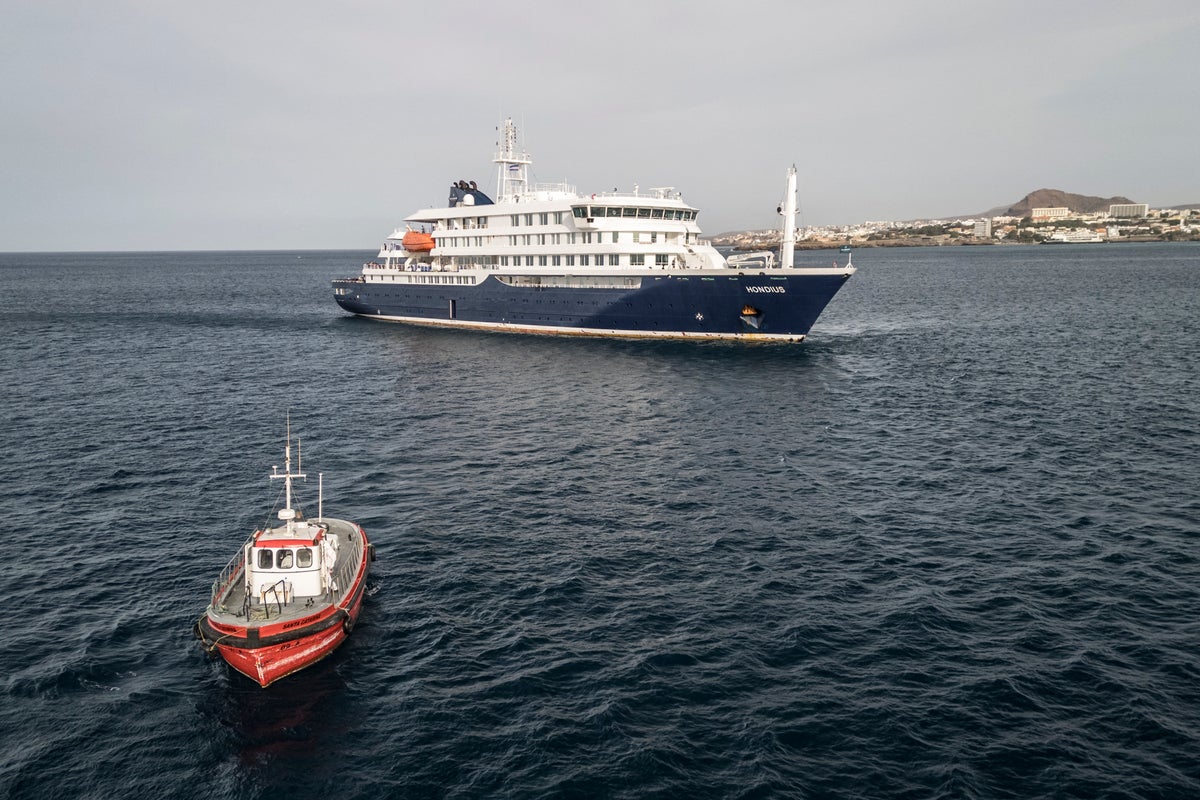
The headlines are screaming about a "race to find the origins" of a Hantavirus outbreak on an Argentinian cruise ship. The narrative is set: a mysterious pathogen, a floating petri dish, and the terrifying prospect of passengers carrying a plague back to U.S. soil. It makes for great clicks. It makes for terrible science.
If you are panicking about a "cruise ship outbreak" of Hantavirus, you don't understand how the virus works, how cruises operate, or how biology actually functions in the wild. We are witnessing a masterclass in media-induced hypochondria that ignores the fundamental mechanics of zoonotic transmission. You might also find this related coverage useful: The Grounding of Hope and the High Price of an Empty Tank.
The "mystery" isn't a mystery. The "danger" isn't what they say it is. And the "race to find the origin" is a bureaucratic formality being sold as a thriller.
The Transmission Myth: You Aren't Catching This From the Buffet
The competitor articles love to use the word "outbreak" because it implies a wildfire of human-to-human transmission. In the world of Hantavirus Pulmonary Syndrome (HPS), that is almost biologically impossible. As reported in recent reports by The Points Guy, the effects are worth noting.
Except for the Andes virus strain found in South America—which has shown extremely rare instances of person-to-person spread—Hantavirus is a dead-end for humans. You get it from breathing in aerosolized droppings, urine, or saliva of infected rodents. Specifically, the long-tailed pygmy rice rat (Oligoryzomys longicaudatus) in the context of Southern Argentina and Chile.
The idea that a cruise ship is a "breeding ground" for Hantavirus is a logistical absurdity. Cruise ships are hyper-sanitized environments. They aren't infested with wild Patagonian field mice. To suggest the ship itself is the source ignores the fact that these vessels are basically floating steel fortresses.
The origin isn't "onboard." The origin was a shore excursion.
I have spent decades watching the travel industry react to health scares. Every time, the public falls for the same trap: they blame the vehicle, not the geography. When passengers get sick, they didn't "catch it on the ship." They caught it while hiking in a forest or visiting a rustic shed in a rural port, then brought the incubation period back to their cabin.
Stop Hunting for a Super-Spreader
The media is obsessed with the idea of passengers returning to the U.S. as if they are biological time bombs. This is a fundamental misunderstanding of viral loads and transmission vectors.
Hantavirus is not the flu. It is not COVID-19. It is not Norovirus.
- Norovirus is the real cruise ship villain because it survives on surfaces and spreads through a single touch.
- Hantavirus is fragile. It dies quickly when exposed to sunlight and standard cleaning agents.
Even if we look at the Andes strain—the only one that can jump between people—the attack rate is incredibly low. According to data from the Pan American Health Organization (PAHO), the case fatality rate for HPS can be high (often between 20% and 40%), but the actual number of cases remains statistically minuscule. We are talking about dozens of cases a year in a region of millions.
The "risk" to the American public from a few returning passengers is effectively zero. By the time these people are symptomatic, they are usually too sick to be walking around a mall or an airport spreading droplets. They are in an ICU.
The False Narrative of the "Mystery Origin"
Argentina isn't "racing" to find the origin. They already know exactly where it is. It’s in the endemic rural areas of the Chubut and Río Negro provinces.
The "race" is just paperwork. Health officials track which excursions the infected passengers took. They identify the specific trail or building where the rodent population was high. This isn't Contagion. It’s basic contact tracing for a disease that has existed in the region for centuries.
Why the drama? Because "Cruise Ship Plague" sells ads. "Four Hikers Inhale Dust in Rural Argentina" does not.
The Problem with Modern Travel Sanitation Obsession
Here is the counter-intuitive truth: The more we sanitize ships, the more we freak out when a natural, environmental pathogen makes a guest appearance.
Cruise lines spend millions on HEPA filters and industrial-grade disinfectants. But you cannot disinfect the outdoors. If a passenger goes on a "Wild Patagonia" trekking tour, they are entering a biological ecosystem that doesn't care about their hand sanitizer.
The industry insider secret? Cruise lines hate these stories because they highlight the one thing they can't control: the passengers' behavior off the boat. You can't wrap a forest in plastic.
The Math of Fear vs. The Math of Reality
Let's look at the actual numbers. In Argentina, Hantavirus cases usually fluctuate between 50 and 100 cases annually across the entire country. Compare that to the millions of tourists who visit the region.
Imagine a scenario where 2,000 passengers go on a shore excursion.
- 500 go to a rural farm.
- 2 of them happen to walk into a shed that hasn't been aired out in six months.
- 1 of them has a slightly compromised immune system or a higher exposure.
That is not an "outbreak." That is a statistical inevitability of human-wildlife interaction. To label this a crisis for the cruise industry is like blaming a rental car company because a driver got a mosquito bite while parked near a swamp.
The Dangerous Logic of "Locking Down" Cruises
The calls for more "vigorous screening" and "quarantines" for cruise passengers are security theater at its finest.
Thermal scanners don't pick up Hantavirus during its incubation period, which can last up to eight weeks. If a passenger was exposed on Day 2 of a 14-day cruise, they might not show a fever until they've been home in Ohio for a month.
Does that mean we should track every traveler who has ever stepped foot in South America? Of course not. The risk of death from Hantavirus is significant for the individual, but the risk to the population is non-existent.
Why We Should Stop Fixing the Wrong Problem
The media wants the cruise lines to "do more." Do what?
- Ban shore excursions? That kills the local economy.
- Force passengers to wear N95s in the woods? Good luck with that.
- Mandate blood tests for every cough? It would bankrupt the medical system for zero gain.
The status quo is actually fine. The Argentinian health authorities are competent. They identify the clusters, they warn the locals, and they treat the sick. The "breakthrough" isn't going to come from a new cruise ship protocol. It comes from people realizing that the world is a biological space, not a sterile hotel room.
The Brutal Truth for Travelers
If you are worried about Hantavirus, don't look at the cruise ship. Look at your feet.
If you are hiking in South America, stay on the trails. Don't sleep on the ground in tall grass. Don't enter abandoned buildings. These are the same rules we have in the American West for the Sin Nombre virus, which is our own version of Hantavirus found in deer mice.
We don't shut down the Grand Canyon because of Hantavirus. We shouldn't treat a cruise ship like a leper colony because a few passengers did what humans have done for millennia: they got too close to nature.
The real "outbreak" here is a lack of perspective. We are hyper-sensitized to any mention of a virus because of the collective trauma of 2020. But applying COVID-era logic to a rodent-borne respiratory disease is like using a chainsaw to perform heart surgery. It’s the wrong tool for the wrong problem.
The Industry’s Silent Reality
Inside the industry, we know this will blow over in two weeks. The ship will be deep-cleaned—mostly for PR purposes—and the next itinerary will sail with a full manifest. The only people left holding the bag of anxiety are the travelers who believed the sensationalist tripe about a "race against time."
There is no race. There is only the slow, predictable cycle of zoonotic infection that occurs whenever humans push into wild spaces.
If you want to be safe on a cruise, wash your hands to avoid Norovirus. That’s the actual threat. The Hantavirus "scare" is just a ghost story told by people who don't know the difference between an aerosolized dropping and a sneeze.
Quit looking for a villain in a captain’s hat. The villain is a tiny rat in a field a thousand miles away, and he isn't interested in boarding your ship.