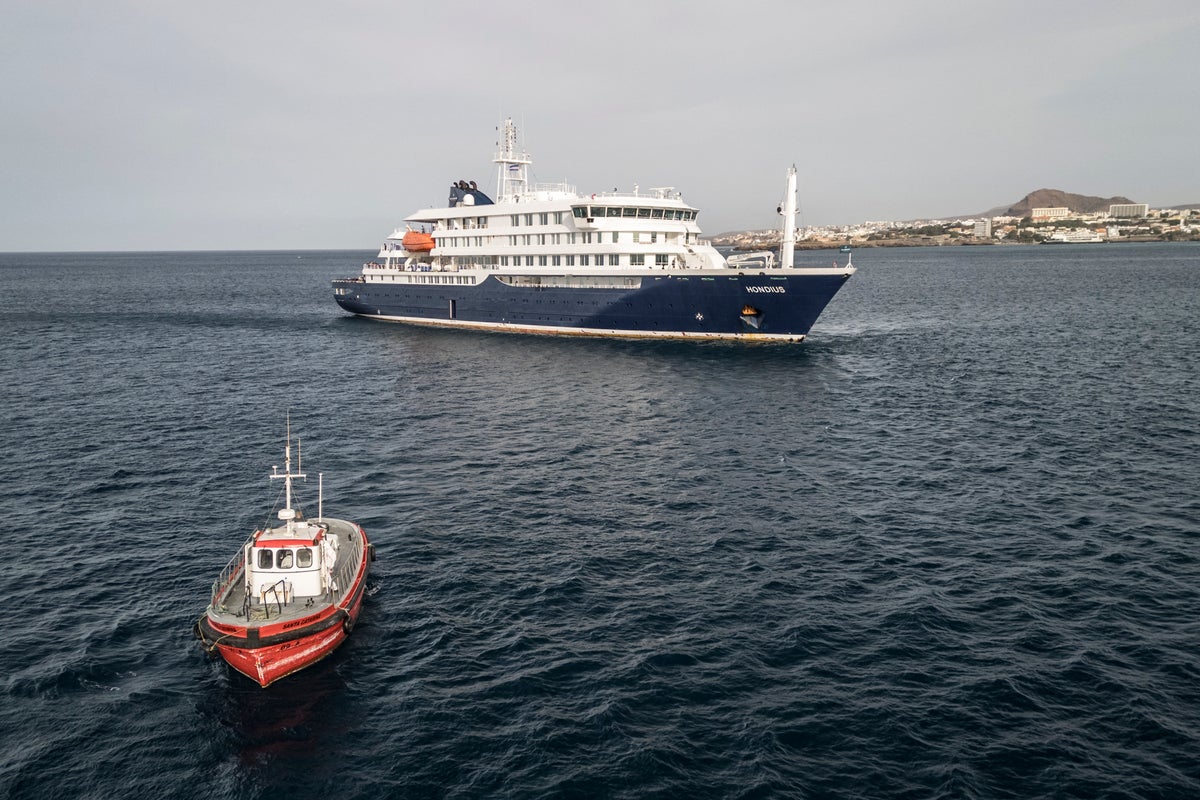
Fear sells better than physics. Right now, the media is feasting on the image of a plague ship—three patients being airlifted from a cruise liner to European hospitals because of a "hantavirus outbreak." It’s the perfect storm of claustrophobia and contagion. It’s also a total distortion of how biology actually works.
If you are reading the breathless reports about "evacuations" and "spreading infections," you are being fed a narrative that prioritizes clicks over clinical reality. We are treating a localized, non-contagious event like the opening scene of a zombie flick. The real story isn't the virus; it's our pathological inability to distinguish between a cluster and a catastrophe. For a deeper dive into this area, we recommend: this related article.
The Myth of the Plague Ship
Most people hear "outbreak" and think of the flu or a norovirus—something that jumps from person to person through a cough or a handshake. The "lazy consensus" in current reporting implies that everyone on that ship is walking into a trap.
Hantavirus doesn't work that way. To get more background on the matter, comprehensive coverage is available at Travel + Leisure.
In the Americas and Europe, the strains we worry about are almost exclusively zoonotic. You don't "catch" hantavirus from the guy in the cabin next to you. You get it from breathing in aerosolized droppings, urine, or saliva of infected rodents. Unless the passengers are engaging in high-stakes rodent husbandry in the engine room, there is zero risk of a ship-wide epidemic.
The three patients being evacuated aren't the first wave of an invasion. They are likely the only victims of a very specific, very localized exposure. Calling this an "outbreak" in the traditional sense is medically dishonest. It’s a localized exposure event. But "Three People Exposed to Dust in a Storage Locker" doesn't move the needle, does it?
Why Europe is the Wrong Focus
The media loves the "evacuated to Europe" angle because it implies a high-tech rescue from a biological wasteland. In reality, this is a logistical decision, not a clinical necessity born of a unique threat.
Most strains of hantavirus found in Europe—like the Puumala virus—cause Hemorrhagic Fever with Renal Syndrome (HFRS). While unpleasant, the mortality rate is often less than 1%. Compare that to the Hantavirus Pulmonary Syndrome (HPS) seen in the Americas, where the death rate can spike to 38%.
If these patients are being moved to Europe, they are moving toward the best specialized care for a condition that is statistically manageable. The drama of the airlift masks the mundane reality: this is just standard medical transport for people who need a ventilator or dialysis. By framing it as an "emergency evacuation," outlets are triggering a "Contagion" reflex in a public that is still traumatized by 2020.
The Cruise Industry’s Dirty Little Secret
I’ve spent years analyzing travel risk and corporate crisis management. Here is what the industry won't tell you: cruise ships are floating petri dishes, but not for the reasons you think.
The focus on hantavirus is a distraction from the actual, systemic failures of maritime hygiene. Hantavirus requires a rodent vector. If you have hantavirus on a ship, you have a pest control failure. Period. That is the story.
Instead of asking "How do we stop the spread?" the better question is "How did a modern, multi-billion dollar vessel end up with a rodent infestation significant enough to aerosolize viral loads?"
We are obsessing over the pathogen when we should be eviscerating the maintenance logs. By focusing on the "scary virus," the cruise line gets to play the role of the concerned host, facilitating evacuations and "cooperating with authorities." If the narrative shifted to "Ship infested with rats," their stock price would crater. The virus is a convenient scapegoat for a lack of basic sanitation.
Dismantling the "People Also Ask" Nonsense
When people search for hantavirus, they ask things like "Can I get it from a toilet seat?" or "How long is the incubation period?"
These questions are rooted in a fundamental misunderstanding of the virus’s stability. Hantaviruses are enveloped viruses. They are fragile. They hate sunlight. They hate detergents. They die quickly once they leave the host's body.
- Is it contagious? With the exception of the Andes virus in South America—which is a rare outlier—no. You cannot catch this from another passenger.
- Should I cancel my cruise? If you’re worried about hantavirus, no. If you’re worried about the cruise line’s inability to keep rats out of the ventilation system, maybe.
- Is this the next pandemic? Not even close. A virus that requires a specific animal vector and doesn't jump between humans is a terrible candidate for a pandemic. It’s a tragic accident, not a global threat.
The Logistics of Fear
Why the airlifts? Why the headlines?
Because the cruise industry lives and dies by "Bio-Security Theater." They need to show that they are doing something. Moving three people at great expense is a visual signal to the other 3,000 passengers that the "threat" is being removed.
It is a performance.
Imagine a scenario where the ship simply docked, the three people walked off into an ambulance, and the ship continued its itinerary after a deep clean of one specific storage area. There would be no news cycle. There would be no panic. But there would also be no "heroic" intervention for the cruise line to point to when the lawsuits eventually arrive.
The Professional Reality
In the world of epidemiology, hantavirus is a "background noise" virus. It’s always there, lurking in rural barns and dusty sheds. When it hits a cruise ship, it becomes "news" only because of the setting.
If these same three people had been cleaning out a garage in rural Germany and contracted the same strain, you wouldn't know their names. You wouldn't know the hospital they were in. The setting—the luxury, the ocean, the isolation—is what creates the "heat."
I have seen companies spend millions on "virus-killing" UV lights and high-tech misting systems while ignoring the fact that their supply chain is bringing in contaminated pallets from unvetted warehouses. We love the high-tech solution to the low-tech problem.
The Actionable Truth
Stop looking at the viral maps. Stop tracking the "spread." There is no spread.
If you are a traveler, your risk of hantavirus is statistically zero. Your risk of being trapped in a cycle of manufactured panic, however, is 100%.
The real danger on that ship isn't a virus that causes renal failure. It’s the institutional rot that allows a pest problem to become a medical crisis, followed by a PR strategy that uses "evacuations" to mask a failure in basic housekeeping.
If you want to be safe, don't worry about the air. Worry about the corners. Look for the signs of poor maintenance that the flashy headlines are designed to make you ignore.
The three patients in Europe are a tragedy of maintenance, not a herald of a plague. Treat the news accordingly. Stop participating in the theater of the "outbreak." The virus isn't the story. The rats—both the furry kind and the ones in the boardroom—are.
The industry wants you to be afraid of the "mysterious disease." They don't want you to ask why there are droppings in the ductwork.
Demand better maintenance, not more airlifts.