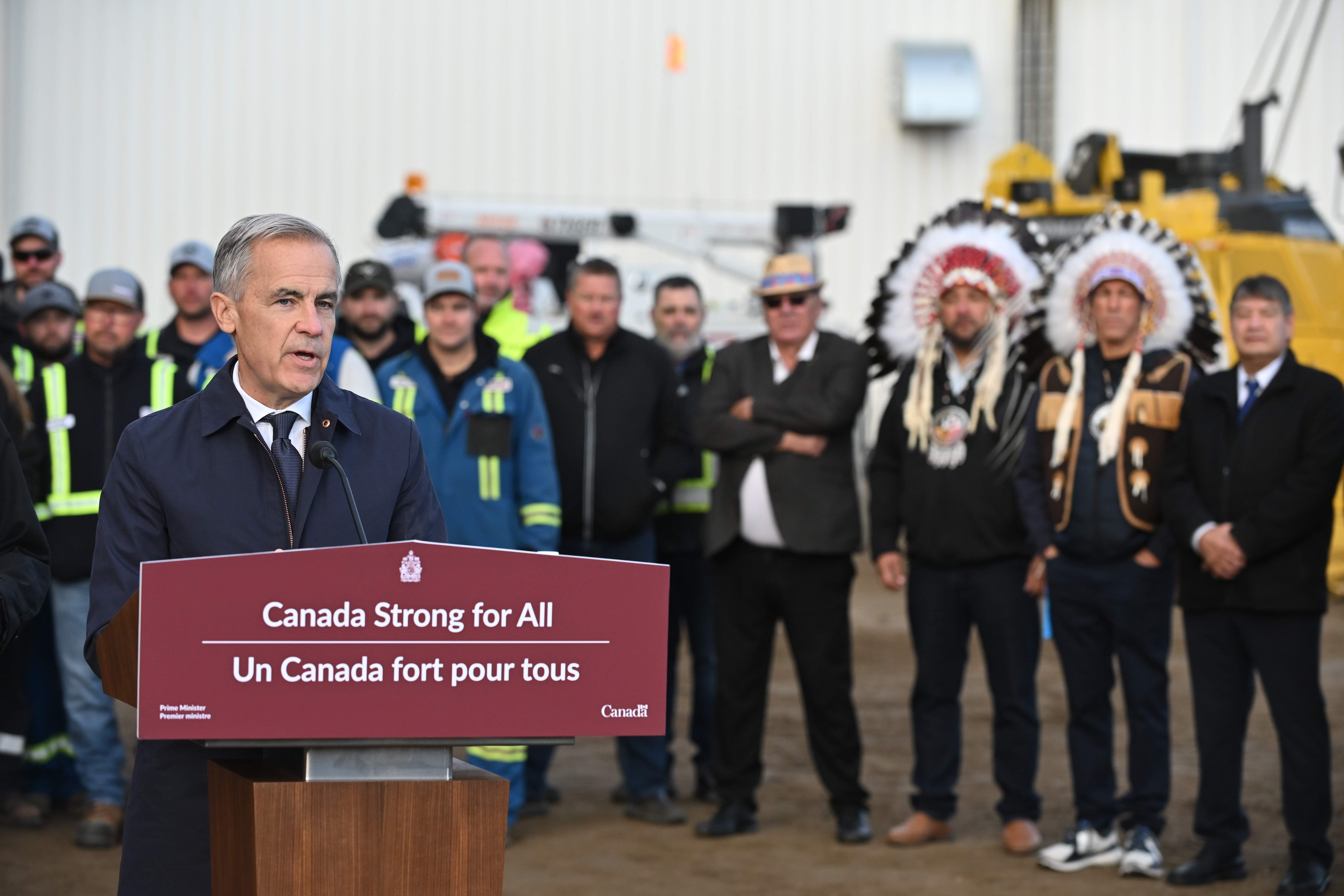
Handing Indigenous communities a compressed two-month window to consult on a massive infrastructure designation is a surefire way to trigger a courtroom showdown. When Prime Minister Mark Carney’s government slapped a "national interest" label on the proposed Pacific Link oil pipeline under the Building Canada Act, the clock started ticking.
The trouble is that two months isn't enough time to review complex engineering maps, let alone consult remote communities whose ancestral territories sit directly in the path of the steel. First Nations across Alberta and British Columbia aren't just sitting back. They are pushing back hard against a timeline that feels designed to bypass meaningful dialogue rather than encourage it.
The Pressure Cooker Timeline
Let's look at how we got here. Planning for the Pacific Link pipeline kicked into gear when provincial and federal officials began eyeing a direct route to move Alberta crude to Asian markets. By July, a formal submission landed on the desk of the Major Projects Office, backed by heavyweights like Trans Mountain Corporation and Pembina Pipeline.
Then came the designation on October 1, 2026. Ottawa granted a tight consultation window that originally looked even shorter before being nudged out slightly following fierce blowback. Even with that minor adjustment, community leaders pointed out an obvious flaw: the consultation period ran smack through summer harvesting, seasonal ceremonies, and a brutal wildfire season that forced emergency evacuations.
When your members are fleeing smoke or gathering essential food for the winter, reviewing pipeline routing data takes a back seat. Government officials argued that early outreach had been happening for months, but local leaders insisted those chats were high-level overviews, not formal consultations on a fast-tracked national designation.
Constitutional Duties Versus Fast Track Ambitions
Canada has clear legal obligations under Section 35 of the Constitution and the United Nations Declaration on the Rights of Indigenous Peoples (UNDRIP), which explicitly requires free, prior, and informed consent. Rushing a designation that alters the regulatory landscape fundamentally tests those commitments.
Legal challenges didn't take long to materialize. First Nations in Alberta, such as Cold Lake First Nation, filed applications for judicial review in Federal Court to overturn the national interest designation. Their argument is straightforward: you cannot truncate constitutionally mandated consultation just because you want to break ground by September 2027.
Other communities, including Métis leaders in the Wood Buffalo region, pointed out they hadn't even been approached in any meaningful way before the announcement. When major stakeholders are left out of the loop entirely, trust evaporates.
The Economic Promise Versus Community Risk
Proponents of the Pacific Link project love to talk about the numbers. We are looking at a project meant to boost national energy security, diversify export markets, and offer Indigenous groups up to ten percent equity ownership. On paper, shared equity sounds like a genuine step forward from old-school resource extraction models.
Yet equity ownership doesn't erase environmental anxiety. Communities along the proposed corridor worry about downstream impacts, habitat fragmentation, and long-term ecosystem health. They want answers on how toxic industrial waste is managed, not just sales pitches about global market access.
When the federal government tries to shave months off regulatory red tape to satisfy impatient investors, it usually ends up paying for it in courtrooms. Delays sparked by injunctions and constitutional challenges often dwarf the time saved by a rushed initial designation.
If Ottawa wants the Pacific Link pipeline to avoid the endless legal quagmires that doomed past energy corridors, the strategy has to shift. Real consultation requires patience, open doors, and timelines that respect the rhythms of the people whose land is on the line. Otherwise, this fast-tracked project will stay tied up in legal battles long before the first piece of steel ever touches the ground.