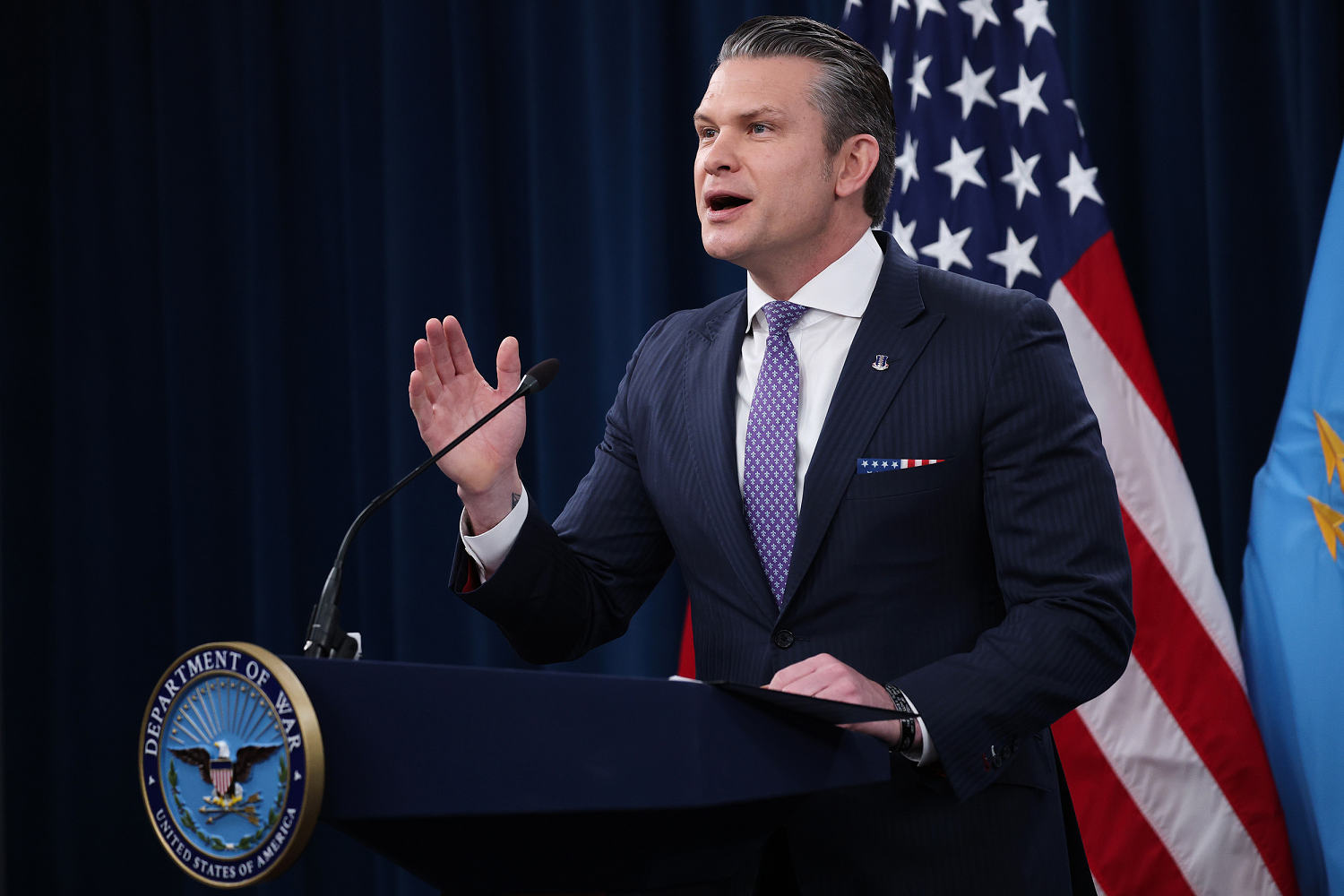
The intersection of executive authority and military promotion cycles has moved from historical anomaly to a systematic disruption of the Department of Defense (DoD) career architecture. When a Secretary of Defense intervenes to freeze or redirect the promotions of over a dozen senior officers, it is not merely a personnel dispute; it is a fundamental shift in the Civil-Military Friction Coefficient. This intervention targets the traditional "up-or-out" pipeline, replacing a standardized, peer-reviewed meritocracy with a centralized vetting model based on ideological or political alignment.
The Mechanics of the Promotion Pipeline
To understand the impact of Secretary Pete Hegseth’s interventions, one must first define the standard operating procedure for flag officer advancement. Under the Defense Officer Personnel Management Act (DOPM), promotions are governed by a multi-stage filtration process: Building on this idea, you can also read: Why the Green Party Victory in Manchester is a Disaster for Keir Starmer.
- The Selection Board: Peer groups and superiors evaluate a candidate based on the "Whole Person" concept, which quantifies operational success, leadership evaluations, and educational milestones.
- Service Secretary Review: The civilian head of a specific branch (Army, Navy, etc.) approves the board’s findings.
- Secretary of Defense Certification: The SECDEF validates the list, ensuring it aligns with broader National Defense Strategy (NDS) requirements.
- Presidential Nomination and Senate Confirmation: The final constitutional check.
Hegseth’s strategy involves inserting a "Freeze and Filter" mechanism at Stage 3. By withholding the certification of lists containing more than a dozen officers, the Secretary creates a structural bottleneck. This is not a passive delay but a deliberate exercise of Negative Authority—the power to prevent a system from functioning until specific, often non-standard, criteria are met.
The Three Pillars of the Intervention Strategy
The current disruption rests on three distinct logical pillars that seek to redefine what constitutes "fitness for command" at the O-7 to O-10 levels. Analysts at Reuters have also weighed in on this trend.
1. The Purge of "Woke" Institutionalism
The primary driver cited for these interventions is the removal of officers associated with Diversity, Equity, and Inclusion (DEI) initiatives. From a structural standpoint, this represents an attempt to de-institutionalize social engineering within the ranks. However, the data challenge lies in definition. Because "woke" is not a codified military term, the intervention relies on subjective audits of past public statements, social media activity, or departmental policies enacted under an officer’s previous command. This creates a Variable Criteria Risk, where officers are judged against a shifting set of expectations that were not in place when they earned their current rank.
2. Loyalty vs. Professional Competence
The intervention signals a transition toward a "Loyalty-First" hiring model. Historically, the U.S. military has prided itself on being an apolitical instrument of the state. By hand-picking or blocking specific senior leaders, the executive branch transforms the general officer corps into a political constituency. This creates a Moral Hazard for junior and mid-career officers. If advancement is perceived to be contingent on political signaling rather than tactical or strategic proficiency, the incentive structure for the entire force shifts toward political theater.
3. Bureaucratic Decentralization
By bypassing the recommendations of the Selection Boards, the Secretary is effectively decentralizing the expertise required to judge military talent while centralizing the decision-making power. The Selection Board consists of officers who have served with the candidates; the Secretary’s office consists of political appointees. This creates an Information Asymmetry where the decision-maker has less contextual data about a candidate's combat leadership but more power over their career trajectory than those who witnessed their performance.
The Cost Function of Delayed Promotions
Freezing the promotion of a dozen senior officers is not a victimless administrative act. It triggers a cascade of operational inefficiencies across the global command structure.
- The Command Vacuum: When a three-star general is not confirmed to lead a numbered fleet or a regional command, the position is filled by an "acting" officer. These interim leaders often lack the full legal authority and political capital to make long-term strategic investments or structural reforms.
- Talent Attrition (The Brain Drain): Senior officers are highly mobile in the private sector. When the path to promotion is blocked by political friction, the highest-performing individuals—those with the most external options—are the first to resign. This leaves a "residue" of officers who may be more willing to comply with political pressures simply to remain employed.
- Succession Planning Instability: Military leadership is built on a 24-to-36-month rotation. A delay of six months at the top ripples down through the O-6 (Colonel) and O-5 (Lt. Colonel) levels. If the O-9s don’t move, the O-8s can’t move, and the entire "Up-or-Out" system stalls.
Logical Framework: The SECDEF’s Legal Leverage
The Secretary of Defense derives the power to intervene from 10 U.S.C. § 618, which allows the SECDEF to return a board's report if they believe the board did not follow the law or the specific instructions provided by the Secretary.
Hegseth’s use of this statute is a high-leverage move. By claiming the previous instructions (which likely included DEI-related goals) were fundamentally flawed or illegal, he justifies the wholesale rejection of the results. This is a Systemic Reset. It treats the entire military promotion history of the last four years as a "corrupted database" that requires a manual override.
Quantifying the Institutional Damage
While the competitor's narrative focuses on the personalities involved, a data-driven analysis must focus on the Institutional Trust Index. Trust within the military operates in two directions:
- Vertical Trust: Confidence that superiors are promoted based on merit.
- Horizontal Trust: Confidence that peers are being held to the same standard.
Interventions at the secretarial level degrade both. If an officer perceives that their peer was promoted because they scrubbed their Twitter account of "controversial" topics rather than because they excelled at a National Training Center (NTC) rotation, horizontal trust collapses. If that same officer sees a qualified leader passed over for a political litmus test, vertical trust erodes.
The Bottleneck at the Senate
Even if the Secretary clears his "vetted" list, he faces the Legislative Wall. The Senate Armed Services Committee (SASC) holds the power of "Advice and Consent." If the Secretary’s interventions are viewed as overly partisan, the Senate can respond by holding the entire list indefinitely.
This creates a State of Perpetual Acting Command. In this scenario, the U.S. military is led by a "ghost cabinet" of officers who hold the rank but lack the permanent status to execute the National Defense Strategy effectively. This is particularly dangerous in high-tension theaters like the Indo-Pacific or Eastern Europe, where continuity of command is a deterrent in itself.
The Strategic Pivot: Rebuilding the Meritocratic Shield
To mitigate the damage of these interventions while addressing the underlying concerns about institutional drift, a three-step structural realignment is required:
- Codification of Merit Standards: The Department must move away from subjective "Instructions to the Board." Instead, it should utilize a rigid, points-based system for flag officer promotions that weights combat experience, joint-force operations, and strategic education above all else. This removes the "DEI" versus "Anti-Woke" debate by focusing strictly on lethality metrics.
- The Professionalized Board: The Selection Board should be insulated from political appointees. While the SECDEF should retain final veto power, that power should be constrained by a requirement for a formal, public justification for each individual rejection. Transparency is the only hedge against the perception of a "purge."
- The Cooling-Off Period: To prevent the "Political General" phenomenon, legislation should be introduced to increase the time an officer must be retired before seeking political office or highly partisan appointments. This reduces the incentive for active-duty officers to audition for future political roles through their current command decisions.
The current trajectory suggests that the military promotion system is being treated as a spoil of political war. If this continues, the U.S. military will cease to be a meritocratic organization and will instead function as a bloated bureaucracy of political appointees. The immediate strategic requirement is to decouple the administrative function of officer advancement from the ideological goals of the executive branch. Failure to do so will result in a force that is politically aligned but operationally hollow.
The final move in this power play is not the promotion of these dozen officers; it is the precedent set for the next thousand. If the Secretary succeeds in making personal loyalty the primary metric of the O-grade, the internal culture of the Pentagon will undergo a permanent, irreversible transformation toward a centralized command model that mirrors the very authoritarian systems it is designed to defeat. The structural integrity of the force depends on the failure of this intervention as a standardized practice.