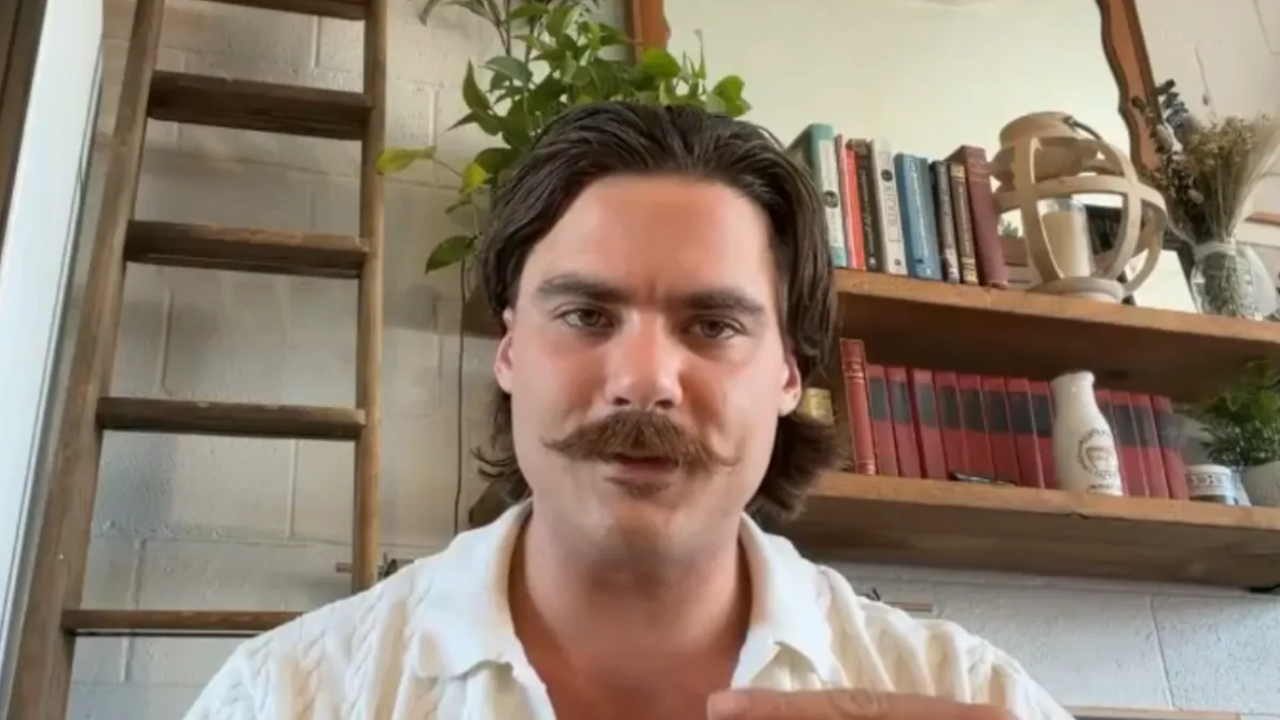
The shooting at the Trousdale County Courthouse involving content creator "ChudTheBuilder"—legal name Austin McCloud—serves as a terminal case study in the breakdown of the "First Amendment Audit" incentive structure. While mainstream reporting focuses on the visceral shock of a public shooting, a structural analysis reveals that this event was the logical conclusion of a high-risk content flywheel. The transition from verbal agitation to kinetic violence suggests that the digital attention economy has created a feedback loop where the threshold for "engagement" eventually exceeds the boundaries of legal self-preservation.
The Incentive Architecture of IRL Conflict
In-Real-Life (IRL) streaming functions on a direct-to-consumer monetization model that rewards high-variance outcomes. The primary driver of viewer retention in this niche is the "confrontation event." We can categorize the lifecycle of this content through three distinct layers of escalation: You might also find this related article interesting: The Desert and the Monsoon Meet in a Shared Lab.
- Passive Surveillance: The creator films public spaces or government buildings to provoke a baseline level of suspicion.
- Verbal Friction: The creator engages with security or law enforcement, using aggressive legal posturing to generate tension.
- The Kinetic Break: The moment where the interaction shifts from a debate over rights to a physical or life-threatening altercation.
McCloud’s presence at the courthouse was not an isolated incident but part of a systematic "audit" strategy. These auditors operate on the premise that constitutional rights are a product to be tested. However, the business model requires increasing levels of risk to maintain audience growth. When a creator's brand is built on being "unfiltered" or "confrontational," the cost of backing down becomes higher than the perceived risk of escalation.
Deconstructing the Trousdale County Incident
The specific facts of the May 2026 incident highlight a critical failure in de-escalation protocols. McCloud was reportedly filming at the courthouse—a high-security environment—leading to a confrontation with a local attorney and courthouse personnel. The transition from a filming dispute to McCloud discharging a firearm represents a total collapse of the "auditor" persona. As reported in latest coverage by BBC News, the effects are significant.
The legal repercussions are categorized by the state of Tennessee as Attempted First-Degree Murder. This charge implies more than a reflexive action; it suggests a level of intent or a reckless disregard for life that transcends the typical misdemeanor charges associated with "disturbing the peace" or "trespassing."
The Jurisdictional Pressure Point
Courthouses are unique legal environments. Unlike a public sidewalk, the interior of a courthouse often operates under specific administrative orders regarding photography and recording to protect judicial integrity and witness safety. When an IRL streamer ignores these specific local rules in favor of a broad interpretation of the First Amendment, they create a jurisdictional friction point. In this instance, that friction resulted in a physical struggle for the camera, which then served as the catalyst for the shooting.
The Cost Function of Digital Infamy
For a streamer like McCloud, the "return on investment" (ROI) for a video is measured in views, "bits," and subscriptions. However, the legal "cost function" is often ignored until it reaches a catastrophic level. We can map the liability of this incident across several vectors:
- Criminal Liability: The attempted murder charge carries a potential sentence of 15 to 25 years in Tennessee, depending on the defendant's prior record and the specific findings of the court regarding "premeditation."
- Platform De-platforming: Major streaming entities typically implement a "Permanent Suspension" policy for creators involved in violent felonies. This results in the immediate termination of the creator’s primary revenue stream and the loss of their digital infrastructure.
- Civil Exposure: Beyond criminal court, the victims of the shooting possess significant grounds for civil litigation. This includes damages for medical expenses, psychological trauma, and lost wages.
The mismatch between a $20 donation and a 20-year prison sentence indicates a fundamental flaw in the risk-assessment algorithms used by individual creators. They are optimizing for short-term engagement while ignoring long-tail existential risks.
Structural Failures in Platform Moderation
The existence of "ChudTheBuilder" and similar creators points to a systemic lag in platform moderation. Streaming platforms utilize "Reactive Moderation"—they wait for a violation of Terms of Service (ToS) to occur before intervening. This creates a "gray zone" where creators can skirt the edges of legality for months or years.
The algorithm rewards "High-Energy" content. Conflict is the most efficient way to generate high energy. Therefore, the algorithm unintentionally subsidizes the exact behaviors that lead to events like the Trousdale shooting. This creates a moral hazard: the platform profits from the build-up to the violence, while the creator bears 100% of the legal and physical risk when the situation turns kinetic.
The Psychological Feedback Loop of "Auditing"
There is a psychological component to this strategy known as "Main Character Syndrome," reinforced by the live chat. A streamer is never alone; they are accompanied by thousands of anonymous voices that often egg on the behavior. This creates a "Social Validation Anchor." If the streamer stops the confrontation, they lose the approval of the crowd.
In the case of McCloud, the presence of his audience likely acted as a barrier to rational exit strategies. When the attorney confronted him, the "logic of the stream" demanded he stand his ground rather than walk away. The firearm becomes the ultimate tool of "winning" the interaction in the eyes of a radicalized audience, even if it guarantees the destruction of the streamer's life outside the digital realm.
Categorization of the Legal Defense
Based on the available evidence, the defense strategy will likely center on Self-Defense (The Stand Your Ground Doctrine). Tennessee law allows individuals to use deadly force if they have a reasonable belief that such force is necessary to prevent imminent death or serious bodily injury.
However, the "Initial Aggressor" exception frequently complicates this defense. If the prosecution can prove that McCloud’s conduct—provocative filming and refusal to leave—initiated the conflict, his claim to self-defense is significantly weakened. Furthermore, the use of a firearm in response to a physical struggle over a camera is often viewed as "disproportionate force."
Evidence Analysis: The Digital Paper Trail
The most damning evidence in modern IRL crimes is the streamer’s own footage.
- Audio Cues: Statements made by the streamer prior to the shooting can establish premeditation or a "hostile intent."
- Visual Angles: High-definition footage captured by the streamer provides a frame-by-frame account of who initiated physical contact.
- Chat Logs: The "intent" of the streamer can be inferred by their interactions with the chat leading up to the event.
Regulatory and Legislative Forecast
This incident is likely to trigger a renewed push for "Buffer Zone" legislation or stricter "Courthouse Security Acts." We should anticipate a two-pronged shift in the regulatory environment:
Administrative Restrictions:
Judicial districts will likely move to ban all non-authorized recording devices within 50 feet of courthouse entrances, not just within the courtrooms themselves. This effectively kills the "entryway audit" as a viable content format.
Platform Liability:
There is a growing legal argument that platforms should be held partially liable if they continue to monetize "High-Risk/Pro-Violence" creators after repeated warnings. While Section 230 currently protects platforms, the sheer frequency of these IRL incidents may lead to a "Duty of Care" standard for live-streaming providers.
The shooting in Tennessee was not an accident; it was an inevitable outcome of a system that treats legal boundaries as content hurdles. As the distinction between digital performance and physical reality continues to blur, the "Auditor" subculture will face an existential choice: professionalize into legitimate journalism or be systematically dismantled by the very legal systems they claim to test.
Creators must pivot immediately toward "Standardized Documentation" and away from "Confrontational Agitation." If the goal is truly to "document" the law, it can be done without the high-variance conflict that leads to attempted murder charges. Failure to adapt will result in the total "blacklisting" of the IRL genre by payment processors and hosting providers alike.