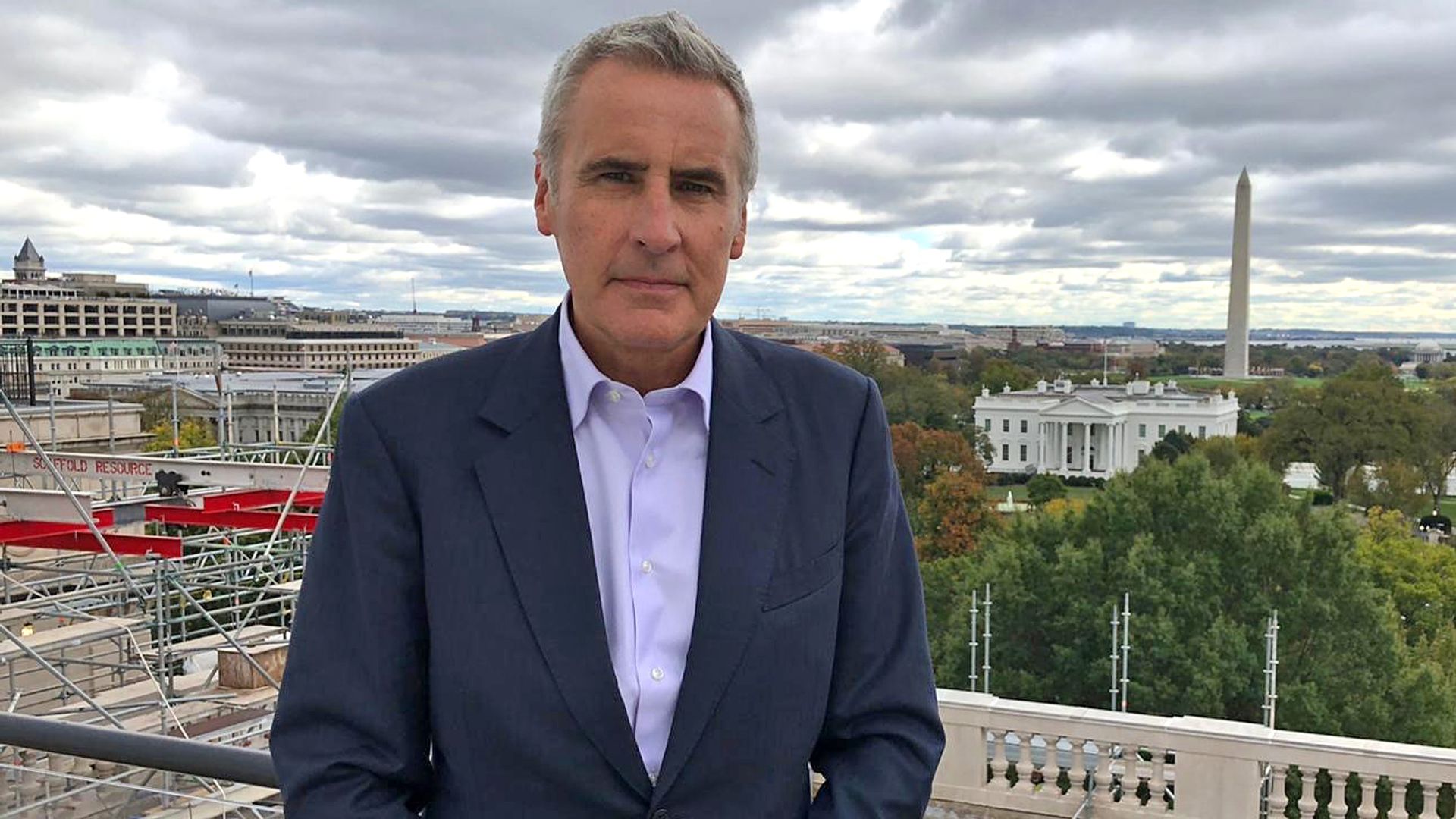
When colleagues from across rival British newsrooms gather in one church, you know the person being honored wasn't just another face on a screen. At St Bride's Church on Fleet Street in October 2026, friends, journalists, and former co-anchors came together to remember Dermot Murnaghan, who died in July 2026 at age 68 following a battle with stage four prostate cancer.
Susanna Reid, Beth Rigby, Mark Austin, Jacquie Beltrao, Anna Jones, and Adam Boulton were among those paying their respects. Normally, names like BBC Breakfast, ITV News, and Sky News sit on opposite sides of a ratings war. Here, they stood in the same pews. That tells you a lot about how Murnaghan operated over four decades in British broadcasting. If you enjoyed this article, you might want to check out: this related article.
Most coverage of the memorial service sticks to a neat checklist of who showed up and a quick summary of his CV. Fair enough—breaking news reports have a job to do. Yet reducing a 40-year career and a fiercely public health push to a list of attendees misses the bigger story. Murnaghan showed what calm authority looks like on live television, and in his final year he used his voice to push men toward earlier prostate cancer checks.
Why His Memorial Service Felt Different From Typical TV Tributes
Media memorials can easily turn into back-slapping nostalgia fests where everyone talks about "the old days" and ignores what made the person tough to beat on air. People who watched Murnaghan closely know he wasn't just a pleasant smile reading an autocue. Behind the dapper suits and easy manner sat a sharp interrogator who could hold a politician's feet to the fire without turning the studio into a shouting match. For another angle on this story, refer to the latest coverage from Al Jazeera.
St Bride's Church has long been known as the journalists' church in London, which made the setting feel fitting for someone who moved comfortably across serious hard news, political grilling, and daytime quiz hosting. Susanna Reid captured that balance well when she noted that Murnaghan was a serious journalist who never took himself too seriously. Viewers felt that honesty. You don't survive at the top of Channel 4, ITV, the BBC, and Sky News from the late 1980s through the 2020s unless audiences trust you when the breaking news banner flashes red.
There's also a practical lesson here for anyone watching modern TV news. Loudness gets clipped for social media, sure. Calm clarity keeps people watching when real events unfold. During ITV's marathon coverage after the death of Diana, Princess of Wales in 1997, Murnaghan stayed on screen for hours. Years later, he anchored major moments at Sky News until stepping away in 2023. Watching a memorial for someone like that makes you notice how rare steady anchor presence has become.
A Career Spanning Every Major British Broadcaster
If you grew up watching British television between 1989 and 2023, you almost certainly bumped into Murnaghan somewhere on the dial. He started presenting on Channel 4, moving from business segments and breakfast television to become one of the channel's lead faces. From there, he stepped into major roles at ITV—hosting the Lunchtime News, Evening News, and News at Ten—before joining BBC Breakfast in 2002.
In 2007, he made the jump to Sky News, spending roughly fifteen years as a lead anchor. Along the way, he hosted Eggheads on BBC Two from 2003 to 2014, which gave him a completely different kind of warmth in living rooms across the country. Plenty of hard-news anchors treat quiz shows or lighter formats as beneath them. Murnaghan didn't. Honestly, that willingness to cross formats made him more relatable, not less credible.
What stood out most across Murnaghan's run wasn't a single catchphrase or viral clip. It was range—moving from heavy political interviews to Eggheads and true-crime series without losing his footing.
His final years didn't slow down the way people might expect after leaving Sky News in 2023. Even after his stage four prostate cancer diagnosis became public in 2025, he launched podcasts, took part in Chris Hoy's Tour de 4 charity bike ride in September 2025, and kept speaking openly about living with the illness. That kind of grit isn't performative. You can't fake pedaling through a charity ride while undergoing serious treatment.
What People Miss About His Prostate Cancer Advocacy
A lot of celebrity health campaigns sound polished and vague. Murnaghan's felt blunt because he didn't sugarcoat his own mistake. Speaking on BBC Breakfast in November 2025, he admitted he had put off getting checked because he felt fine. That single admission hits a nerve with millions of men who treat feeling normal as proof that nothing is wrong inside.
Prostate Cancer UK noted after his death how much his advocacy meant to men across the country and the charity's work. Why does a broadcaster admitting he delayed testing matter so much? Because fear and denial keep plenty of men out of the doctor's office until symptoms force their hand. Hearing a familiar, composed journalist say, "Don't wait just because you feel fine," cuts straight through stigma.
Of course, cancer screening and diagnosis aren't one-size-fits-all. Medical guidelines on PSA blood tests and follow-up checks depend on age, family history, ethnicity, and personal risk factors, and doctors weigh benefits against potential over-testing. I'm not a clinician, and no headline can replace a proper conversation with a GP. Still, Murnaghan's openness gave men a clear reason to ask their doctor where they stand rather than guessing.
Common Misconceptions Around His Later Life and Legacy
Because tributes around a memorial service naturally focus on highlights, a few misunderstandings tend to pop up online. Let's clear a couple of them up:
- He retired completely in 2023: Leaving his long-running Sky News anchor role in 2023 ended a major chapter, yet he stayed active afterward through podcasts, guest spots, charity cycling, and advocacy.
- He only ever did serious politics: Political grilling was a huge part of his reputation, especially at Sky News, but his career also included business journalism, Eggheads, and true-crime programs like Killer Britain.
- His cancer awareness work was a late-career PR move: By the time he spoke publicly about his diagnosis and urged men at higher risk to get tested, he had already lived decades in the spotlight. His advocacy came out of personal experience, not career building.
When you look closely at those details, the picture becomes much richer. He wasn't a static figure frozen in a single decade of television. He kept adapting—from studio newsrooms to podcasts and public health conversations—right up until his death in July 2026.
Practical Steps You Can Take Right Now
Reading about a broadcaster's memorial service can stay just a passing thought, or it can prompt one useful action today. If you want to honor the spirit of Murnaghan's late-life advocacy and good media habits, start with these concrete steps:
- Book a straightforward health check if you've been putting it off. If you're a man—especially if you're over 50, Black, or have a family history of prostate issues—ask a GP about your personal risk and screening options even if you feel completely well.
- Support or share credible resources from Prostate Cancer UK. If someone in your family brushes off checkups, pass along practical information from Prostate Cancer UK rather than lecturing them.
- Pay attention to how you consume breaking news. Notice which journalists and outlets explain events calmly with evidence versus which ones manufacture panic for clicks, and build your daily habits around clarity.
Dermot Murnaghan's memorial at St Bride's brought together people from across the industry because he earned respect the slow way—by showing up prepared, treating viewers like adults, and using his platform for something bigger than himself when it counted most.