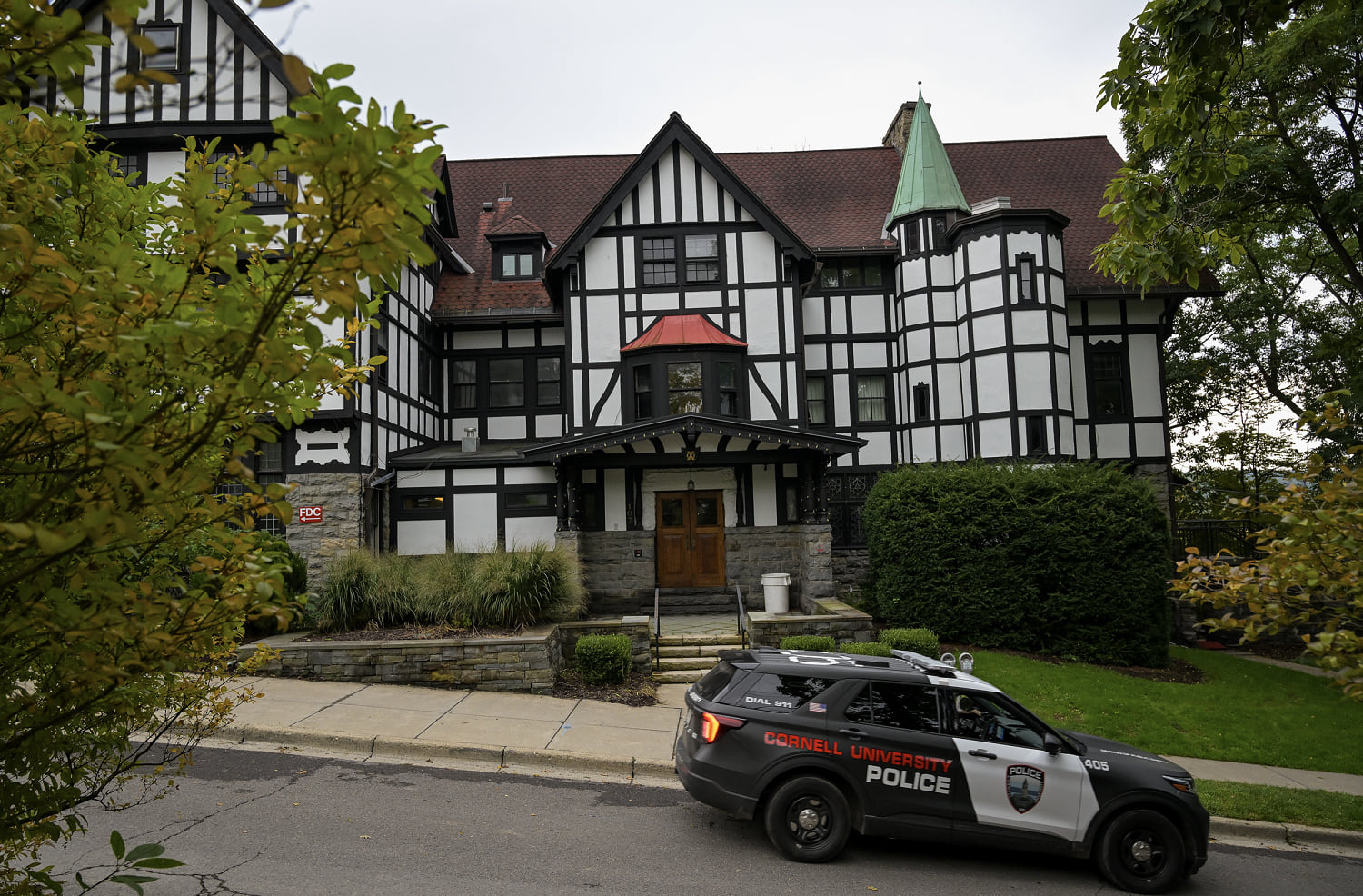
Cornell University hired a former federal prosecutor who previously worked on the Sean "Diddy" Combs investigation to lead an independent review into an alleged campus sexual assault. The move signals a calculated institutional effort to project maximum legal credibility during a high-stakes reputational crisis. Rather than relying on internal Title IX administrators, universities facing intense public scrutiny increasingly recruit high-profile outside litigators to insulate their boards from liability and restore trust.
The appointment happens against a familiar backdrop in higher education. Campus sexual assault allegations rarely stay confined to university disciplinary committees anymore. They spill immediately into local police blotters, national media cycles, and federal civil rights complaints.
When a university brings in a heavyweight from the Southern District of New York or a comparable federal office, it is sending two distinct messages. To students, parents, and alumni, the message is that no stone will be left unturned. To potential plaintiffs, regulators, and insurers, the message is that the institution has fortified its legal perimeter.
The Anatomy of the Crisis Hire
Universities do not hire celebrity prosecutors by accident. In the corporate and academic crises I have covered over the last twenty years, the retention of an outside investigator with a recognizable name from a major federal case serves a specific strategic function. It shifts the narrative away from institutional failure and toward institutional rigor.
The "Diddy" tag attached to the prosecutor's resume carries immediate cultural weight. It implies familiarity with complex power dynamics, reluctant witnesses, digital evidence trails, and intense media pressure. For a university administration trying to prove it takes campus safety seriously, that association acts as instant shorthand for toughness.
Yet seasoned legal observers know that prosecuting a federal racketeering and sex trafficking case is fundamentally different from running a university-commissioned internal review.
Criminal Prosecution vs. Institutional Fact-Finding
A federal prosecutor wields the power of a grand jury. They can issue subpoenas, compel testimony under threat of perjury, grant immunity, and execute search warrants. Their mandate is to prove criminal guilt beyond a reasonable doubt in a court of law.
An outside investigator hired by a university has none of those tools.
- No subpoena power: A private investigator cannot force off-campus witnesses, former students, or unaffiliated third parties to sit for an interview or hand over text messages.
- Voluntary cooperation: Participation relies entirely on institutional pressure—such as requiring current students and employees to cooperate under campus codes of conduct—or the goodwill of witnesses.
- Different evidentiary standards: University proceedings typically operate under the preponderance of the evidence standard (more likely than not), rather than the criminal bar.
- Client privilege boundaries: Depending on how the engagement letter is structured, the investigation's findings may be shielded by attorney-client privilege until the university decides what, if anything, to release publicly.
That last point is where most campus investigations lose the trust of the student body. When a university hires a law firm to investigate itself, the university is the client. The investigator owes their professional duty to the institution paying the bill, not to the complainant or the campus community.
Why Internal Title IX Offices Get Sidelined
To understand why Cornell looked outside its own walls, you have to look at how broken the internal campus adjudication system has become.
Over the past decade, federal rules governing Title IX—the 1972 civil rights law prohibiting sex-based discrimination in education—have swung wildly from one presidential administration to the next. Every regulatory overhaul forces universities to rewrite their handbooks, retrain their staff, and alter how hearings are conducted.
Internal Title IX coordinators are caught in an impossible bind. If they move too aggressively against an accused student, they face due process lawsuits from families who claim the university ruined a young person's life without a fair hearing. Hundreds of such lawsuits have succeeded in federal courts over the last ten years, costing universities millions in settlements and legal fees.
Conversely, if internal administrators move too cautiously or fail to act on warning signs, they face federal Department of Education investigations, student protests, and devastating negligence claims.
The Optics of Independence
When an incident involves high-profile campus organizations, athletics, or alleged systemic failures by campus police, internal investigators carry too much baggage. Students assume an employee who gets their paycheck from the university will protect the university's brand first.
Bringing in an outsider removes the immediate appearance of a conflict of interest. It buys the administration time. While the investigation is ongoing, university spokespeople can deflect every tough question with a standard line: We have retained an independent expert to conduct a thorough review, and we will not comment until that work is complete.
By the time the report is finished—often months later, sometimes after a semester break when campus momentum has faded—the immediate heat has usually dissipated.
What Makes a Campus Investigation Actually Credible
Hiring a former federal prosecutor is a strong opening move, but pedigree alone does not guarantee a credible outcome. History is littered with expensive, blue-ribbon university investigations that ended up gathering dust or sparking fresh outrage because the process was flawed from the start.
If an outside review is going to withstand scrutiny from both legal experts and campus activists, several structural conditions have to be met.
1. Unrestricted Scope
The engagement letter dictates everything. If the university limits the investigator to looking only at a single night's events, the probe will miss the broader cultural or administrative failures that allowed the incident to happen. A credible mandate allows the investigator to follow the facts wherever they lead, including into the offices of senior administrators who may have ignored prior complaints.
2. Full Publication Commitment
The single biggest red flag in any institutional investigation is the "executive summary." Universities frequently pay law firms hundreds of thousands of dollars for a comprehensive report, only to release a sanitized, ten-page summary written by public relations consultants. True transparency requires publishing the full report, redacted only to protect the privacy of victims and witnesses.
3. Separation from Defense Counsel
The law firm conducting the independent fact-finding cannot be the same firm defending the university against potential civil lawsuits. Those two roles are fundamentally incompatible. Defense lawyers are obligated to minimize the university's legal exposure; independent investigators are supposed to uncover the unvarnished truth, even if that truth creates massive liability for the school.
The Parallel Track Problem
One of the trickiest realities in any alleged campus sexual assault is the collision between the university's review and the criminal justice system.
Local police and district attorneys operate on their own timelines. When a criminal investigation is active, law enforcement routinely asks university investigators to pause their interviews. Prosecutors worry that multiple interviews by campus investigators will contaminate witness memories, create inconsistent statements, or tip off suspects before police can secure warrants.
For the former Diddy prosecutor stepping into the Cornell matter, navigating this friction will be familiar territory. Federal prosecutors constantly manage parallel proceedings involving civil regulators, internal corporate monitors, and criminal grand juries.
Knowing how to coordinate with local law enforcement without compromising the integrity of the criminal case is one area where a former federal prosecutor offers genuine operational value over a standard campus administrator. They speak the same language as the local district attorney. They understand chain-of-custody rules for digital evidence, and they know how to structure interviews so they do not inadvertently hand a defense attorney impeachment material for a future criminal trial.
The Financial and Reputational Stakes for Ivy League Institutions
Elite universities operate like multi-billion-dollar corporations with intense brand sensitivity. For an Ivy League institution like Cornell, campus safety statistics and crisis management directly affect fundraising, faculty recruitment, and undergraduate applications.
When a scandal erupts, the board of trustees steps in. Trustees are typically corporate executives, financiers, and senior lawyers. In the private sector, when a major compliance failure occurs, the board hires a former federal prosecutor from a white-shoe law firm to conduct an internal investigation. Cornell's decision is simply the corporate crisis playbook applied to higher education.
The price tag for these engagements is steep. Senior partners at major litigation firms routinely bill upwards of $1,500 to $2,000 per hour, supported by teams of associates and forensic specialists. A thorough multi-month campus investigation easily runs into the seven figures.
Universities pay those fees willingly because the alternative—loss of institutional trust, federal sanctions, or a botched internal disciplinary hearing that triggers a massive lawsuit—costs far more.
What to Watch as the Investigation Unfolds
The headline about a former Diddy prosecutor taking the reins at Cornell grabs attention, but the real test lies in the mechanics of the probe over the coming months.
Watch whether the university discloses the exact terms of the prosecutor's mandate. Pay close attention to whether current students and Greek life or campus organizations are compelled to cooperate, and whether the university commits upfront to releasing the complete findings rather than a curated summary.
A high-powered resume can buy a university credibility on day one, but only unredacted facts and structural accountability will keep it when the final report lands on the president's desk.