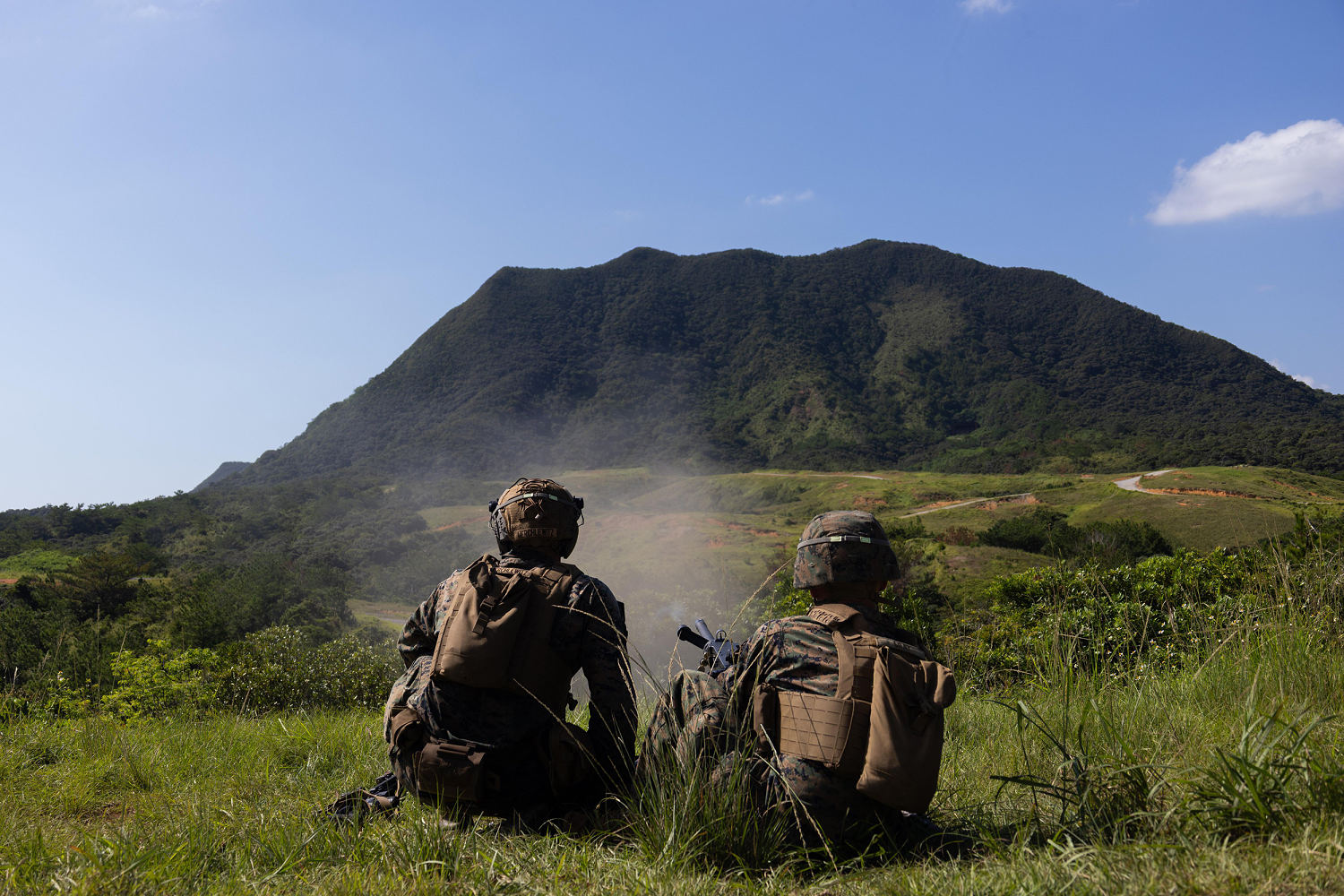
When a U.S. Marine dies during a training exercise in Japan, the official press release rarely exceeds four paragraphs. It offers the rank, the unit, a vague reference to a "non-combat incident," and the standard assurance that the matter is under investigation while next of kin are notified.
Those sterile announcements mask a recurring, high-stakes reality across the Indo-Pacific. Thousands of miles from the American mainland, tens of thousands of U.S. service members operate daily inside one of the most densely populated, geographically unforgiving, and geopolitically sensitive training environments on earth. Understanding why these fatalities keep happening requires looking past the boilerplate military statements and examining the brutal intersection of operational tempo, cramped geography, aging equipment, and regional deterrence.
The Anatomy of a Press Release
Pentagon communications protocols are designed to protect privacy and preserve operational security, yet they frequently leave the public with more questions than answers. When a Marine dies in Okinawa, mainland Japan, or the surrounding waters, the initial dispatch from the III Marine Expeditionary Force (III MEF) follows a strict, predictable formula.
Names are withheld for 24 hours after primary next-of-kin notification. The cause of death is omitted pending a formal command investigation or an inquiry by the Naval Criminal Investigative Service (NCIS). To an outside observer, a fatal training accident can look like a sudden, isolated fluke.
It rarely is.
Behind every terse notification lies a complex chain of human factors, environmental hazards, and institutional pressures. Over the past decade, congressional watchdogs, the Government Accountability Office (GAO), and internal Pentagon reviews have repeatedly flagged non-combat training fatalities as a persistent crisis across the U.S. armed forces. In several recent fiscal years, more American service members died in training accidents than in active combat zones. The Indo-Pacific theater—anchored by the Marine Corps' heavy footprint in Japan—bears a disproportionate share of that risk.
Why Japan Poses Unique Operational Hazards
To understand the danger, look at a map of Okinawa.
The island is roughly 70 miles long and averages just seven miles wide. It hosts roughly 1.4 million Japanese citizens alongside the vast majority of the 54,000 U.S. troops stationed in Japan. Unlike the sprawling desert ranges of Twentynine Palms in California or the vast expanses of Camp Lejeune in North Carolina, training areas in Japan are tightly hemmed in by civilian towns, rugged subtropical jungle, steep limestone ridges, and treacherous open ocean.
Cramped Ranges and Urban Encroachment
Pilots flying out of Marine Corps Air Station Futenma or Kadena Air Base execute complex maneuvers within minutes of densely packed residential neighborhoods. Ground units conducting live-fire exercises at the Central Training Area or Camp Hansen operate in narrow corridors where a slight miscalculation in trajectory or navigation carries immediate consequences.
This lack of physical margin forces units to compress complex, multi-domain drills into tighter footprints. When infantry, artillery, and aviation assets train together in confined spaces, the cognitive load on junior leaders and operators spikes dramatically.
Unforgiving Terrain and Weather
Japan’s geography amplifies standard military risks. Okinawa sits squarely in "Typhoon Alley," subject to violent, rapidly shifting weather systems, blinding squalls, and unpredictable sea states. Amphibious operations—the core specialty of the Marine Corps—become exponentially more hazardous when sudden swells batter Assault Amphibious Vehicles (AAVs) or rigid-hull inflatable boats.
Further north on mainland Japan, at facilities like the Combined Arms Training Center Camp Fuji, Marines face steep volcanic slopes, dense fog, and extreme cold-weather conditions during winter rotations. Hypothermia, vehicle rollovers on narrow mountain roads, and sudden flash floods are constant, lethal threats that demand relentless vigilance.
The Hidden Toll of Operational Tempo
Geography only explains half the equation. The other half is pace.
As strategic competition in the Western Pacific has intensified, the U.S. military has shifted away from two decades of counterinsurgency warfare in the Middle East and pivoted toward high-end, peer-level deterrence. For the Marine Corps, this shift is codified in Force Design, a sweeping modernization effort aimed at turning Marines into agile, distributed reconnaissance and strike teams capable of operating inside contested maritime zones.
That strategic pivot requires relentless practice.
Units deployed to Japan under the Unit Deployment Program (UDP) typically rotate in for six-month stints. Because their time in theater is short, commanders face immense pressure to maximize every single training day. Schedules are packed back-to-back with amphibious landings, jungle warfare courses, live-fire assaults, and bilateral exercises with the Japan Ground Self-Defense Force (JGSDF).
When operational tempo climbs, sleep deprivation and maintenance backlogs follow. A hypothetical example illustrates how quickly these pressures compound: imagine a motor transport section running convoy operations through mountain passes on four hours of sleep after spending the previous night troubleshooting hydraulic leaks on aging tactical vehicles. Neither fatigue nor a worn brake line alone might cause a tragedy. Combined on a wet, winding road at 0300 hours, they become fatal.
The Maintenance and Modernization Bottleneck
Military hardware does not age gracefully in saltwater environments. Salt spray, high humidity, and constant deployment cycles corrode airframes, electronics, and amphibious hulls faster in the Pacific than almost anywhere else.
In recent years, high-profile crashes involving the MV-22 Osprey tiltrotor aircraft, F/A-18 Hornets, and aging amphibious assault vehicles have drawn intense scrutiny from both Washington and Tokyo. Following fatal incidents—such as the 2020 AAV sinking off California that killed eight Marines and a sailor, or the 2023 Osprey crash off Yakushima Island in southern Japan that killed eight Air Force Special Operations personnel—investigations routinely uncover a troubling pattern.
Equipment failures rarely stem from a single broken part. Instead, they emerge from systemic friction:
- Spare parts shortages that force mechanics to cannibalize grounded aircraft or vehicles to keep others mission-ready.
- Compressed maintenance windows driven by demanding exercise schedules.
- Skill dilution, where experienced non-commissioned officers rotate out of units faster than junior technicians can master complex diagnostic procedures.
When aviation and ground crews are stretched thin, safety margins erode quietly until a catastrophic failure occurs mid-exercise.
Diplomatic Shockwaves in Tokyo and Okinawa
Every time a U.S. service member dies in a training incident in Japan, the fallout extends far beyond the gates of the military base. It immediately becomes a diplomatic flashpoint.
For decades, the U.S.-Japan security alliance has rested on a delicate political bargain. Tokyo relies on the American nuclear umbrella and forward-deployed forces for regional security, while local communities—particularly in Okinawa—shoulder the noise, environmental impact, and safety risks of hosting foreign troops.
When an aircraft crashes near a school, a flare sparks a brushfire, or a service member dies during a maneuver, local governors and anti-base activists demand immediate answers, flight groundings, and stricter oversight. Under the U.S.-Japan Status of Forces Agreement (SOFA), the American military retains primary jurisdiction over on-duty incidents and internal investigations. While legally standard for overseas deployments, that arrangement often fuels frustration among Japanese officials who feel shut out of safety reviews affecting their own soil and airspace.
Pentagon leaders must therefore walk a tightrope. They have to maintain peak combat readiness to deter regional adversaries while simultaneously proving to an anxious host nation that American forces can operate safely without endangering local civilians or destroying their own personnel in the process.
Inside the Investigation Process
Once the initial press release goes out, a rigid, methodical apparatus kicks into motion behind closed doors. Understanding how the military investigates its own deaths reveals why final answers often take six months to a year to reach the public.
First comes a Command Investigation, governed by the Manual of the Judge Advocate General (JAGMAN). A senior officer outside the immediate chain of command is appointed to gather physical evidence, review maintenance logs, inspect weather data, and interview witnesses. The goal is strictly fact-finding: establishing what happened, why it happened, and whether existing rules were violated.
Simultaneously, if the death involves an aircraft or major tactical vehicle, a separate Safety Investigation Board (SIB) convenes. SIB proceedings operate under strict confidentiality. Witnesses are granted immunity from disciplinary action so they will speak with total candor about shortcuts, fatigue, or leadership failures without fear of court-martial. Because of those legal protections, SIB reports are heavily redacted or withheld from public release, leaving journalists and families reliant on the parallel JAGMAN report for official accountability.
If criminal negligence or foul play is suspected at any stage, NCIS agents take over the scene, treating the training ground like a homicide investigation.
The Structural Fixes That Remain Unfinished
Following scathing GAO reports and congressional hearings, the Pentagon has instituted a series of reforms aimed at curbing training deaths. Grounding fleets for safety stand-downs, mandating minimum crew rest hours, overhauling amphibious vehicle protocols, and installing better rollover protection on tactical trucks have all saved lives.
Yet the fundamental tension remains unresolved. You cannot simulate the chaos of modern warfare without introducing real danger. Live ammunition is lethal; flying low over open water at night in bad weather is inherently perilous; moving heavy armor through dense terrain carries irreducible risk.
Eliminating every hazard would produce a peacetime military incapable of surviving actual combat. Conversely, pushing troops past human and mechanical limits during routine rotations bleeds the force of the very warfighters it is trying to prepare. Until military planners reconcile the relentless demands of Indo-Pacific deterrence with the physical limits of cramped bases, tired crews, and overworked machinery, those brief, four-paragraph press releases from Japan will keep arriving.