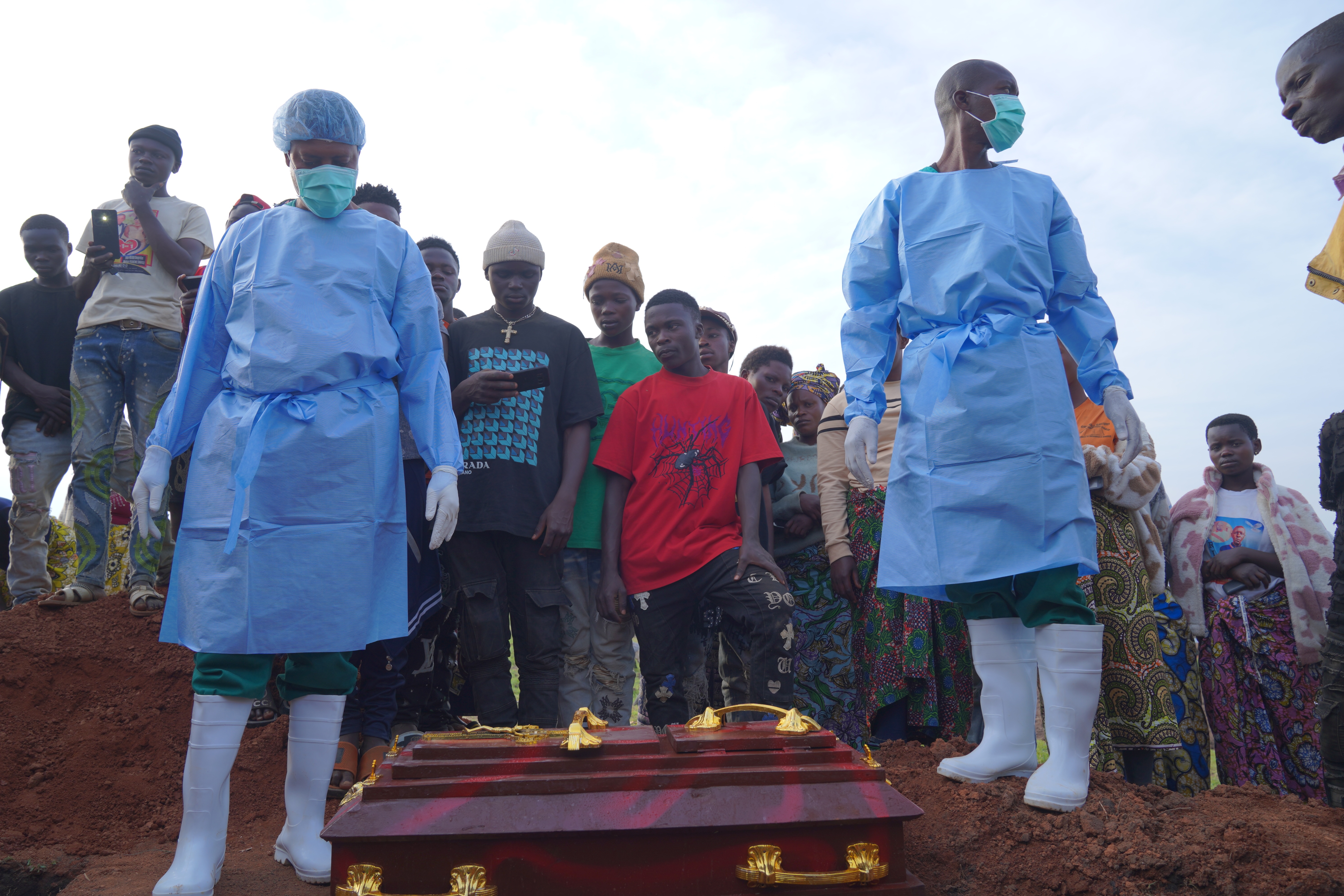
Every time an outbreak crosses a threshold, the humanitarian industrial complex spins up the exact same panic machine. The headlines scream about overwhelmed health infrastructure, broken supply chains, and international indifference. We get endless hand-wringing about how the system is failing, how communities are resisting, and how funding is perpetually too little, too late.
It is a comfortable narrative. It allows distant observers to point fingers at logistical bottlenecks and bureaucratic inertia. It is also entirely wrong.
When case numbers spike, the reflex is to throw more planes, more tents, and more foreign experts at the geography of the crisis. I have watched organizations burn millions shipping heavy gear into regions where roads dissolve into mud during the rainy season, wondering why local compliance refuses to match their spreadsheet projections. The premise is flawed from the first step. You cannot solve a structural behavioral crisis with airdropped logistics.
The Myth of the Broken Response
The lazy consensus says that thousands of cases mean the intervention model broke down. The truth is much harsher. The model is working precisely as designed, and that design is fundamentally obsolete.
For decades, international health response has operated on a top-down, command-and-control paradigm imported from militarized disaster relief. Men in biohazard suits descend from helicopters, cordon off zones, and bark protocols dictated from Geneva or Atlanta. They treat affected populations as passive recipients of care rather than active agents of survival.
When locals hide their sick family members, the experts call it fear or misinformation. It is neither. It is rational self-preservation in the face of an institutional apparatus that historically alienates the dying from their families.
Let us look at the mechanics of containment. Pathogens like Zaire ebolavirus do not spread because people lack pamphlets; they spread through deeply embedded cultural practices around caregiving and mourning. When you criminalize touching a deceased loved one without offering a culturally viable alternative, you drive transmission underground. The explosion of numbers is not a failure of detection. It is the direct consequence of alienating the exact communities whose cooperation you need to break the chain of transmission.
What Real Containment Looks Like
If you want to stop an epidemic, stop treating it like an engineering problem. It is an anthropological puzzle.
Look at how localized task forces in previous equatorial outbreaks actually snuffed out transmission. They did not rely on central hospitals staffed by foreign doctors wearing moonsuits. They empowered local matriarchs, traditional healers, and trusted youth leaders to manage triage within their own neighborhoods.
Imagine a scenario where every dollar spent on chartering cargo planes for high-tech treatment centers was instead funneled directly into local, community-led surveillance networks.
Trust is the only vaccine that matters in the early phases of an outbreak, and trust cannot be airlifted in a cargo hold. It is built by eating local food, speaking the regional dialects without an interpreter, and allowing communities to bury their dead with dignity through modified, safe rituals rather than cold, sterile body bags handled by strangers.
The heavy hitters in epidemiology know this. Field veterans who have survived multiple deployments will tell you off the record that community buy-in accounts for ninety percent of containment success. Yet, institutional funding models reward visible spectacle. Giant treatment tents look great on donor reports. Quiet, grueling community mobilization does not.
The Cost of Our Addiction to Crisis
There is a dark incentive structure keeping the old machinery alive. Outbreak management has become an industry unto itself, complete with career tracks, emergency grants, and institutional prestige tied to emergency response rather than baseline resilience.
When an epidemic reaches thousands of cases, it triggers emergency funding releases that sustain organizations through lean years. Nobody gets a grant for preventing a fire that never starts.
This creates a perverse cycle. We underinvest in primary health care infrastructure during peacetime, waiting for a flashpoint to justify massive, reactive spending sprees. Then, when the numbers swell, we act surprised that the local clinics have no running water and zero baseline capacity.
Fixing this requires dismantling the emergency response complex entirely. We need to shift capital from reactive containment to permanent local capacity. Every regional clinic needs a decentralized testing capability that yields results in hours, not days, managed by locals who do not pack their bags and leave when the international media cycle shifts to a new war.
We have to stop treating these outbreaks as sudden, unpredictable acts of God. They are predictable ecological collisions driven by deforestation, wildlife displacement, and chronic infrastructural neglect.
Stop funding the circus. Start paying the local doctors and community leaders who stay long after the cameras go dark.