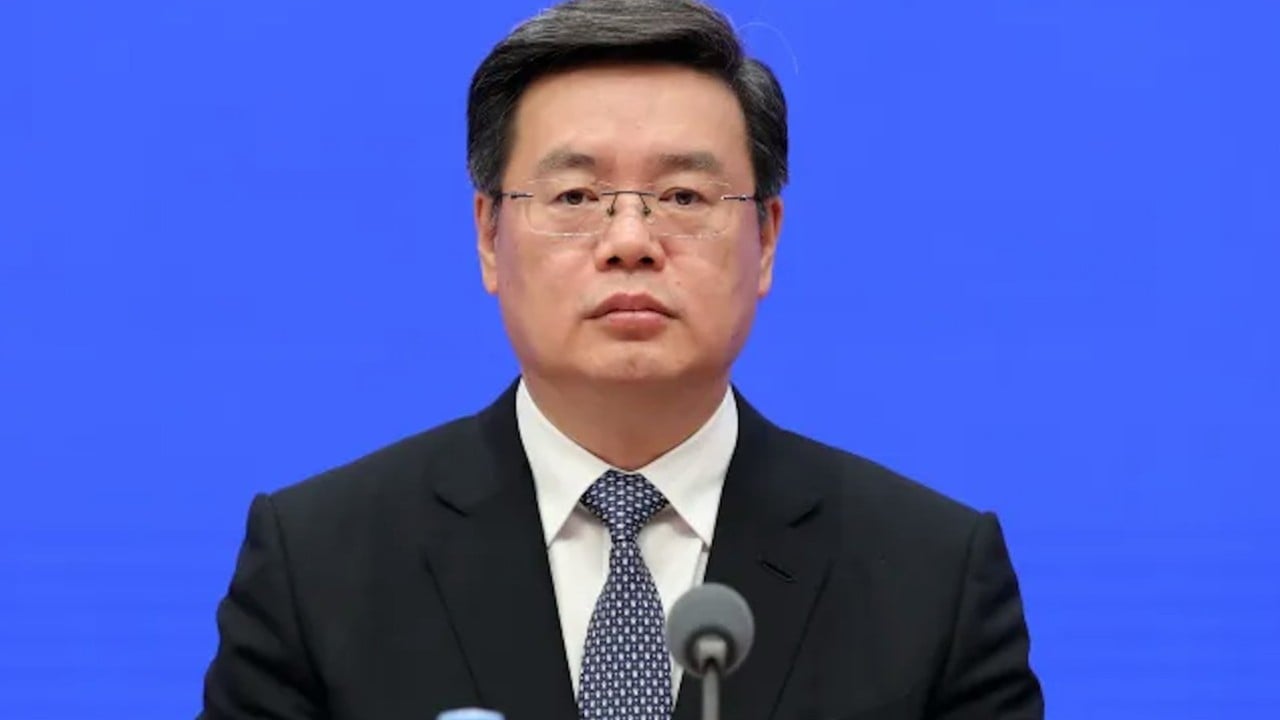
Every time a senior official in China gets pulled into a corruption probe, Western media outlets scramble to dust off their favorite tired tropes. They frame it as a palace coup, a purge of factions, or a sudden tremor shaking the foundations of the world's second-largest economy. When Qin Weizhong, the former mayor of Shenzhen, lands in the crosshairs of the Central Commission for Discipline Inspection, the headlines write themselves.
Except they are completely wrong.
If you view Beijing through the lens of western political theater, you will misread every single signal coming out of Zhongnanhai. The anti-corruption campaign is not an erratic weapon used by a supreme leader to smite rivals. It is a permanent, structural maintenance program designed to keep a massive bureaucratic engine from seizing up. Shenzhen is not a fiefdom falling out of favor; it is the crucible where economic policy gets tested, and attrition at the top is simply the cost of doing business.
Let us look past the sensationalism and examine the mechanics of how power actually operates in China's municipal powerhouses.
The Myth of the Untouchable Special Economic Zone
Shenzhen is often painted as a libertarian bubble within a planned economy, a place where tech behemoths and venture capitalists operate beyond the rigid confines of traditional state control. Because of this, commentators assume that anyone running the city wields immense, autonomous clout.
This is a fundamental misunderstanding of Chinese municipal governance.
A city like Shenzhen generates staggering wealth and houses the crown jewels of China's technological hardware and software sectors. But economic output does not equal political immunity. In fact, the higher the velocity of capital through a municipality, the tighter the screws turn on its leadership. When billions in land sales, infrastructure budgets, and tech subsidies move at lightning speed, the surface area for regulatory friction expands exponentially.
Qin Weizhong’s tenure did not collapse because of a sudden ideological betrayal. It collapsed because the tolerance threshold for administrative inefficiency and procurement leakage in tier-one technology hubs has dropped to zero. Beijing does not care about your pedigree or your past successes when the calculus of systemic risk management demands accountability.
Why Bureaucratic Attrition is a Feature Not a Bug
The lazy consensus views these high-profile investigations as signs of systemic instability. The reality is precisely the opposite.
Imagine a massive corporation where middle and upper management are never audited, never replaced, and never held personally liable for systemic drift. Within a decade, that corporation calcifies into a bloated, corrupt bureaucracy incapable of executing strategy.
China's discipline inspection apparatus functions as a ruthless corporate turnaround mechanism. By regularly pruning senior leaders—regardless of their apparent alignment or past achievements—the system signals to the entire administrative class that complacency is fatal. It prevents local officials from building unassailable local networks that could challenge central directives.
When a mayor is placed under graft probe, the immediate assumption abroad is that fear will paralyze the local government. In practice, it creates a hyper-compliant environment where project execution accelerates because officials know that foot-dragging or cutting corners invites immediate scrutiny. It is brutal, stressful, and entirely effective at keeping a centralized state nimble across vast geographic expanses.
The Real Risk is Not Corruption It is Over-Caution
The counter-intuitive truth about Beijing's relentless anti-corruption drive is that its biggest danger to the economy is not over-enforcement, but defensive paralysis.
I have watched local officials across booming provinces choose total inaction over the risk of an inadvertent procedural violation. When every signature on a zoning permit or a tech-park development grant carries the shadow of a future audit, bureaucrats learn that doing nothing is the safest career move.
This is where the western narrative completely misses the mark. They focus on the high-profile scalps like Qin Weizhong while ignoring the silent economic drag caused by mid-level administrators who refuse to approve routine expenditures out of sheer self-preservation. Beijing is well aware of this bottleneck and spends an immense amount of energy trying to calibrate the pressure—punishing malfeasance without destroying initiative.
Stop looking for hidden ideological factions every time a prominent technocrat falls. There is no grand ideological struggle playing out in the shadows of Guangdong. There is only a state machine aggressively lubricating its gears, grinding down anyone who friction adds resistance to the wheel.