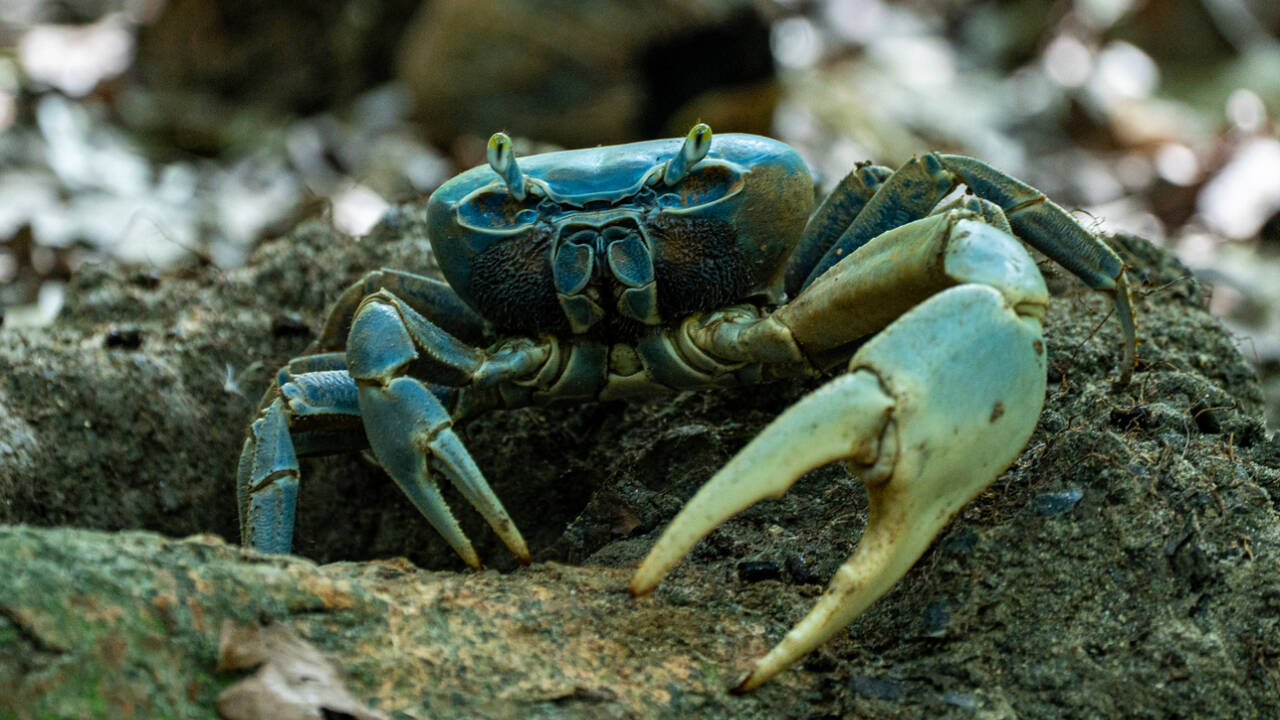
Seed distribution mechanics have historically been modeled through a vertebrate-centric lens, prioritizing avian and mammalian vectors while treating invertebrate and non-avian reptile interactions as anomalous noise. Recent ecological data identifying seed dispersal vectors across 186 plant species by slugs, beetles, and crabs upends this traditional paradigm. By examining how these underrepresented functional groups execute zoichory, researchers expose critical blind spots in contemporary plant population models.
The structural failure of standard ecological models stems from a geographic and taxomic bias. Conservation frameworks and botanical censuses evaluate dispersal distance, directional vectoring, and gut passage viability primarily through large-bodied endotherms. This approach ignores the high-density, localized dispersal networks managed by ground-dwelling invertebrates and crustaceans. Evaluating these alternative vectors requires shifting from macroscopic tracking models to micro-habitat kinetic analysis.
The Mechanics of NonAvian Seed Vectors
Dispersal success relies on three operational phases: attraction, acquisition, and deposition. Non-avian vectors alter each phase through distinct biological mechanisms that bypass the requirements of vertebrate-mediated endozoochory.
Invertebrate Gastropods and Epizoochorous Adhesion
Slugs and snails frequently engage with diaspores not through consumption, but via adhesive transport. The mucus production of gastropods creates a high-viscosity binding agent that secures small-seeded taxa to the exterior integument. Unlike avian vectors that deposit seeds miles away via high-altitude flight paths, gastropods operate on a micro-spatial scale.
The kinetic profile of a slug vector involves slow-velocity transit across short horizontal distances. While this limits dispersal radius, it optimizes micro-site deposition. Seeds dropped within immediate damp litter layers experience significantly higher moisture retention rates than those broadcast across exposed soil matrices. The cost function of this mechanism involves high vulnerability to desiccation and a constrained spatial footprint, yet it guarantees high-density colonization of immediate understory niches.
Coleopteran Granivory and Burial Dynamics
Beetles, particularly ground beetles of the family Carabidae, interact with plant reproductive units through predatory or caching behaviors. Rather than acting as passive carriers, many coleopteran species function as secondary dispersers or accidental scatter-hoarders.
The operational sequence follows a strict efficiency curve:
- Detection of lipid-rich elaiosomes or direct seed pericarps by olfactory receptors.
- Transport of diaspores to subterranean burrows or structural crevices for consumption or storage.
- Partial consumption yielding viable seed embryos abandoned in subterranean micro-environments.
Subterranean caching introduces a high-value survival variable. Seeds integrated into beetle burrows evade surface-level seed predators, including granivorous birds and rodents, while securing ideal depth placement for germination. The trade-off is mechanical damage; high mandibulary pressure from larger beetles frequently destroys seed coats, creating a narrow threshold between effective dispersal and lethal seed predation.
Crustacean Intertidal and Terrestrial Vectors
Crabs, particularly land crabs and intertidal species, expand the spatial boundaries of zoichory into marginal zones previously considered devoid of vector-mediated seed flow. These organisms process massive volumes of organic matter, unintentionally ingesting small-seeded understory and riparian species during foraging operations.
The kinetic advantage of crustacean vectors lies in directional hydro-terrestrial connectivity. Crabs move between aquatic margins and terrestrial forest floors, translating seeds across vertical and moisture gradients that static gravity or wind dispersal cannot bridge. The biological constraint is gut-passage degradation. Digestive tracts of crustaceans utilize rigorous mechanical grinding structures, meaning only seeds possessing exceptionally hard sclerified endocarps survive transit intact.
Evaluating the Dispersal Kernel
To quantify the impact of these 186 plant-vector interactions, ecologists must abandon linear distance metrics and adopt multi-dimensional dispersal kernels. Traditional spatial models measure success solely by distance from the parent plant. Non-avian vectors demand a shift toward microsite quality metrics.
The efficiency of a dispersal event is a product of survival probability multiplied by germination viability, divided by energetic expenditure.
$$\text{Efficiency} = \frac{P(\text{Survival}) \times P(\text{Germination})}{\text{Energy Expenditure}}$$
When applied to beetles, slugs, and crabs, this equation reveals high scores not due to long-distance transport, but due to localized hazard reduction. By depositing seeds directly beneath protective leaf litter, inside moisture-sealed burrows, or across moisture gradients, these vectors offset their lack of range with extreme precision in micro-site selection.
The absence of these vectors from historical seed-rain models distorts predictions of forest regeneration rates following localized disturbances. If a forest tract experiences a decline in carabid populations due to pesticide application or habitat fragmentation, the regeneration failure of understory flora cannot be explained by avian migration patterns or mammalian foraging habits. The missing variable is the localized subterranean planting mechanism executed by ground-dwelling invertebrates.
Systemic Vulnerabilities in Fragmented Habitats
Anthropogenic landscape modification impacts non-avian seed vectors differently than large vertebrates. Habitat fragmentation creates hard edges that restrict the movement of slow-moving gastropods and ground beetles far more severely than highly mobile birds.
The loss of invertebrate-mediated seed dispersal triggers a cascading failure in plant community composition. Plant species that rely exclusively on myrmecochory (ant-mediated dispersal) or generalized coleopteran transport experience localized recruitment bottlenecks. Without vectors to transport diaspores away from the parent canopy, density-dependent mortality agents—such as pathogenic fungi and host-specific seed predators—decimate seedlings clustered near the parent plant.
Mitigating this ecological blind spot requires a restructuring of habitat corridor design. Conservation biology traditionally prioritizes wide, continuous corridors for large mammals. Preserving non-avian dispersal networks demands the retention of complex, multi-layered forest floors with intact deadwood dynamics, undisturbed litter layers, and uncompacted soils capable of sustaining invertebrate micro-habitats.
Strategic Allocation of Ecological Research
Future empirical investigations into plant recruitment must integrate multi-taxa tracking protocols. Current funding and research methodologies remain locked in vertebrate bias because large animals are easily tagged with GPS transmitters or radio telemetry. Tracking a two-millimeter seed transported by a woodland slug requires chemical marking, stable isotope analysis, or high-resolution environmental DNA tracing on vector surfaces.
Resource allocation in ecological monitoring must pivot toward baseline invertebrate population mapping in threatened biomes. Understanding the resilience of plant communities requires treating beetles, slugs, and crabs not as incidental background fauna, but as primary architectural components of forest regeneration and spatial plant dynamics.

.png?itok=1mb05mKJ)

