Two million dollars sounds like serious money until you actually price a commercial saltwater filtration loop.
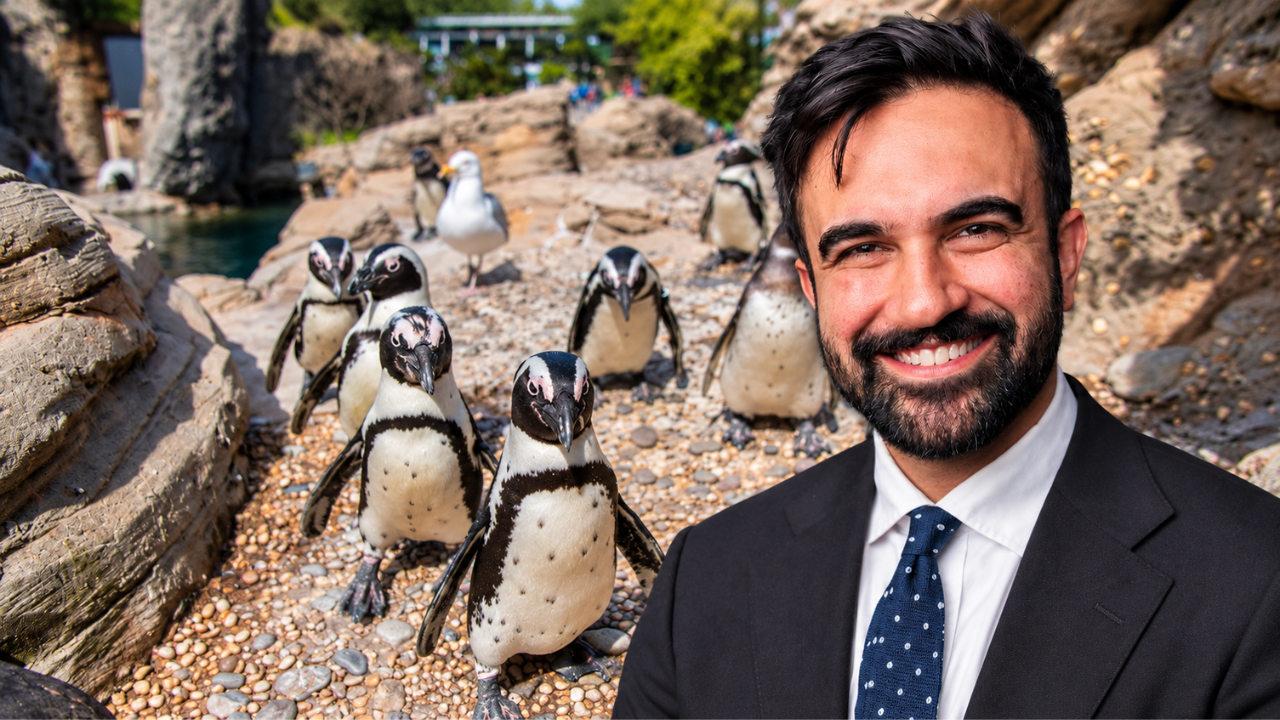
The local press corps is currently tripping over itself to applaud the headline: Zohran Mamdani has secured $2 million in capital funding for renovations at the New York Aquarium in Coney Island. The standard media narrative writes itself. A progressive New York politician steps up to save a beloved cultural institution, children get to look at sharks, and coastal conservation wins the day. Everybody claps. Everybody goes home happy.
Everybody is completely missing the point.
If you have ever worked anywhere near municipal infrastructure, zoo operations, or large-scale marine life support systems, you know that $2 million at a facility sitting directly on the Atlantic edge of Brooklyn is not a renovation. It is a rounding error. Worse, celebrating micro-grants like this as structural victories masks the brutal economic reality facing public-private cultural institutions in New York City: we are using pocket change to patch a hull that is taking on water faster than the pumps can clear it.
The Illusion of the Seven-Figure Press Release
Let us look at what actually happens when city capital dollars hit a facility operated by the Wildlife Conservation Society.
Public announcements treat capital allocations like cash deposited into a checking account, ready to buy shiny new exhibits and interactive touchscreens. That is fiction. Municipal capital funding in New York City comes wrapped in layers of procurement mandates, prevailing wage requirements, environmental impact reviews, and Department of Design and Construction oversight that routinely inflate project timelines by years and swallow twenty to thirty percent of the budget before a single shovel hits Coney Island sand.
I have watched cultural non-profits across the five boroughs spend eighteen months and hundreds of thousands of dollars in soft costs just to get city approval to replace an HVAC unit. By the time the contractors actually mobilize, inflation has eaten the contingency fund, and the scope of work gets quietly cut in half.
When you strip away administrative overhead, architectural fees, and municipal compliance costs, $2 million at the New York Aquarium buys maybe one upgraded back-of-house life support manifold, a fraction of a roof replacement, or a modest concrete repair along a seawall that gets battered by nor'easters every winter.
To put this in perspective, the aquarium’s Ocean Wonders: Sharks! exhibit—which opened in 2018 after years of post-Sandy delays—cost roughly $157 million. Even routine coastal hardening after Hurricane Sandy required tens of millions of dollars just to keep the basement mechanical rooms from flooding every time a hurricane brushed past Cape Hatteras. Against that balance sheet, $2 million is not a transformation. It is triage.
Why Progressive Politicians Love Aquarium Money
Here is the nuance the press releases leave out: why does a democratic socialist assemblymember like Zohran Mamdani—whose political brand is built on public transit, housing justice, and tenant protections—put his name on a $2 million capital allocation for an aquarium?
Because aquariums are politically bulletproof.
If you allocate $2 million to a supportive housing developer, half your constituents scream about neighborhood character and the other half complain it is not enough. If you put $2 million into MTA bus lane enforcement, you start a trench war with local merchants and car owners.
Put $2 million into the New York Aquarium, and nobody loses. Working-class families in outer-borough neighborhoods get discounted school trips. Union construction trades get billable hours. Environmentalists get talking points about marine education. And the politician gets a clean, photogenic ribbon-cutting with zero ideological blowback.
There is nothing corrupt about this. In fact, it is textbook constituent service. Assemblymembers receive discretionary capital pots precisely to steer money toward community anchors in their districts and across the city. The problem is not that Mamdani directed the money there. The problem is the lazy media framing that treats a routine budget earmark as a generational investment in New York’s waterfront future.
The Brutal Economics of Keeping Saltwater Alive
Most visitors walk past a 500,000-gallon shark tank and see tranquil blue water. Engineers walk past the same tank and see an industrial chemical plant running twenty-four hours a day, 365 days a year, with zero margin for error.
Saltwater is aggressively hostile to everything humans build. It corrodes standard steel, eats through concrete seals, fouls heat exchangers with bio-growth, and destroys electrical conduits. Unlike an art museum, where a power outage means turning on emergency lighting and locking the doors until Con Edison fixes the grid, a power or pump failure at an aquarium triggers an immediate biological crisis.
Consider the invisible expenses that eat an aquarium’s budget alive:
- Life Support Systems (LSS): Protein skimmers, ozone generators, sand filters, and UV sterilizers must run continuously to strip ammonia and nitrates from the water. Replacing a single industrial-grade titanium heat exchanger can run into the hundreds of thousands of dollars.
- Energy Consumption: Heating and chilling millions of gallons of water to exact tropical or temperate benchmarks while running massive pumps makes aquariums some of the most energy-intensive buildings per square foot in any city.
- Veterinary and Husbandry Overhead: Marine mammals, sharks, and sea turtles require specialized diets, round-the-clock water quality lab testing, and surgical suites that rival small human hospitals.
- Coastal Exposure: Located right on Surf Avenue and the Riegelmann Boardwalk, the New York Aquarium sits in one of the most flood-vulnerable ZIP codes in the Northeast. Every storm surge tests the perimeter defenses.
When a facility carries that kind of fixed operational burn rate, a $2 million capital injection does not expand capacity. It merely delays the next emergency repair.
The "Public-Private" Trap Nobody Wants to Admit
The New York Aquarium sits on city-owned land, housed in city-owned buildings, yet it is managed by the Wildlife Conservation Society, a massive private non-profit that also runs the Bronx Zoo, Central Park Zoo, Prospect Park Zoo, and Queens Zoo.
This public-private hybrid model is how New York City funds almost all of its premier cultural institutions, from the Metropolitan Museum of Art to the Brooklyn Botanic Garden. On paper, it is brilliant: the city owns the real estate and covers baseline capital infrastructure and energy subsidies, while the non-profit raises private philanthropic dollars to fund programming, research, and flashy new galleries.
In practice, it creates a permanent structural standoff.
Private mega-donors love putting their names on new shark tunnels, sea lion stadiums, and conservation fellowships. Nobody wants to donate $10 million so their name can be engraved on a brass plaque above a subterranean wastewater treatment pipe. That leaves crumbling roofs, corroded electrical switchgear, and aging seawalls squarely on the shoulders of city taxpayers.
Meanwhile, City Hall and the State Legislature chronically underfund baseline maintenance across the Cultural Institutions Group. Instead of committing to predictable, multi-year infrastructure schedules, elected officials hand out piecemeal $1 million and $2 million grants every budget cycle so they can issue press releases every summer.
Imagine a scenario where you own a hundred-year-old beachfront house with a rotting foundation, a leaking roof, and salt-corroded wiring. Every year, your rich uncle hands you five hundred dollars and tells you to "renovate the place." You cannot fix the foundation with five hundred dollars. You cannot rewire the house with five hundred dollars. All you can do is buy a few buckets of tar, slap them over the worst leaks, and hope the next hurricane misses your block. That is the exact financial cycle governing Coney Island’s marine infrastructure.
What Critics Get Wrong About Aquarium Spending
Whenever public money goes toward zoos or aquariums, two predictable camps immediately attack from opposite sides.
The fiscal hawks argue that if the Wildlife Conservation Society wants to renovate exhibits, it should raise ticket prices or hit up billionaire board members instead of tapping taxpayers. That argument ignores basic urban economics. The New York Aquarium is one of the primary economic engines keeping Coney Island viable outside of the twelve-week summer amusement peak. Strip away year-round school groups and off-season family foot traffic, and local small businesses along Mermaid and Surf Avenues take a direct hit. Furthermore, the city already mandates free or discounted admission windows specifically because public capital underwrites the physical plant.
On the other side, animal welfare hardliners argue that pouring any money into captive marine facilities is inherently unethical and that funds should go exclusively to wild ocean protection. That sounds pure in theory and collapses in reality. The Wildlife Conservation Society’s New York Seascape program conducts critical field research on local shark populations, whale migration patterns in the New York Bight, and horseshoe crab spawning habitats right outside the aquarium’s front door. Millions of urban kids who will never afford a scuba trip to the Florida Keys form their first tangible connection to marine ecosystems inside those Coney Island halls. You do not build political support for ocean conservation by locking the doors and telling working-class New Yorkers to watch a documentary instead.
Both sides miss the actual failure: the mismatch between the scale of the asset and the scale of the funding.
How New York Should Actually Fund Waterfront Institutions
If Albany and City Hall want the New York Aquarium to survive the next fifty years of rising sea levels and aging infrastructure, they need to stop treating it like a ribbon-cutting photo op and start treating it like critical coastal infrastructure.
- Separate Life-Safety Infrastructure from Exhibit Upgrades. Stop lumping seawall reinforcement, electrical switchgear, and filtration replacements into the same discretionary political pot as visitor amenities. Put baseline marine life support and flood defense into a dedicated, multi-year capital maintenance schedule backed by the New York City Economic Development Corporation and state environmental bond funds.
- Reform Cultural Capital Procurement. If the city gives a cultural institution $2 million, it should not cost $600,000 in bureaucratic compliance to spend it. Streamline DDC review thresholds for projects under $5 million at established Cultural Institutions Group facilities so capital dollars actually reach concrete and steel.
- Tie State Energy Subsidies to Grid Decarbonization. Instead of handing out fragmented micro-grants, Albany should use New York Power Authority financing to overhaul the aquarium’s massive heating, chilling, and pumping plants with high-efficiency heat recovery systems—cutting long-term operating deficits permanently rather than subsidizing them piecemeal.
To be fair, there is a real political risk to this approach. Dedicated infrastructure funding is boring. Nobody wins an election by campaigning on streamlined procurement rules for saltwater ozone generators, and no assemblymember gets a front-page photo op standing next to a municipal switchgear box. Elected officials gravitate toward bite-sized capital grants because the political system rewards visible announcements over invisible maintenance.
That is precisely why voters and journalists need to stop grading politicians on the press release and start grading them on the engineering reality.
Zohran Mamdani delivered $2 million for an institution that deserves support, in a neighborhood that desperately needs year-round economic anchors. Take the money, fix whatever pipe or roof section it covers, and thank the assemblymember for showing up. Just do not pretend for a second that two million bucks is going to hold back the Atlantic Ocean.