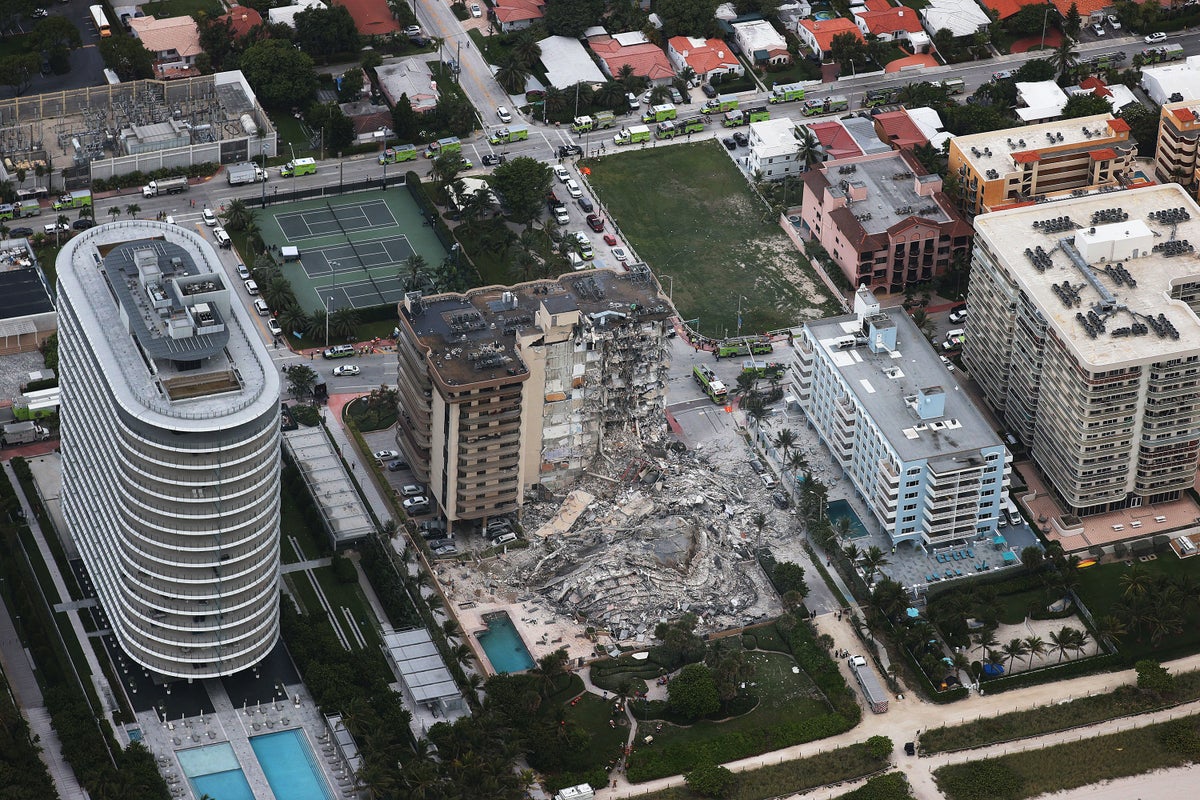
The mainstream media loves a ghost story.
When reports surfaced that DAMAC Properties hadn't logged a single official sale for its planned ultra-luxury condo building on the site of the tragic Champlain Towers South collapse in Surfside, the narrative was instantly written. Journalists lined up to paint the project as a macabre failure, implying that buyers were staying away out of moral obligation, superstition, or fear. For an alternative look, check out: this related article.
They are reading the market entirely wrong.
Zero pre-sales at this stage of a hyper-luxury development in South Florida is not a sign of a struggling project. It is standard operating procedure for a billionaire developer who knows how to squeeze maximum margin out of a premium piece of land. The lazy consensus assumes that because everyday consumers want to see high demand immediately, real estate oligarchs operate under the same desperate timeline. They don't. Further analysis on the subject has been shared by MarketWatch.
The Pre-Sale Myth That Mainstream Media Buys Hook Line and Sinker
To understand why the "zero sales" headline is a joke, you have to understand how luxury development capital stacks actually work.
The traditional real estate playbook says a developer needs to hit 50% or 60% in pre-sales to secure a construction loan. This is how mid-market developers survive. They sell units early at a discount to de-risk the project for risk-averse local banks.
But DAMAC is an international titan funded by Dubai-based billionaire Hussain Sajwani. When you have institutional capital that can self-fund the early phases of vertical construction, pre-selling is actually a financial mistake.
Why sell a penthouse for $3,000 a square foot in the dirt when you can sell it for $5,000 a square foot once the concrete shell is poured and the wealthy can physically touch the view?
The Reality Check: Luxury real estate is an emotional asset, not a rational one. The ultra-wealthy do not buy floor plans; they buy scarce physical realities.
I have watched developers flush millions in potential profit down the toilet because they panicked and sold out their best units early to appease the public narrative. DAMAC isn't panicking. They are hoarding inventory because thermodynamic market pressures in Miami favor the patient.
Dismantling the Superstition Premise
Let’s tackle the elephant in the room: the tragedy. The prevailing sentiment is that wealthy buyers are avoiding the Surfside site out of reverence or existential dread.
This view fundamentally misunderstands the psychology of the global elite.
History proves that premium oceanfront land completely decouples from its past over a long enough timeline. Look at the ultra-luxury hotels and residences built on top of historic battlegrounds, former prisons, or sites of immense urban disasters globally. Capital has no memory; it only has a yield.
More importantly, a site that has undergone this level of scrutiny becomes, ironically, the safest piece of dirt on earth.
- Hyper-Scrutinized Engineering: The new structure will be subjected to the most rigorous structural engineering reviews in modern history.
- Post-2021 Building Codes: It will be built under the heaviest, most unforgiving post-collapse inspection regimes ever implemented in the state of Florida.
- Geotechnical Overkill: The foundations will be driven deeper and tested harder than any standard building on Collins Avenue.
Savvy buyers know this. They aren't looking at the site and seeing a graveyard; they are looking at it and seeing a structural fortress that will outlast every aging 1980s tower flanking it.
Why Waiting Out the Market is the Real Power Move
The Miami real estate market is undergoing a structural shift. The massive influx of high-earning tax refugees from New York, California, and Chicago isn't slowing down—it's solidifying.
Typical Mid-Market Strategy:
Pre-sell Early -> Secure Bank Debt -> Build -> Low Margin Profit

The Sovereign Capital Strategy:
Self-Fund -> Build to Completion -> Sell at Peak Market Pricing -> Maximum Profit
If you launch a sales center today and lock in prices, you are capping your upside. In an inflationary environment where construction material costs fluctuate, locking in a price with a buyer three years before completion is a massive risk. If inflation spikes 15%, your profit margin evaporates.
By holding back inventory and refusing to slash prices to create a fake narrative of "momentum," the developer protects their margin. They are waiting for the building to go vertical. Once that structure starts rising past the palm trees, the FOMO (Fear Of Missing Out) among the global billionaire class will do the heavy lifting.
The Downside to the Contrarian Stance
To be completely fair, this strategy requires nerves of steel and an absolute fortress of a balance sheet.
If global liquidity dries up completely, or if interest rates hit double digits and stay there for a decade, holding un-sold inventory becomes an expensive game of chicken. Carrying costs, insurance premiums in Florida—which are currently astronomical—and property taxes will eat a hole through less-capitalized firms.
But betting against Dubai-backed sovereign-level capital running out of breath before Miami oceanfront real estate loses its luster is a historically bad bet.
Stop Asking if Units Are Selling and Start Asking Who Holds the Debt
If you want to know if a real estate project is in trouble, stop looking at the sales ledger. Look at the debt maturity dates.
When a project is drowning in high-interest mezzanine debt with a ticking clock, zero sales means death. When a project is backed by deep equity that doesn’t answer to a regional bank loan officer, zero sales simply means the owner hasn't found a reason to give a discount yet.
The media will keep writing the obituary for the Surfside site because it generates clicks. The reality is much colder, much more calculated, and entirely driven by the math of luxury scarcity.
Stop expecting institutional sharks to play by the rules of retail homebuyers. They are playing a completely different game. Turn off the noise, wait for the cranes to finish their work, and watch how fast those "unsellable" units vanish the moment the roof is poured.


