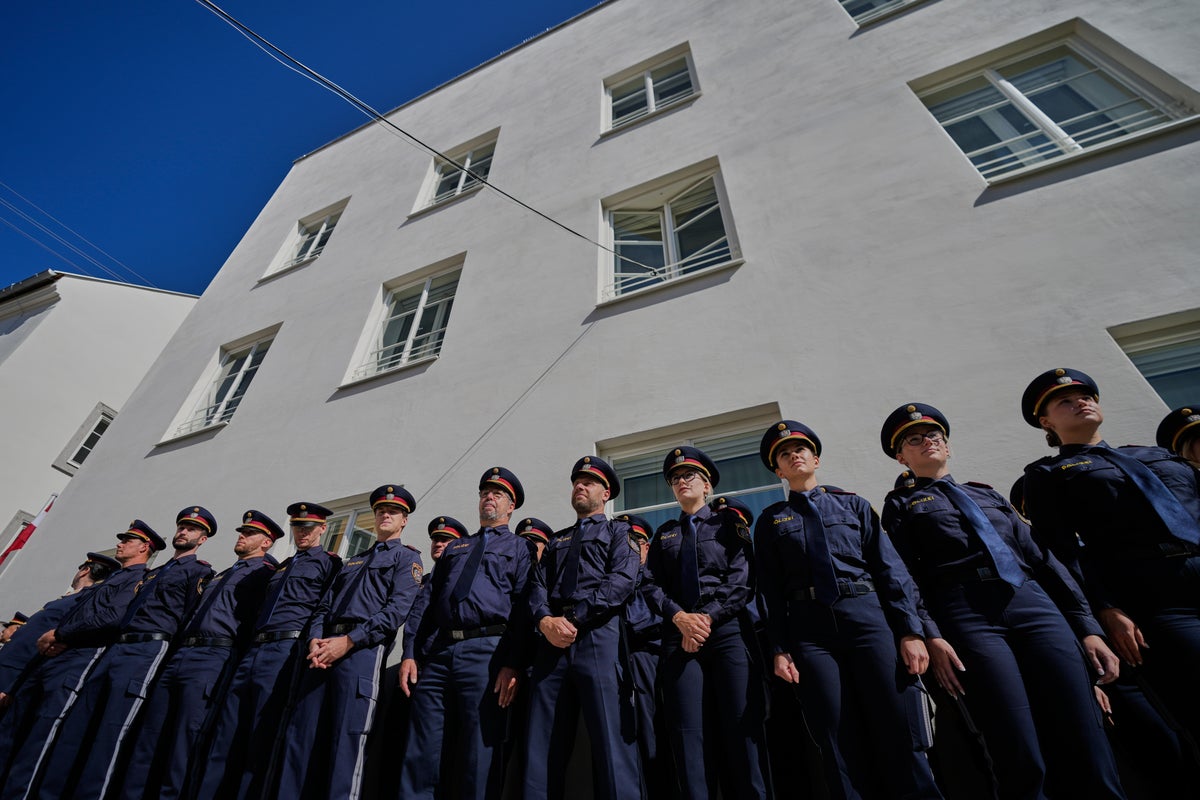
A Doorway in Upper Austria
In a small Austrian town where the Inn River glides past pastel-painted storefronts, stands a three-story building with yellow stucco. Its address is Salzburger Vorstadt 15. To an unsuspecting traveler walking the cobblestone streets of Braunau am Inn, it looks unremarkable. It resembles a quiet residential complex, perhaps a bakery on the ground floor, or an archivist’s office.
Yet for decades, this building served as a magnet for a shadow world.
Men with shaved heads and tactical boots would travel across continents just to stand on the sidewalk outside. They would pose for photos. Some dropped quietly to one knee. Others left behind small trinkets, flowers, or handwritten notes tucked into the masonry.
They came because on April 20, 1889, in a small rented room on the top floor, Alois and Klara Hitler welcomed a newborn son named Adolf into the world.
How does a society neutralize a physical structure that has turned into a shrine for hatred? You cannot simply ignore it. You cannot easily erase it without running the risk of erasing the memory of what happened next.
Austria’s answer was counterintuitive, radical, and took decades to execute: hand the keys to the police.
The Weight of Stone and Mortar
Structures carry memory, but humans give them meaning.
Consider a hypothetical traveler named Marco. He travels to Braunau not out of admiration, but out of a disturbing curiosity. He wants to see the birthplace of human catastrophe. When he arrives, he expects a dark monument, or perhaps a heavily guarded museum surrounded by barbed wire and historical plaques explaining the horror that grew out of that top-floor room.
Instead, he sees blue-and-red flashing emergency lights parked in the driveway. He sees officers in uniform carrying clipboards, walking in and out with coffee cups, opening squad car doors, discussing shift changes.
The atmosphere of dark reverence instantly collapses.
That is the entire point.
For years, Austrian authorities wrestled with what to do with the building. The government rented the space for decades to prevent it from becoming a far-right pilgrimage site, turning it over to a local charity that operated a workshop and day center for people with special needs. But when the building's private owner repeatedly refused necessary renovations and declined to sell, the situation ground to a agonizing halt.
By 2016, the Austrian parliament took an unprecedented step. They officially expropriated the property.
Then came the real debate.
Tear it down completely? Some argued that bulldozing the structure would finally wipe the slate clean. Others countered that demolition was a coward's exit—an attempt to bury history rather than confront it. Turn it into a memorial? Opponents warned that any memorial, no matter how carefully curated, would still act as a focal point, drawing the very extremists the town was trying to keep away.
Silence, it turned out, was not an option. Neutrality was impossible.
The Neutralization Project
The solution lay in a concept architects and criminologists call "neutralization."
If you want to strip a sanctuary of its power, you do not destroy it; you make it thoroughly, unshockingly mundane. You fill it with the everyday bureaucracy of civil order.
In 2020, an architectural firm won a design competition to reshape the building. The plan was deliberate in what it sought to remove. The physical alterations aimed to strip away any aesthetic features that could be romanticized or fetishized by neo-Nazi groups. The facade would be redesigned, blending the structure seamlessly into the historic streetscape of Braunau am Inn.
It was designed to look ordinary. Unremarkable. Functional.
By converting the site into the district police headquarters and a regional training center for human rights, the state flipped the script. The building where totalitarianism took its first breath was slated to become an administrative hub responsible for enforcing democratic laws and protecting civil liberties.
+-------------------------------------------------------------------+
|                  SALZBURGER VORSTADT 15: THEN & NOW               |
+-------------------------------------------------------------------+
| Past Use          | Birthplace (1889); Daycare/Workshop (1970s-2011)|
| Current Status    | Expropriated by the Austrian State (2016)         |
| Future Purpose    | District Police Headquarters & Human Rights Hub   |
| Primary Objective | Neutralize extremist pilgrimage site              |
+-------------------------------------------------------------------+
The Stone That Remains
Outside the building stands a granite boulder taken directly from the quarry at the Mauthausen concentration camp. It was placed on the sidewalk in 1889’s shadow back in the late 1980s, long before the police station architectural overhaul began.
Inscribed upon the stone are words that cut through the quiet air of the town:
For Peace, Freedom, and Democracy. Never Again Fascism. Millions of Dead Admonish Us.
The stone remains. It does not honor the man born inside; it honors those who suffered because of him.
Reclaiming a space is never clean. It is uncomfortable. Some residents of Braunau am Inn wished the town could simply shed its association with the past, tired of the international press showing up every few years to re-examine their quiet home under a magnifying glass. They wanted normal lives. They wanted their town to be known for its river views, its medieval architecture, its warm hospitality.
Instead, they learned that history is not something you leave behind in a drawer. It is a living, physical weight that demands constant management.
What a Uniform Means
Imagine standing across the street from Salzburger Vorstadt 15 today.
The low hum of traffic moves past. A child rides a bicycle along the sidewalk. A police car pulls out onto the main street, its indicator clicking methodically.
The neo-fascist who travels thousands of miles expecting a quiet moment of dark solidarity is met not with a shadowy shrine, but with the crisp uniform of an officer on duty, looking back at him from behind a glass door.
The magic is broken. The myth is punctured.
We often think history is carved in stone, unyielding and fixed. But the story of a yellow house in Upper Austria proves something else entirely. Places only hold the power we allow them to keep. When a society decides to strip away the grandiosity of evil, replacing it with the quiet, relentless machinery of public service, the shadows lose their place to hide.
The building still stands. But the shrine is gone.