History rarely stays neatly contained in the past. Sometimes, a patch of dirt in a quiet French village becomes the exact spot where modern geopolitical trauma collides with mid-century memory. That is precisely what happened in Thil, a small municipality in Lorraine, where plans to honor a group of Soviet women forced into labor by the Nazis turned into a diplomatic and communal firestorm.
When local officials organized an official tribute to commemorate thirty-seven Soviet resistance fighters—known as the Rodina group—who escaped a Nazi labor camp inside an iron mine in May 1944, they expected a straightforward historical commemoration. Instead, they walked straight into a geopolitical minefield. The reason is simple: the modern war in Ukraine has rewritten how Europe views Soviet-era symbols, Russian state involvement, and the ownership of anti-fascist history.
The Forgotten Heroines of the Thil Mine
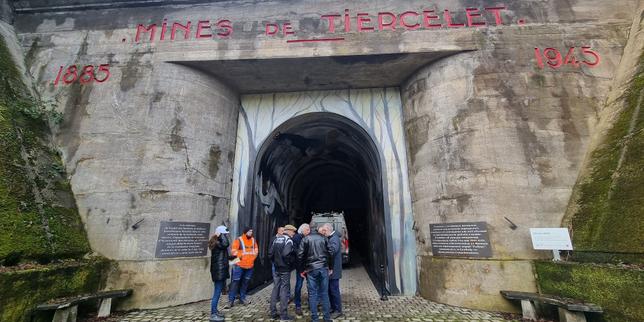
To understand why this French village became a flashpoint, you have to look at what actually happened there during the Second World War. The camp at Thil was a brutal sub-camp of the Natzwiller-Struthof complex. Hundreds of prisoners, including Soviet women, were subjected to forced labor extracting iron ore and assembling military equipment under appalling conditions.
The conditions were lethal. Exhaustion, starvation, and mine collapses claimed numerous lives. Yet, survival turned into active resistance. In the spring of 1944, a group of thirty-seven women managed a daring escape into the forests of Argonne, linking up with French partisans and forming the all-female Rodina (Homeland) detachment. They fought with captured weapons, gathered vital intelligence, and survived until the liberation.
Their story is a genuine chapter of shared French and Soviet resistance heroism. But honoring that history today is complicated by who is left to claim it.
The Clash Over Memory and Modern Conflict
The controversy erupted when the Ukrainian diaspora in France and the Ukrainian Embassy pointed out a grim irony. Inviting official representatives of the Russian state to unveil monuments honoring Soviet resistance fighters while the Russian military actively bombards Ukrainian cities feels less like historical preservation and more like political instrumentalization.
Critics argued that the Kremlin weaponizes the shared victory over Nazism to justify contemporary imperial aggression. For Ukrainian communities across Europe, seeing symbols tied to the Soviet era promoted by current Russian diplomats feels like a direct affront—especially when historical memory is being aggressively manipulated to serve modern authoritarian narratives.
On the other side, local municipal leaders faced a difficult dilemma. Mayor Stéphan Brusco and local organizers maintained that the focus should remain strictly on the historical facts of the victims and the heroism of the women who fought back, independent of current politicians. The pressure eventually forced the cancellation of the official public inauguration ceremony, even as closed-door meetings and smaller delegations moved forward.
Why This Matters Beyond Lorraine
This localized dispute in a Lorraine mining town reflects a continent-wide reckoning. Across Eastern and Central Europe, streets are being renamed and Soviet-era war monuments are being dismantled by the hundreds. Countries like Poland, Latvia, and Lithuania have systematically removed Red Army memorials, viewing them not as tributes to fallen liberators, but as enduring scars of decades of Soviet domination.
Yet Western Europe handles this legacy differently. France holds a deep historical gratitude toward the enormous human cost borne by the Soviet peoples in defeating Nazi Germany. Millions of Russians, Ukrainians, Belarusians, and citizens of other former Soviet republics died in that war. When those distinct national identities are flattened into a single "Russian" narrative by modern geopolitics, it erases the immense sacrifices made by Ukrainians and other non-Russians within the Red Army and the resistance movements.
Honoring the victims of Nazism shouldn't require turning a blind eye to current atrocities. As Europe continues to navigate the long shadow of the twentieth century, communities must find ways to preserve historical truth without letting authoritarian regimes hijack the dead for today's propaganda.