When a 28-year-old laboratory technician at the Irkutsk Anti-Plague Research Institute in Siberia died suddenly after a rapid bout of severe bilateral pneumonia, alarm bells didn't just ring in Russia—they echoed across global health networks. Media reports quickly pointed fingers at a potential occupational exposure to pneumonic plague, triggering hospital quarantines and throwing roughly 200 close contacts under strict medical monitoring.
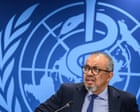
Weeks later, the World Health Organization is still waiting for clear answers. International health authorities admit they don't have the full picture. While Russian consumer and health watchdog Rospotrebnadzor insists that subsequent tests on the deceased worker and her contacts turned up negative for high-threat pathogens, the lack of transparent, timely diagnostic data leaves a dangerous vacuum. When information flow stalls around dangerous pathogens, speculation rushes in to fill the gap. Recently making headlines in this space: Airport Security is Breaking the Law for Travelers with Stomas.
The Anatomy of an Opaque Crisis
To understand why international health agencies are frustrated, you have to look at how the incident unfolded. Darya Shipilova, a researcher at the Siberian anti-plague facility, was hospitalized on September 29 and passed away within days. Local Russian media and regional officials initially suggested a lab accident involving pneumonic plague. Yet, federal regulators quickly pivoted, classifying her cause of death merely as "pneumonia of unknown etiology" and denying any biosecurity breaches or registered plague cases in the region.
This sort of mixed messaging triggers immediate skepticism from epidemiologists. Pneumonic plague is the most severe and rapidly fatal form of Yersinia pestis. It spreads person-to-person via respiratory droplets and can kill within 24 hours if antibiotics aren't administered early. If a specialized research facility experiences a worker fatality with symptoms matching such a high-threat pathogen, the international community expects rapid, verifiable genomic and clinical data. Instead, the WHO received generalized assurances that tests were negative, leaving the core mystery of what actually killed the young researcher entirely unsolved. Additional details on this are covered by CDC.
Why Trust and Transparency Matter in Biosecurity
Global health security relies on shared intelligence. Since the COVID-19 pandemic, public health watchdogs have maintained zero tolerance for delayed communication regarding atypical respiratory clusters. When a nation housing high-security containment labs encounters a sudden fatal illness among staff, secrecy breeds distrust.
Independent global experts note that Russia has a long history of institutional opacity regarding biological incidents. From the Soviet-era cover-ups of the Sverdlovsk anthrax leak to current scientific isolation following geopolitical fractures, outside oversight is practically non-existent. U.S. and European officials have repeatedly urged Moscow to open scientific channels and share concrete diagnostic findings. Without independent verification, statements claiming everything is under control carry little weight among international epidemiologists who prefer raw data over bureaucratic reassurances.
Assessing the Real Risk
Despite the communication breakdown, field epidemiologists emphasize that there is currently no evidence of community spread. Medical monitoring of the roughly 200 individuals who came into contact with the victim yielded no secondary symptoms or positive diagnoses. For regions outside of Siberia, the immediate public health risk remains very low.
Even so, the incident exposes glaring vulnerabilities in global health governance. Pathogens do not respect international borders, and localized containment failures can quickly escalate if local authorities choose damage control over radical transparency. Until Russian health regulators share complete diagnostic logs with the WHO, this Siberian tragedy remains an unsettling reminder of how fragile international cooperation truly is when handling Earth's most dangerous microscopic threats.


