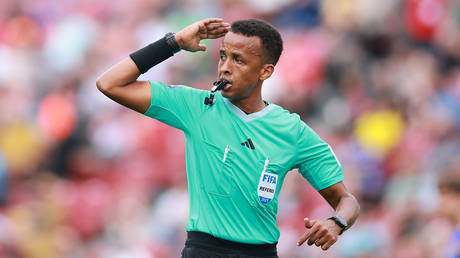
You work your entire life to reach the pinnacle of your profession. You get voted the absolute best in your entire continent. You secure the paperwork, grab your bags, and board a flight to the biggest sporting event on earth, ready to make history for your country. Then, you land at Miami International Airport, and Uncle Sam tells you to turn right back around.
That's exactly what happened to Omar Artan.
The 34-year-old Somali referee was set to become the first person from his country to officiate at a men's World Cup finals. Instead, he spent his weekend trapped in immigration limbo before being shipped back to Istanbul. US Customs and Border Protection (CBP) confirmed they barred him due to "vetting concerns."
FIFA quickly washed its hands of the situation. They dropped him from the tournament roster, stating they don't get involved in host country immigration laws. It's a brutal reality check for international sports.
The Myth of the Neutral Sporting Event
We love to pretend that major tournaments exist in a vacuum. We tell ourselves that sports transcend borders, politics, and government squabbles. It's a nice thought, but it's completely wrong.
Artan wasn't some random traveler trying his luck at the border. He was one of just 52 elite referees selected globally by FIFA for the tournament running from June 11 to July 19. He was the Confederation of African Football (CAF) 2025 men's referee of the year. He has proven himself on the biggest stages in African soccer, including the Africa Cup of Nations.
None of that mattered to CBP.
Government officials are being incredibly tight-lipped about the whole thing. Andrew Giuliani, who leads the White House Task Force on the World Cup, publicly supported the decision, hinting at "derogatory information" without giving any specifics.
Here is what we do know. Artan was traveling with valid documents. According to Somali embassy officials, he was even using a diplomatic passport specifically issued to help him avoid the usual bureaucratic red tape that African travelers face. He already had a valid US visa in his possession.
Yet, during a "routine" secondary inspection, officers decided he was inadmissible.
The Travel Ban Shadow
It's impossible to talk about this situation without looking at the broader political landscape. Somalia sits squarely on the travel ban list re-instituted by the current administration.
When the US, Canada, and Mexico won the joint bid to host this tournament, guarantees were made to FIFA that players, officials, and fans would be able to access the country. But a guarantee from a past political administration doesn't mean much when the border patrol agents are staring at a passport from a red-listed nation.
The Somali Football Federation is frantic, demanding answers from FIFA. Somalia's ministry of youth and sports issued a statement saying the move directly undermines football's commitment to fairness and merit. They aren't wrong. If the best referee in Africa can't get into the country to do his job, the integrity of the selection process is shot.
This isn't an isolated headache either. Fans and sports officials have been raising alarms for months about the rigid US visa system. There's a growing feeling that this tournament is turning into a closed party rather than a global celebration.
What This Means for Future Mega Events
If you think this is just a short-term problem for one unlucky referee, think again. This situation exposes a massive flaw in how global sports bodies select their hosts.
FIFA and the International Olympic Committee love giving hosting rights to massive economic powerhouses. But those powerhouses come with intense national security apparatuses. When security policies clash with sporting ideals, security wins every single time.
What happens when a top-tier national team qualifies, but their star forward hails from a country blacklisted by the host nation? We almost saw it happen with various esports tournaments over the last few years, but now it's hitting the biggest stage in the world.
FIFA's hands-off stance is the most telling part of this saga. By immediately falling back on the line that "a host government ultimately determines who is admitted," soccer's governing body proved it has zero leverage when actual laws come into play. They won't fight for their own people.
How International Sports Organizations Must Shift
International sports federations can't keep ignoring the realities of geopolitics when handing out hosting duties. If a country can't guarantee entry for accredited officials who have passed every vetting process required by the sport, that country shouldn't host.
For future bids, sports governing bodies need to demand legally binding immigration waivers before a single stadium blueprint is approved.
- Enforceable Visa Guarantees: Host nations must establish a dedicated, expedited immigration track for verified tournament participants that bypasses standard geopolitical bans.
- Independent Vetting Panels: Security checks should be coordinated between the host nation and international sports security entities well in advance, rather than at an airport gate.
- Consequence Frameworks: If a host nation revokes entry for a qualified participant without transparent, provable criminal cause, they should face financial penalties or lose future bidding rights.
Omar Artan is currently sitting in Turkey, his lifelong dream entirely shattered just days before kickoff. He did everything right on the pitch to earn his spot. But in the grand scheme of global politics, his whistle didn't carry any weight.