The International Court of Justice (ICJ) finally delivered the words Rohingya survivors have waited nine years to hear. On November 19, 2026, the world's highest court ruled that Myanmar committed genocide against the Rohingya people.
It's a historic first. Never before in the ICJ's history has the court found a United Nations member state directly responsible for committing genocide. When you read past the headlines about legal milestones in The Hague, a much harder reality hits you. A binding verdict from an international court doesn't automatically unlock refugee camp gates in Bangladesh, and it certainly won't force Myanmar's military junta to hand over power tomorrow.
If you're trying to make sense of what this ruling actually changes—and where international justice hits a brick wall—you have to look closely at both the legal victory and the messy politics on the ground.
Why the ICJ Genocide Verdict Took Seven Years
Most people assume international courts work like domestic criminal trials. They don't.
When The Gambia first filed this case against Myanmar back in November 2019 on behalf of the Organisation of Islamic Cooperation (OIC), legal experts warned it would drag on for years. Proving genocide under the 1948 Genocide Convention is notoriously difficult because prosecutors don't just have to prove mass atrocities happened. They have to prove dolus specialis—specific intent to destroy a protected national, ethnic, racial, or religious group, in whole or in part.
In its November 2026 judgment, the ICJ judges ruled 9 to 6 that Myanmar acted with that exact intent during its brutal 2017 "clearance operations" in northern Rakhine State. The court accepted evidence estimating around 10,000 Rohingya were killed and concluded that the scale of violence went far beyond any legitimate counterinsurgency operation.
Here is what the judges specifically found Myanmar guilty of violating under the Genocide Convention:
- Killing members of the group through systematic massacres across northern Rakhine State.
- Causing serious bodily or mental harm, including widespread sexual violence and torture.
- Imposing measures intended to prevent births, targeting the community's ability to survive and renew itself long-term.
- Failing to prevent and punish genocide, alongside destroying evidence—specifically burning village remnants in 2020 and building a government base over a razed Rohingya village in 2021.
That last detail about evidence destruction matters more than people realize. Because Myanmar blocked independent investigators and bulldozed crime scenes, the court ruled it could draw stronger legal inferences from UN fact-finding reports. Trying to hide the crimes actually backfired on Naypyidaw in court.
The Biggest Misconception About the World Court Ruling
Let's clear up the single biggest point of confusion surrounding this case. The ICJ does not put generals in handcuffs.
People constantly mix up the International Court of Justice (ICJ) with the International Criminal Court (ICC). They sit in the same Dutch city, yet they do completely different jobs. The ICJ settles legal disputes between countries. The ICC prosecutes individual human beings.
So while the ICJ ruled that the state of Myanmar committed genocide, no military commander walked out of The Hague in chains on November 19. That individual accountability track runs separately through the ICC, where prosecutors sought an arrest warrant against Myanmar's military chief and president, Min Aung Hlaing, back in November 2024.
Does that make the ICJ ruling symbolic fluff? Not at all.
By legally classifying Myanmar's state actions as genocide, the ruling triggers binding legal duties for every other country that signed the Genocide Convention. The court explicitly clarified that third-party states have a legal obligation to prevent genocide and cannot simply look away. Within days of the verdict, the United Kingdom formally recognized the genocide, expelled Myanmar's defense attaché, and slapped fresh sanctions on senior military officers. Fourteen nations quickly issued a joint statement affirming that the judgment is legally binding.
What the Court Ordered Myanmar to Do
The ICJ didn't stop at a guilty verdict. By majorities ranging from 9–6 to 14–1, the judges laid out a strict list of mandatory remedies:
- Prosecute perpetrators. Myanmar must immediately investigate and prosecute anyone suspected of committing genocidal acts during the 2017 military crackdown.
- Guarantee non-repetition. The state must rewrite its domestic laws to fully criminalize genocide and ensure discrimination against the Rohingya stops.
- Facilitate safe return. Myanmar must allow displaced Rohingya—whether stuck in Cox's Bazar in Bangladesh, scattered across Southeast Asia, or internally displaced—to return home safely, voluntarily, and with dignity.
- Pay reparations and restore property. The government has to return or replace destroyed homes and land, help locate missing persons, and pay financial compensation where physical restitution isn't possible.
- Report back within two years. Naypyidaw faces a hard deadline to submit a compliance report detailing what steps it has actually taken.
On paper, that list looks airtight. In reality, enforcing it runs straight into geopolitical quicksand.
Why Enforcement Hits a Wall in Rakhine State
If you look at a map of Myanmar right now, you immediately spot the glaring problem with ordering Myanmar's government to welcome Rohingya refugees home.
The military junta doesn't even control most of Rakhine State anymore.
Since late 2023, the Arakan Army—an ethnic armed organization fighting Myanmar's military—has swept across Rakhine State, seizing vast swaths of territory along the Bangladesh border. You have an international court ordering a military regime in Naypyidaw to guarantee safe returns to villages that are currently governed by a rebel army. Even if the junta suddenly woke up tomorrow and decided to comply with the ICJ—which it won't—it lacks physical control on the ground to protect returning families.
Meanwhile, diplomatic enforcement relies on the UN Security Council. Any binding Security Council resolution to force Myanmar's compliance can be killed with a single veto from China or Russia, both of whom maintain close ties with Myanmar's generals. Beijing has already pushed back against the ruling, accusing the court of overreach.
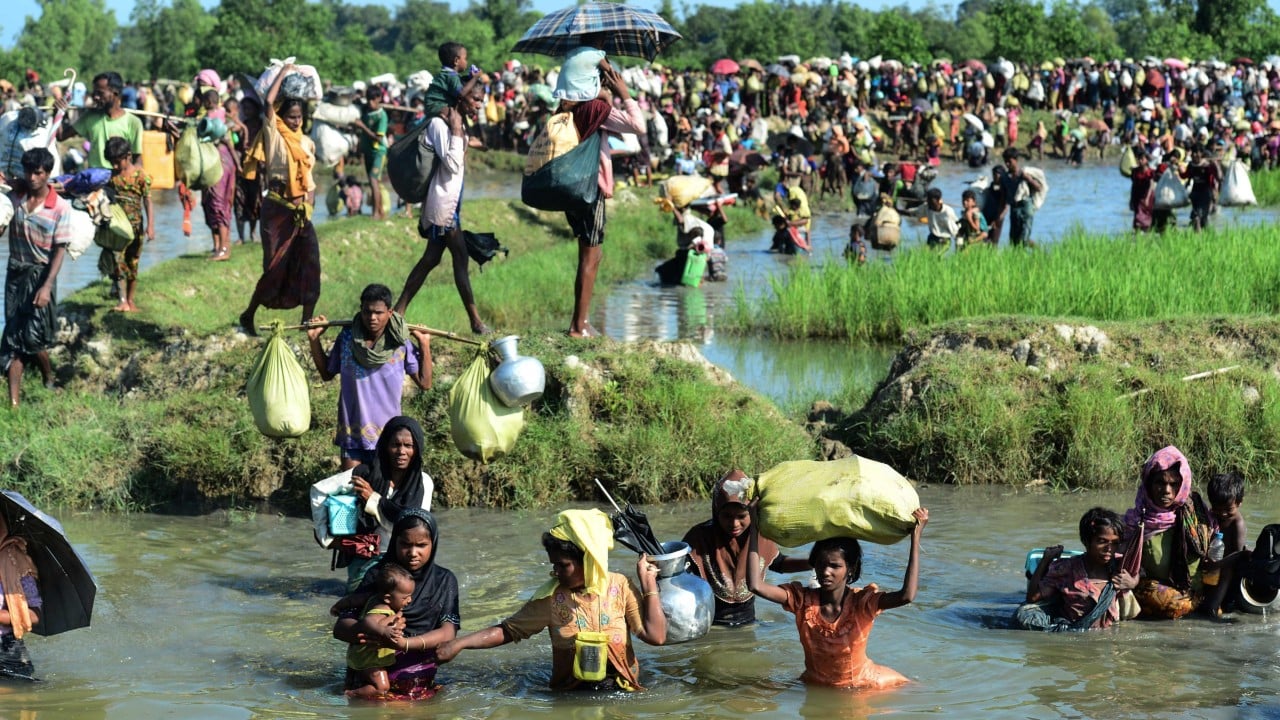
And what about the refugees themselves? Over a million Rohingya remain crammed into sprawling camps in Bangladesh, where humanitarian funding has shrunk and rations have faced severe cuts. Bangladesh's government welcomed the ICJ ruling, yet officials in Dhaka are simultaneously under immense domestic pressure to begin repatriations. Legal scholars like Antje Missbach at Oxford have warned that if conditions in the camps keep deteriorating while safe return remains impossible, the verdict could inadvertently drive more desperate young Rohingya onto rickety smugglers' boats across the Andaman Sea.
How This Verdict Reshapes International Law Beyond Myanmar
Even if the immediate situation in Rakhine State remains deadlocked, legal analysts are paying intense attention to the precedent this ruling sets globally.
For decades, critics argued the 1948 Genocide Convention had become almost impossible to enforce against sovereign states. Previously, the ICJ had ruled in 2007 that Serbia failed to prevent the Srebrenica genocide, stopping short of holding the state directly responsible for committing it. By crossing that threshold in The Gambia v. Myanmar, the court proved that a smaller nation with no direct geographical stake in a conflict can successfully haul a military regime before the world's top judges and win.
Two legal shifts stand out for future cases:
- Genocide doesn't require total extermination. The ICJ confirmed that destroying a group's capacity to survive and renew itself—through mass displacement, sexual violence, and stripping away basic conditions of life—satisfies the legal threshold for genocidal destruction.
- Armed conflict isn't a legal shield. Governments often excuse mass atrocities by claiming they were fighting armed insurgents. The court flatly rejected that defense, ruling that the presence of militant groups like ARSA does not give a state license to destroy an entire civilian population.
Other pending genocide cases at the ICJ—including South Africa's case against Israel and Ukraine's case against Russia—will inevitably draw on the evidentiary standards the judges just established here.
What Needs to Happen Next to Make the Ruling Count
A court judgment is only as strong as the political pressure behind it. If governments simply issue polite congratulatory statements and move on, the ruling risks becoming a moral victory with zero practical relief for survivors.
Right now, accountability depends on concrete policy shifts from regional neighbors and major powers:
- Stop forced returns and maritime pushbacks. Because the ICJ officially recognized the Rohingya as survivors of an ongoing genocide, countries like Malaysia, Thailand, and Bangladesh face heightened legal obligations under the Genocide Convention not to deport refugees back to danger or push boats back out to sea.
- Grant legal work rights in host countries. Keeping over a million people indefinitely trapped in aid-dependent camps isn't sustainable. Host nations need international financial backing to allow Rohingya refugees to work legally and educate their children until safe repatriation actually exists.
- Cut off the junta's cash and weapons. Targeted sanctions against Myanmar's state-owned enterprises, aviation fuel suppliers, and military officers must be coordinated across the US, UK, EU, and Asian partners rather than applied piecemeal.
- Engage all actors controlling Rakhine State. Diplomatic pressure cannot focus solely on Naypyidaw. International mediators must engage both Myanmar's democratic opposition (the National Unity Government) and the Arakan Army to secure binding human rights guarantees for Rohingya communities living under their control.
Nine years after their villages were burned to the ground, the Rohingya finally have the truth written into permanent international law. Turning those words into safety, citizenship, and a real home is the fight that starts now.