The metal shutter of a corner store in downtown Johannesburg does not slam shut. It screeches. It is a dry, rusted sound that scrapes against the concrete sidewalks of Hillbrow, echoing through streets that are usually deafeningly loud. By noon, the silence is total.
A winter chill hangs over South Africa, but the cold inside the commercial heart of Durban and the gridlocked lanes of Alexandra has nothing to do with the June weather. It is the freezing effect of an ultimatum.
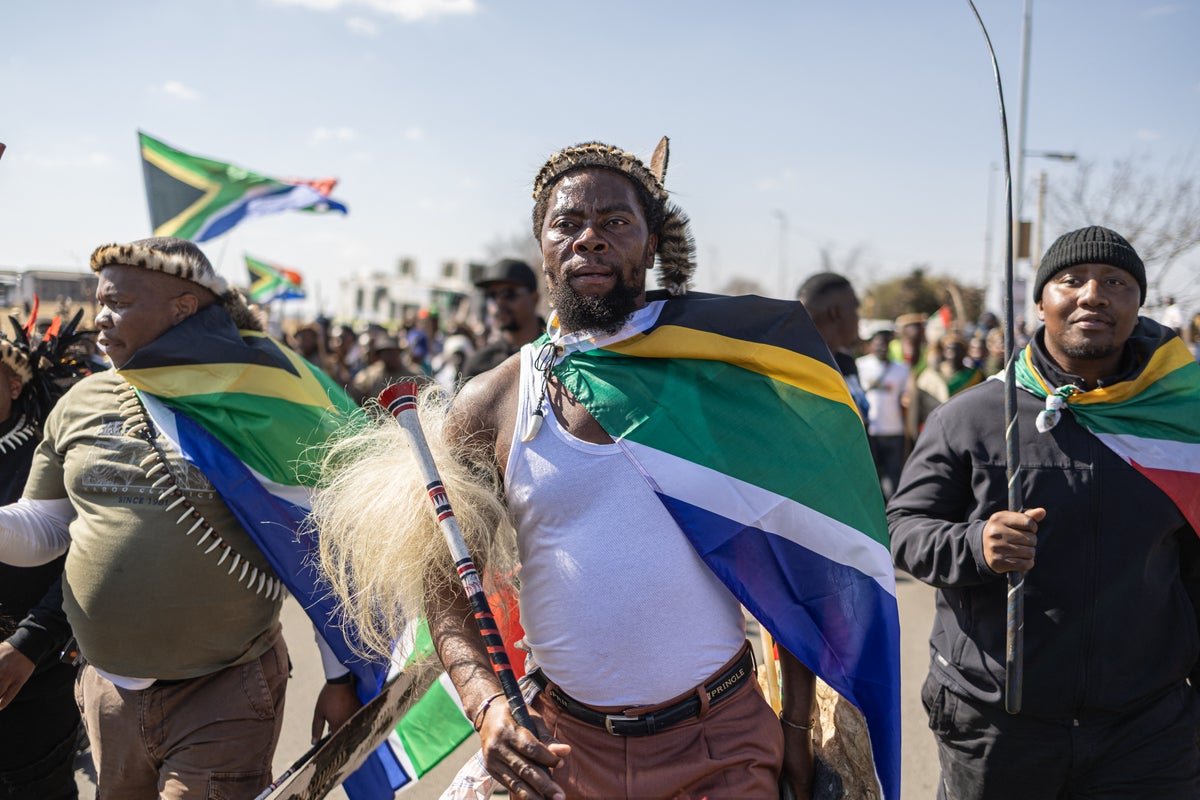
A civic organization calling itself March and March drew a line in the dust weeks ago. They gave June 30 as a hard deadline. The mandate was simple, sweeping, and entirely unauthorized by any court of law: every undocumented migrant must pack up and leave the country. But out here on the pavement, nuance is the first casualty. The decree did not distinguish between a registered refugee with a valid permit and an undocumented laborer who crossed the Limpopo River under the cover of night. To the crowds gathering with wooden sjamboks and tree branches, the only document that matters is the accent in your mouth and the birthplace on your skin.
Consider what happens when a city decides to hold its breath.
Step inside a transit camp in Durban, where the air smells of woodsmoke and damp wool. A young mother from Malawi sits on a plastic crate, her fingers tracing the edge of a nylon duffel bag. She spent five years braiding hair in a shop that no longer exists because the landlord, terrified that his building would be burned to the ground by vigilantes, evicted every foreign tenant over the weekend. She is legal. Her papers are tucked neatly into a plastic sleeve beneath her sweater. Yet, she is waiting for a bus out of the country she chose to call home. Fear does not check your visa status.
This is the invisible tax of a country fractured by its own expectations. South Africa is the most unequal society on earth. One in three people here has no job. The taps in the townships run dry for days, and the electricity grid trips under the weight of decades of neglect. When a state fails to deliver on the promises of freedom, anger does not look upward at the politicians in Pretoria. It looks sideways at the man running the spaza shop on the corner.
The numbers provided by the state are staggering, but they fail to capture the friction of the exodus. The Border Management Authority reports that roughly 25,000 people have been repatriated or have fled through the borders in recent weeks. Fifteen thousand Malawians have been processed for departure. Thousands more from Zimbabwe, Mozambique, and Nigeria are gone. Governments across the continent have scrambled buses and charter flights to pull their people out before the streets catch fire.
The memory of July 2021 behaves like a ghost in these streets. Five years ago, a wave of looting and arson tore through KwaZulu-Natal and Gauteng, leaving more than 350 people dead and three billion dollars in economic ashes. It was described as an insurrection. Today, the shopping malls are not taking chances. The country’s largest private security firms have activated armored personnel carriers, and drone pilots are stationed on the roofs of suburban shopping centers.
But the real problem lies elsewhere. It is found in the slow erosion of what South Africa used to mean to the rest of the continent.
There was a time when this country was the North Star of human rights, the house that Nelson Mandela built on the foundation of the Freedom Charter, which famously declared that South Africa belongs to all who live in it. Now, police vans cruise through the central business districts while small groups of protesters march past shuttered storefronts, blowing plastic whistles and handing ultimatums to clothing store managers, demanding the immediate dismissal of foreign staff.
President Cyril Ramaphosa has issued statements acknowledging that the deep concerns of citizens regarding illegal immigration are real, while condemning the threat of violence. It is a delicate, agonizing tightrope walk. The state has deployed thousands of police officers to ensure the marches do not turn into a repeat of the 2008 xenophobic riots that claimed 62 lives.
As afternoon fades into a tense, quiet evening, the crowds in Johannesburg CBD hover around a few hundred rather than the thousands the organizers predicted. The state claims it remains in full control.
Yet, down at the transit centers and along the roads leading north toward the border, the damage is already done. A sidewalk covered in abandoned mattress foam and discarded plastic hangers tells the true story of the deadline. It is the story of a continent's dream fracturing from the inside out, leaving thousands of people to choose between the home they built and the safety of the road back.
The screech of the metal shutters opening again tomorrow will not mean the terror has passed. It will only mean the silence has shifted.