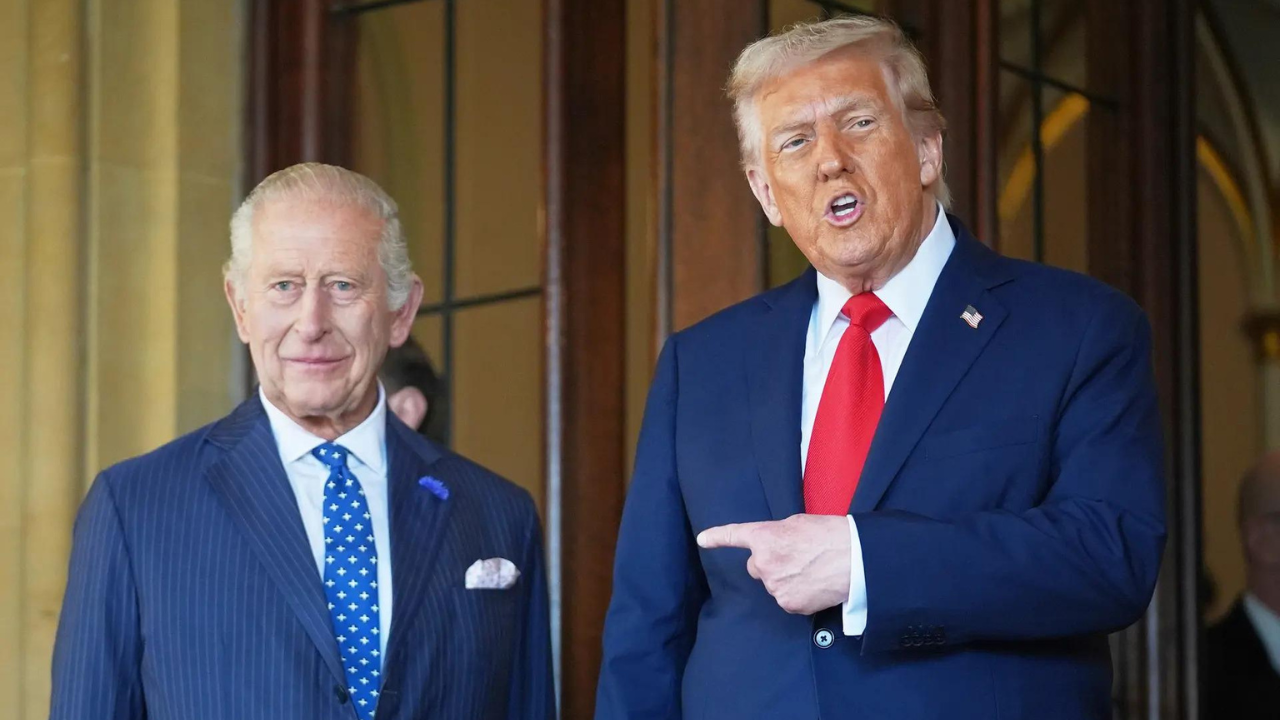
King Charles III steps onto the floor of the U.S. Capitol today to perform the most delicate diplomatic surgery of his reign. Nominally, he is here to celebrate the 250th anniversary of American independence. In reality, the British monarch has been dispatched as a human firewall between a volatile White House and a Downing Street that has flatly refused to join the American-led offensive in Iran.
The primary goal of this address to a joint session of Congress is to bypass the combative rhetoric of the executive branch and appeal directly to the American legislature. By invoking the shared legal and democratic DNA of both nations—stretching back to the Magna Carta—Charles aims to insulate the "Special Relationship" from the immediate fallout of the Iran conflict. Whether a 77-year-old constitutional monarch can bridge a rift over regime change and blocked global oil routes remains the central gamble of the 2026 diplomatic season. Recently making headlines in this space: The Mechanics of Urban Displacement and the Statutory Price Control Trap in Mexico City.
The Proxy War in the Oval Office
While the public sees handshakes and tea on the South Lawn, the private reality is one of profound strategic divergence. President Donald Trump has spent the last year publicly lambasting Prime Minister Keir Starmer, labeling the UK’s refusal to provide offensive support in the Iran campaign a "tragic mistake." The American administration’s policy of "zero enrichment" and its pursuit of regime change via air strikes have found no buyers in London.
Sir Keir Starmer has been resolute: the UK will not participate in what he terms "regime change from the skies." While the Royal Air Force has defended UK bases in Bahrain and Cyprus from Iranian counter-strikes, the British government has restricted the use of its sovereign territory to strictly defensive maneuvers. This has led to a Cold War of words, with the White House threatening to scrap trade agreements and impose heavy tariffs on British digital services. Additional insights regarding the matter are detailed by Al Jazeera.
Charles is not in Washington to negotiate these details—he cannot. Instead, he is there to embody the continuity that exists beyond the four-year cycles of American politics.
The Strait of Hormuz and the Economic Brink
The stakes of this royal intervention are written in the price of global energy. The Iranian closure of the Strait of Hormuz has choked off nearly 20% of the world’s oil supply, forcing the International Energy Agency to release 400 million barrels of emergency reserves. Even with these measures, the global economy is shuddering.
The UK finds itself in a strategic vice. It is an ally of the United States but a proponent of the Pakistani-mediated peace talks that the Trump administration has viewed with open skepticism. British intelligence suggests that the "maximalist" demands of the U.S. negotiators—demanding the total removal of all past nuclear material—are currently the primary roadblock to a lasting ceasefire.
The Legislative Strategy
The decision to address Congress rather than focus solely on the White House is a calculated move by the Foreign, Commonwealth & Development Office (FCDO). By speaking to the House and Senate, the King is engaging the branch of government that holds the "power of the purse" and the authority over trade.
- Trade Preservation: Charles will emphasize that economic partnership is a "shared security interest," a subtle nudge against the President's tariff threats.
- The NATO Anchor: Amid renewed American threats to withdraw from or sideline NATO, the King will likely reiterate the UK's commitment to the alliance as the "bedrock of Western security."
- Historical Absolution: By framing the 250th anniversary not as a celebration of a split, but as the birth of a sibling democracy, he seeks to lower the emotional temperature in the room.
The Limits of Royal Soft Power
We must be clear about what this visit can and cannot achieve. A speech in the House Chamber does not change the fact that the U.S. and Israel launched strikes against Iran on February 28, nor does it bring back the Iranian Supreme Leader killed in those attacks. The transition of power in Tehran to the next generation of leadership has only made the Iranian position more "unyielding," according to recent briefings.
The King is essentially playing the role of a stabilizing weight on a ship in a gale. He represents a version of Britain that is dependable, historical, and unswerving, even as the specific policies of the Starmer government clash with the Trump "America First" doctrine. It is a performance of statecraft that relies entirely on prestige because the hard power of the UK—its Navy mocked by the current U.S. President—is no longer sufficient to dictate terms in Washington.
The Shadow of the Weekend
The atmosphere in Washington is further complicated by the recent assassination attempt on President Trump during a media dinner. The security presence is suffocating, and the political mood is one of defensive nationalism. Charles must offer genuine sympathy for the attack without appearing to endorse the political agenda of the survivor.
The King's mention of "reconciliation and renewal" is intended for two audiences. To the Americans, it is an olive branch after months of public bickering. To the British public, many of whom are deeply wary of being dragged into a Middle Eastern quagmire, it is an assurance that the UK can maintain its alliance without sacrificing its strategic autonomy.
Success today is measured in silence: the absence of a presidential "tweet" or a public rebuke from the Speaker of the House. If the King can finish his twenty-minute address without a diplomatic incident, the FCDO will consider the mission a triumph. The war in Iran will continue, the tankers will remain stalled in the Gulf, and the tariffs may still come, but the institutional bridge between London and Washington will have been reinforced for another season.
The pageantry is the point. When the hard logic of war and trade fails, the only thing left is the weight of history and the theater of the throne.