Travel media loves a time capsule. For decades, glossy magazines and hyperventilating travel blogs have recycled the same breathless narrative about Poland’s Wieliczka Salt Mine. They call it a "hidden city." They gush over the 700 years of history, the subterranean lakes, and the massive underground chapels carved entirely from rock salt. They frame it as an untouched, mystical underworld hiding just outside Kraków.
It is a beautiful story. It is also entirely manufactured.
If you descend into Wieliczka expecting an intrepid journey into an ancient, quiet underworld, you are going to be hit with a severe case of tourist whiplash. Wieliczka is not hidden. It attracts over one million visitors a year. It is not an untouched relic; it is a highly engineered, aggressively monetized subterranean theme park.
Step away from the glossy brochures. The standard "Tourist Route" is a sanitized, Disneyfied conveyor belt that completely misses why this place actually matters. If you want to understand the grim, brutal, and fascinating reality of human ambition underground, you have to stop buying into the fairytale and look at the infrastructure.
The Myth of the Subterranean Utopia
The typical travel piece presents Wieliczka as a triumph of artistic devotion. You are told stories of lonely, pious miners who, in their spare time between grueling shifts, lovingly chipped away at the salt walls to create the St. Kinga’s Chapel. They paint a picture of a subterranean community finding spiritual solace in the dark.
Let’s dismantle that romanticism immediately.
Mining in the 13th to 20th centuries was a brutal, lethal enterprise. The chapels were not built out of leisurely artistic expression; they were built out of profound, everyday terror. Miners faced constant threats of catastrophic cave-ins, asphyxiation from toxic gases, and sudden methane explosions. In an era before modern ventilation and structural engineering, entering the mine was a daily roll of the dice with death. The chapels were built because the miners were terrified, and prayer was their primary line of defense.
When you look at the famous salt statues, you are looking at monuments to survival anxiety, not a medieval art collective. By sanitizing this history into a neat story of "artistic wonder," modern tourism erases the sheer grit and suffering that built the place.
The "Tourist Route" Trap
The biggest mistake travelers make is booking the standard Tourist Route. You line up, you get corralled into a group of 30 strangers, and you walk down 378 wooden steps. From that point on, your experience is entirely scripted.
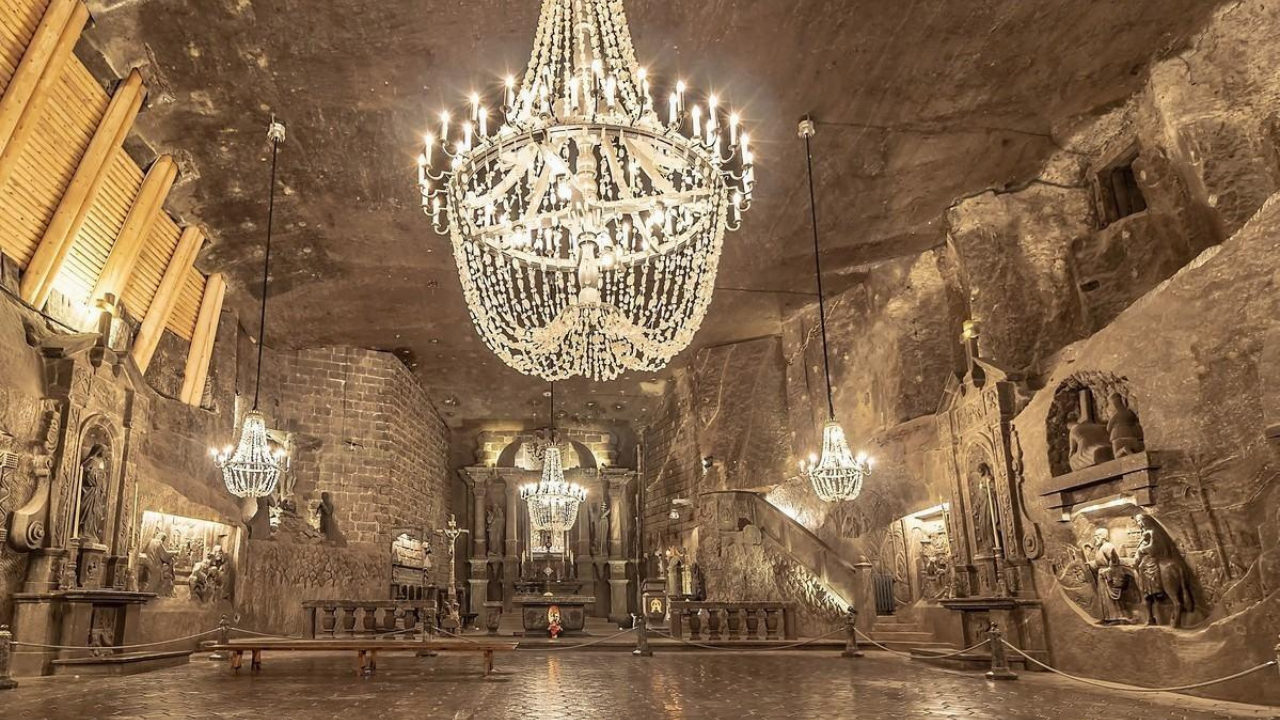
The lighting is dramatic and cinematic. The paths are perfectly paved. You are guided from one brightly lit cavern to the next, listening to an acoustic guide or a guide repeating the same jokes they’ve told three times that day. You arrive at the Chapel of St. Kinga, and while the scale is genuinely impressive, you are sharing that moment with hundreds of people taking the exact same selfie. It feels less like exploring an ancient mine and more like walking through a very damp museum that happens to be underground.
Even the lakes are staged. The famous salt lakes are illuminated with artificial, neon-hued lights that look more like a high-end nightclub pool than a natural geological feature. It is a curated spectacle designed to look good on a smartphone screen, completely detached from the raw, industrial reality of the space.
How to Actually Experience Wieliczka
If you want to see the real mine, you have to bypass the main entrance and book the Miners' Route.
The Miners' Route is the antithesis of the standard tourist trap. They don't let you walk down in your streetwear. You are handed a heavy jumpsuit, a helmet, and an actual headlamp. You don't enter through the grand visitor halls; you take an old industrial elevator shaft down into the dark.
On this route, there are no paved paths. There are no dramatic spotlights illuminating pristine statues. You are walking through raw, unpolished timber-framed tunnels. The air is thick, cool, and tastes heavily of salt. You are tasked with actual mining activities: measuring methane levels, digging for salt, and navigating by the light of your own headlamp.
This is where the real value of Wieliczka hides. In the pitch black of the active conservation zones, you understand the claustrophobia. You hear the deep, unsettling groans of the earth above you—a reminder that the ground is constantly shifting, compressing, and trying to reclaim the space humans carved out of it.
The Hypersaline Reality
To appreciate the mine, you have to understand the science of salt, not just the folklore.
Wieliczka exists because of a Miocene-era sea that evaporated 13 million years ago, leaving behind a massive deposit of rock salt (halite). What the standard tours rarely explain is that a salt mine is a living, volatile environment. Salt is highly soluble. The greatest threat to Wieliczka isn't structural collapse from weight; it is water.
Every drop of fresh water that leaks into the mine from the surrounding water table dissolves the very pillars holding it up. For centuries, the battle of Wieliczka has been a hydrological war. Miners had to constantly manage water inflow, directing it into controlled channels and pumping it out to prevent the entire structure from melting from the inside out.
In 1992, an unexpected water inflow in the Danilowicz shaft flooded parts of the mine, threatening the historic town above. It took years of intensive grouting and engineering to stabilize the disaster. When you walk through the tunnels, you aren't walking through a static monument; you are walking through a highly fragile, ongoing engineering crisis that requires continuous intervention to stay standing.
Dismantling the Premier Questions
When people research Wieliczka, they usually ask the wrong questions because they've been primed by marketing copy. Let's fix the premise of those inquiries.
Is the air in the salt mine therapeutic?
The industry pushes the concept of "subterranean microclimates" and halotherapy, claiming the air cures respiratory ailments. Wieliczka even has an underground health resort. The reality? The air is incredibly pure, completely free of pollen, allergens, and major pollutants, which offers immediate relief to asthma sufferers. But it is not a magical cure-all. It is simply a highly effective air filter created by nature and hundreds of meters of rock. It’s clean air, not a medical miracle.
How long does it take to see everything?
The standard tourist answer is "three hours." That is wrong. Three hours is just the length of the leash the tour company keeps you on. The mine consists of nine levels and over 245 kilometers of galleries. You are seeing less than two percent of the actual complex. To say you’ve "seen the mine" after the standard tour is like looking at a hotel lobby and claiming you've explored the entire city.
Is it safe for everyone?
The brochures say yes, but they downplay the physical reality. Even the standard route requires climbing down hundreds of stairs and walking several kilometers in cool, damp conditions (around 15°C or 59°F). If you have mobility issues or severe claustrophobia, the standard tour is a grueling exercise in endurance, made worse by the inability to easily exit the tour midway.
The Trade-off of Commercialization
Let's be candid about the downsides of rejecting the mainstream experience. If you skip the Tourist Route to find authenticity, you miss the sheer architectural scale of St. Kinga's Chapel. The Miners' Route doesn't go there. You won't see the massive salt chandeliers or the intricate relief carvings of the Last Supper.
That is the compromise. You can have the polished, visually stunning spectacle along with a thousand other tourists, or you can have the raw, gritty, authentic historical experience in the dark. You cannot have both.
The travel industry wants you to believe you can buy adventure without discomfort. It sells the illusion of exploration while keeping your feet firmly on a paved, safe sidewalk. But real travel requires making a choice.
Stop consuming pre-packaged wonders. Skip the gift shops selling overpriced salt lamps. Put on the jumpsuit, turn off your phone, and go stand in a dark, silent tunnel where human beings traded their sweat and lives for a mineral we now buy for a dollar a bag. That is the only way to actually see Wieliczka.