The wind in the Northern Alps of Japan does not just blow; it screams with a predatory intent. It is a place where the granite peaks of Mount Shirouma pierce the sky at nearly 3,000 meters, acting as a serrated fence against the moisture-heavy clouds rolling off the Sea of Japan. When the weather turns, the transition isn't gradual. It is a shutter slamming shut. One moment, you are a hiker tracing the jagged spine of a dream; the next, you are a ghost-in-waiting, lost in a vertical world of blinding white.
This is the reality that two hikers from Hong Kong stepped into this week. They didn't seek a tragedy. They sought the sublime. But the line between an Alpine adventure and a fight for breath is thinner than the Gore-Tex layers supposed to protect us.
The Weight of the First Step
Consider the preparation. You check the maps. You buy the boots. You fly from the humid, neon-soaked density of Hong Kong to the crisp, silent air of Nagano. There is a specific kind of hubris we all carry when we head into the mountains—a belief that our gear and our fitness act as a contract with nature. We assume that if we respect the trail, the trail will respect us back.
But the Northern Alps are indifferent to contracts.
When the two men set out, the peaks likely looked like postcards. Mount Shirouma is famous for its "DaisekkeI," a massive snowy gorge that lingers even into the warmer months, acting as a natural air conditioner for the surrounding valley. It is beautiful. It is also a trap. As they ascended toward the ridge between Mount Korenge and Mount Shirouma, the atmosphere curdled.
The clouds dropped. The temperature plummeted. In the high altitudes of Japan, spring and summer are mere suggestions. Winter lives in the shadows of the rocks year-round, waiting for the sun to dip or the wind to shift. When the two hikers became separated, the narrative shifted from a shared journey to a singular, terrifying isolation.
The Sound of One Voice
Imagine the moment the realization hits. You turn around to suggest a water break or to point out a distant ridgeline, and there is no one there. Just the hiss of the wind. You shout a name. The sound is swallowed instantly by the fog. You shout again, louder this time, feeling the first prickle of cold sweat that has nothing to do with physical exertion.
This is the "invisible stake" of mountain travel. It isn’t just the risk of a fall; it’s the sudden, violent evaporation of the social safety net.
One of the men managed to find his way to a mountain hut. In the Japanese Alps, these huts—yamagoya—are the only cathedrals that matter. They are sturdy, wooden bastions of warmth and curry rice, often perched on dizzying precipices. Reaching one is the difference between a harrowing story and a static headline. He made it. He spoke to the staff. He raised the alarm.
But his companion remained out there, somewhere in the gray.
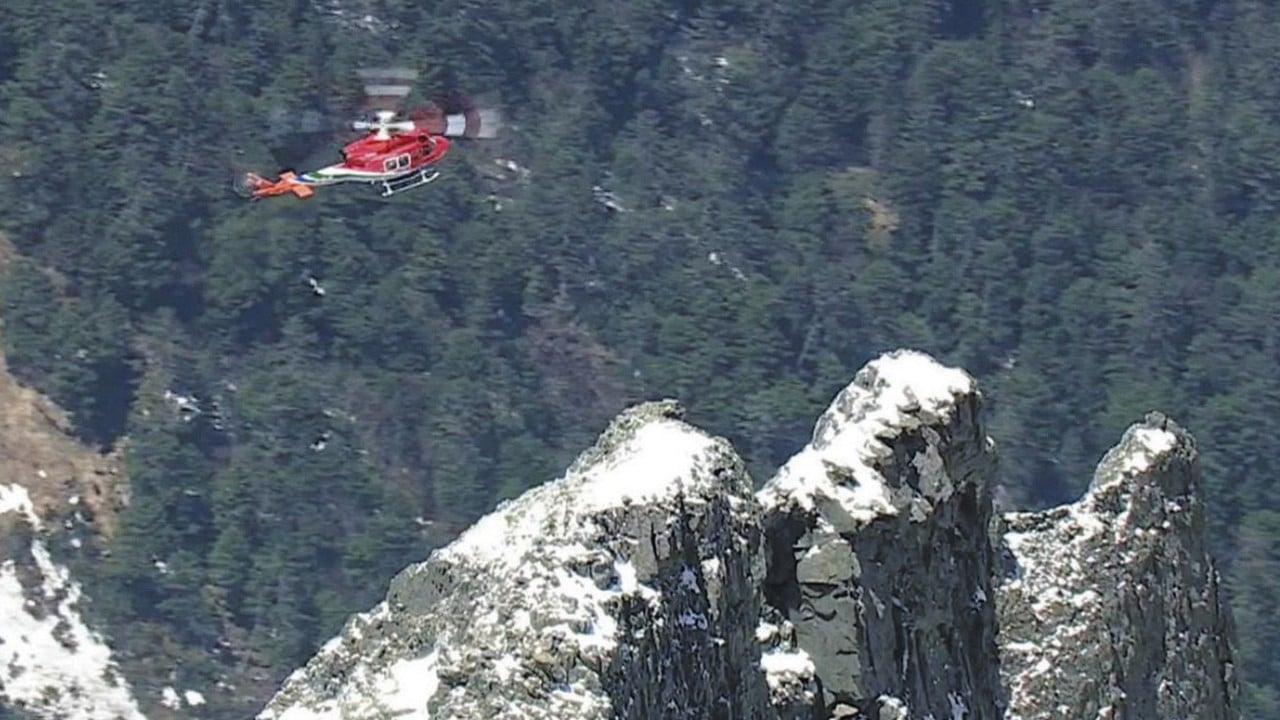
The rescue operation began under the heavy shroud of "bad weather." That phrase is a polite euphemism used by news agencies. For the Nagano Prefectural Police mountain rescue teams, "bad weather" means navigating slopes where the ground is indistinguishable from the sky. It means hovering a helicopter near rock faces where a single downdraft can turn the aircraft into a fireball.
The Geometry of a Search
Searching for a human being in the Northern Alps is like looking for a specific grain of gray sand on a gray beach. The terrain is a chaotic tumble of scree, dwarf pine, and lingering snowfields.
The rescuers are professionals who live in a constant state of calculated risk. They understand the "Golden Hour," but they also understand the "Frozen Night." When a hiker goes missing in these conditions, the searchers aren't just looking for a person; they are looking for a break in the pattern. A splash of color from a backpack. A rhythmic whistle. A footprint that hasn't been erased by the spindrift.
Why do we do it? Why do we go to places where we are so clearly unwelcome?
It’s the pull of the "Above." In our daily lives, we are surrounded by cushions. We have GPS to tell us where we are, heaters to tell us what season it isn't, and walls to keep the world at bay. The mountains strip that away. They offer a rare, terrifying clarity. When you are on a ridge in Nagano, you are exactly where you are standing. No more, no less.
But that clarity comes with a price. The mountains don't care if you have a return flight to Hong Kong. They don't care if you have family waiting for a "Home Safe" text. They are ancient, tectonic, and utterly silent.
The Lingering Cold
As of the latest reports, the search continues for the second hiker. The rescue teams are battling the same elements that claimed the duo's visibility. Every hour that passes, the narrative grows heavier. The survivor at the hut waits. The rescuers prep their gear for another push.
We often read these reports as "travel news" or "mishaps." We shouldn't. They are reminders of our fragile biology. We are tropical creatures who have learned to trick the cold with synthetic fibers and internal combustion. But when those tricks fail, we are left with only our will and the hope that someone is looking for us.
The Northern Alps are currently holding a secret. They are holding a man who went out to see the world and found himself at the mercy of it.
The tragedy isn't in the going. The tragedy is in the silence that follows when the mountain decides it isn't finished with you yet. We watch the weather reports from afar, hoping for a break in the clouds, for a glimpse of neon fabric against the gray stone, and for the sound of a helicopter that finally finds what it’s looking for.
The peaks remain. They do not watch the rescuers. They do not watch the lost. They simply exist, cold and towering, while we humans scramble across their knees, praying for a way back down to the warmth of the world we know.