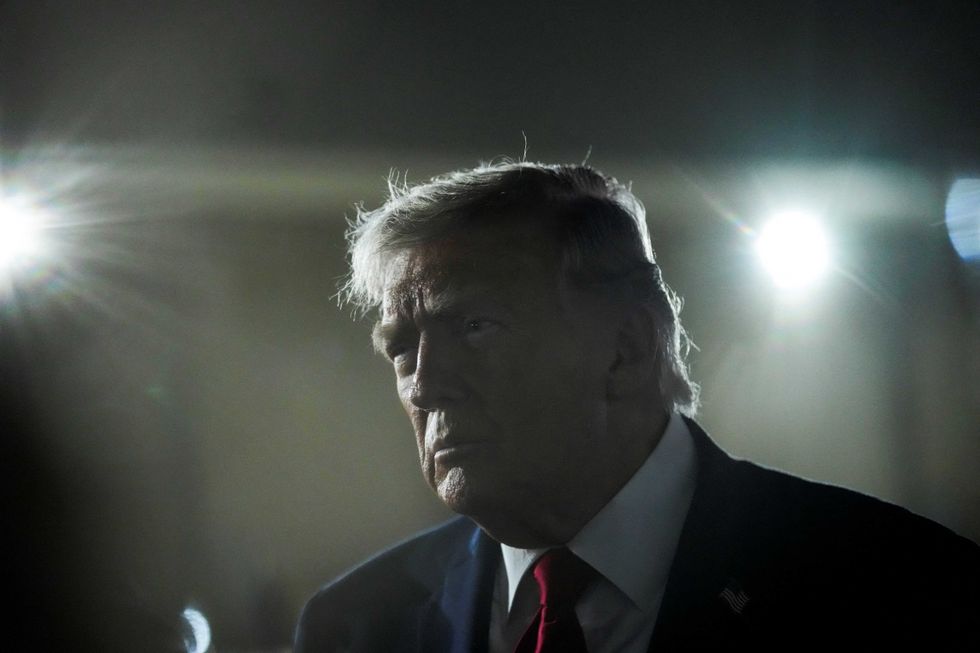
The basement briefing room of the West Wing has no windows. It smells faintly of damp carpets, stale coffee, and the unique, ozone tang of high-end electronics running continuously. For the journalists who spend their lives crammed into its narrow rows, the room is less a workspace and more a pressure cooker. On a Tuesday afternoon, a senior administration official stood at the lectern, his crisp blue tie perfectly knotted, adjusting a stack of heavily vetted talking points. He spoke with the quiet, measured cadence of a career diplomat. He assured the room, and by extension the world, that American foreign policy was steady, predictable, and aligned with months of careful intelligence gathering.
Then, the notification banners started lighting up on every phone in the room. For a different look, check out: this related article.
Upstairs, sitting in the residence, Donald Trump had typed a few dozen words. With a single tap, the carefully constructed reality of the State Department disintegrated. The official at the podium was still speaking, his voice droning on about alliances, when a reporter in the front row interrupted.
"Sir, the President just said the exact opposite." Further analysis on this trend has been provided by NPR.
The room went completely silent. You could hear the hum of the air conditioner. You could see the color drain from the official’s face. In that single, frozen moment, the invisible architecture of global governance shuddered. This is not just a story about a political gaffe or a routine contradiction. It is a glimpse into the profound, destabilizing friction between the traditional machinery of statecraft and the raw, unvarnished impulse of a single man.
The Anatomy of the Double Take
Imagine a massive container ship. It takes miles for that ship to turn. Thousands of hours of labor, diplomatic cables, legal reviews, and strategic planning go into every single public statement issued by a United States government agency. This bureaucracy exists to prevent catastrophic misunderstandings between nuclear-armed nations. It is designed to be slow. It is designed to be boring.
Now, imagine someone tossing a firecracker onto the bridge of that ship.
When a President immediately contradicts their own administration's official line, it creates a phenomenon known in diplomatic circles as strategic whiplash. Critics from both sides of the aisle are left stunned, not necessarily by the substance of the new declaration, but by the sheer velocity of the pivot. It reveals a terrifying truth: the right hand does not just misunderstand what the left hand is doing; the right hand is actively cutting the left hand off at the wrist.
For the career diplomats, intelligence analysts, and military advisors who populate the lower tiers of the American government, these moments are deeply disorienting. Consider a mid-level analyst at the Pentagon. She has spent the last six months analyzing satellite imagery, drafting policy briefs, and coordinating with European allies to present a united front against a specific foreign adversary. Her work is meticulous. It is based on hard data.
She walks into her office, logs onto her terminal, and discovers that the entire strategic framework she built has been rendered obsolete by a social media post written during a commercial break.
The immediate casualty of this dynamic is trust. When America speaks with two entirely different voices at the exact same moment, foreign capitals are forced to play a dangerous game of choose-your-own-adventure. Do they listen to the official policy statement delivered by the Secretary of State, or do they wager everything on the unpredictable declarations of the Commander-in-Chief?
The Currency of Predictability
International relations run on predictability. It is the invisible currency that prevents wars. When an ally knows exactly how the United States will react to a specific provocation, they can plan accordingly. When an adversary knows the precise boundaries of American tolerance, they are less likely to cross them.
When that predictability vanishes, the world becomes a significantly more volatile place.
Critics of the President's sudden declarations often point to the immediate fallout in global markets. Money is a coward; it flees at the first sign of uncertainty. A sudden policy reversal on trade, sanctions, or military alliances can wipe out billions of dollars in valuation within minutes. But the economic impact is merely a symptom of a deeper, more systemic rot.
The real danger lies in the miscalculation.
If a foreign dictator believes the official administration line is a bluff because the President hinted otherwise online, they might choose to test American resolve. They might move troops across a disputed border. They might launch a cyberattack. They might intercept a commercial vessel. In that scenario, a war could start not because either side truly wanted it, but because the signals were so scrambled that neither side understood the other's true intentions.
The Performance of Disruption
To understand why this happens, one must look past the policy itself and examine the psychological allure of disruption. For Donald Trump, the traditional methods of governance are not just slow; they are inherently suspicious. The career bureaucrats, the intelligence agencies, the diplomatic corps—these are often viewed not as tools of American power, but as components of a entrenched system designed to frustrate the will of the executive.
A sudden, contradictory declaration is an act of dominance over that system.
It is a declaration to the world, and to his domestic base, that the traditional rules do not apply. It creates a sense of immediacy, a direct line of communication between the leader and the public that bypasses the filtering mechanisms of the press and the presidency's own staff. It feels authentic to his supporters precisely because it is unpolished and disruptive.
But authenticity is a poor substitute for stability when the stakes are existential.
Inside the embassies of Washington D.C., foreign diplomats spend hours dissecting these contradictions. They employ teams of linguists, psychologists, and political scientists to analyze the syntax of a late-night post, trying to determine if it represents a genuine shift in American policy or merely a fleeting thought amplified by a megaphone. They look for patterns in the chaos. Frequently, they find none.
The Human Cost of the Shift
We often view these political dramas through the lens of cable news punditry, treating them as a high-stakes sport where points are scored and gaffes are tallied. We lose sight of the human beings caught in the gears of the machine.
Think of the ambassador representing the United States in a fragile democracy halfway across the globe. He has spent years building capital with local leaders, reassuring them that the United States will honor its security commitments. He has looked those leaders in the eye and given his word.
Then comes the contradiction.
Suddenly, the ambassador’s phone is ringing off the hook. The local prime minister wants answers. The defense minister is demanding clarification. The ambassador sits at his desk, staring at a screen, realizing that his credibility has been entirely compromised. He has been left out on a limb, and his own government just sawed it off. The personal humiliation is secondary to the geopolitical damage; a diplomat without credibility is entirely useless.
This internal chaos creates a chilling effect throughout the entire apparatus of government. When initiative is punished by sudden reversals, people stop taking initiative. Career officials become hesitant to make decisions, preferring to wait for the next directive from the top, no matter how erratic it might be. The entire machine grinds to a halt, paralyzed by the fear of being contradicted before the ink on their memos is even dry.
The West Wing briefing room eventually cleared out that Tuesday afternoon. The journalists scurried off to write their urgent updates, and the senior administration official gathered his papers, his face set in a rigid, polite mask. He walked out the side door, back into the quiet corridors of power where the real work of running a superpower is supposed to happen.
The talking points he left behind on the lectern were useless now, just sheets of paper covered in dead words, rendered completely meaningless by a reality that moves too fast for the truth to keep up.