The Briefing Room is a place of jagged edges. It is a room built on the friction of divergent truths, defined by the staccato rhythm of camera shutters and the sharp, relentless questioning of the press corps. Under the hot glow of the television lights, the air usually tastes of recycled oxygen and adrenaline. It is perhaps the last place on earth where anyone expects to find a moment of soft, unvarnished human stillness.
But the podium is empty today for a reason that has nothing to do with policy shifts or international summits.
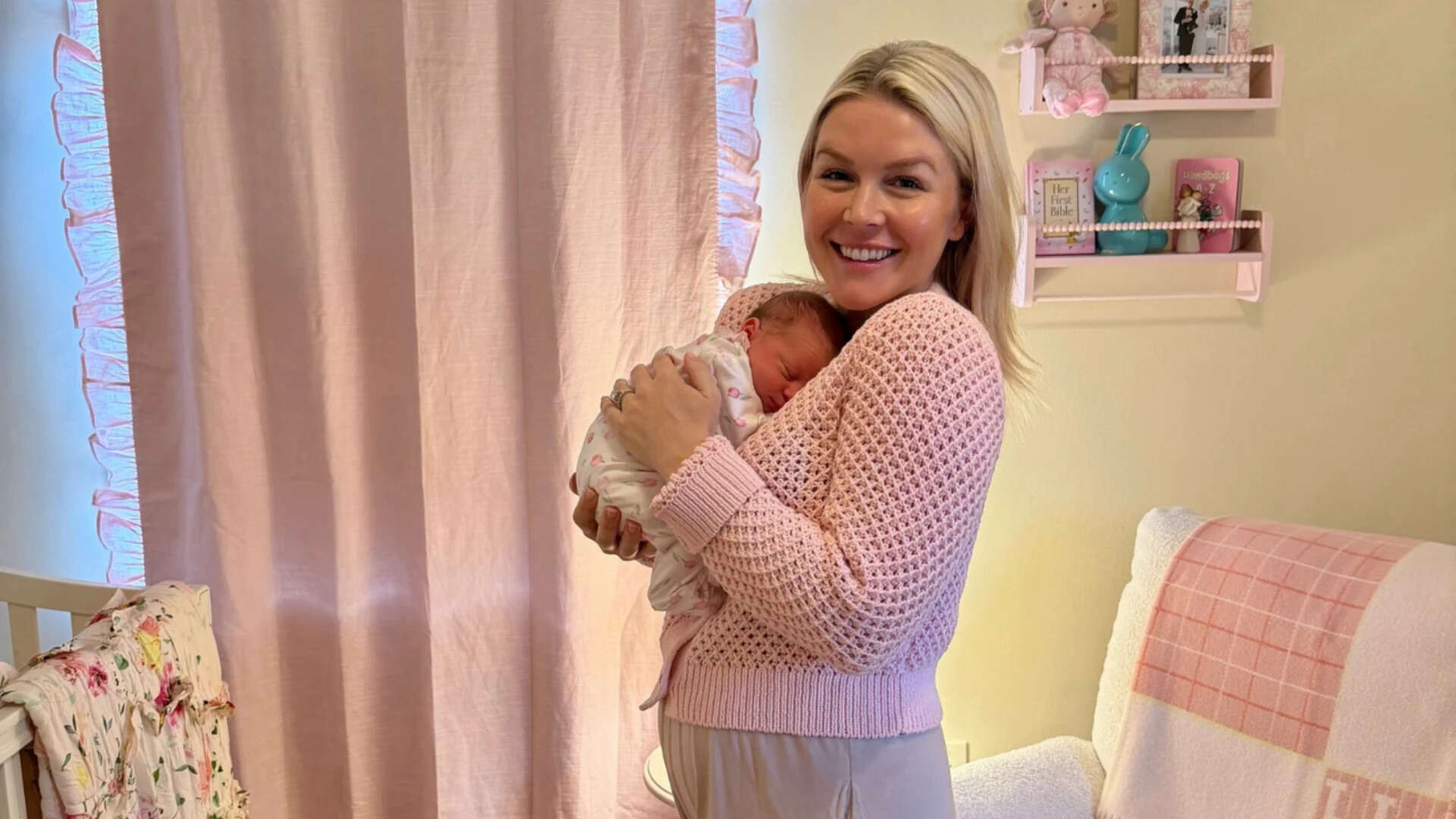
Karoline Leavitt, the voice of the White House, has traded the high-stakes theater of the West Wing for the rhythmic, quiet breathing of a newborn. Her daughter, Viviana, has arrived. In an environment where every word is calculated for its impact on the 24-hour news cycle, the arrival of a child provides a jarring, beautiful reminder that the gears of history are ultimately turned by people who go home to small, messy, miraculous lives.
The transition from the most public stage in the world to the most private room in a hospital is a dizzying shift in scale. One moment, you are managing the narrative of a nation; the next, your entire universe is condensed into six or seven pounds of fragile life.
The Weight of the Silence
Politics is an industry of noise. It demands constant vigilance, a skin thick enough to repel arrows, and a mind that functions like a high-speed processor. For a Press Secretary, the job is an endurance sport. You are the shield. You are the bridge. You are the person who stands in the gap between the administration’s inner sanctum and a world hungry for answers.
When a woman in such a high-pressure role steps away to bring life into the world, it forces a collective pause. We are used to seeing these figures as extensions of a political brand—icons of power or targets of criticism. We forget that beneath the tailored blazers and the poised delivery, there is the physical reality of a person carrying a future.
Viviana’s birth isn't just a line in a social media update. It is a quiet rebellion against the idea that the machinery of government is purely mechanical. It represents the "invisible stakes"—the reason why anyone bothers with the chaos of governance in the first place. We argue about tax codes, foreign aid, and energy independence because we are trying to build a world that is safe for the Vivianas of the tomorrow.
A Different Kind of Briefing
Imagine the scene. It is 3:00 AM. The frantic pace of the campaign trail and the grueling schedule of the White House are a thousand miles away. There are no teleprompters here. There is no spin. There is only the primal, exhausting, and transformative work of early motherhood.
Leavitt has spent years honing her ability to command a room. She knows how to navigate a hostile "Q&A" and how to stay on message when the pressure is mounting. But a newborn doesn't care about talking points. A newborn is the ultimate truth-teller. In those early hours of parenthood, the power dynamics of the world are inverted. The person who speaks for the President of the United States is now a servant to a tiny, demanding, and utterly perfect sovereign.
This is where the humanity of our public servants becomes undeniable. Whether you agree with the policies she defends or find yourself on the opposite side of the political aisle, the universal experience of parenthood is a leveling ground. It is the one thing that can pierce the bubble of Washington D.C. and remind us that we are all, at our core, driven by the same fundamental desires to protect and provide.
The Invisible Stakes of the Podium
There is a specific kind of bravery required to be a mother in the public eye. Every choice is scrutinized. Every absence is noted. There is a lingering, outdated expectation that women in high-powered roles should somehow minimize their personal lives, as if being a mother makes one less of a professional.
In reality, it is the opposite.
The perspective gained from holding a child changes how one views the world. The abstract "future" becomes a concrete reality. The stakes of every policy debate become personal. When Leavitt eventually returns to that podium, she won't just be representing an administration. She will be a woman who knows exactly what is at risk when we talk about the world we are leaving behind.
The "human element" is often scrubbed out of political reporting. We prefer the conflict. We prefer the "gotcha" moments and the partisan bickering. But the story of a young woman reaching the pinnacle of her career and then pausing to welcome a daughter is a narrative of wholeness. It suggests that you don't have to choose between being a force in the world and being a source of life and love at home.
The Rhythm of the New Normal
The news cycle moved on almost instantly. Within minutes of the announcement, the headlines had shifted back to the latest polls and the newest controversies. That is the nature of the beast. The world doesn't stop turning because a baby is born.
But inside a quiet home, the world has stopped.
The frantic pinging of a government-issued smartphone is likely muted. The television, usually tuned to a cable news loop, is probably dark. There is a different rhythm now—the soft rustle of blankets, the scent of a nursery, and the profound, terrifying realization of a love that exceeds all logic.
We often talk about "work-life balance" as if it’s a mathematical equation to be solved. It isn't. It’s a dance. Sometimes the work takes the lead, and sometimes the life demands the floor. For Karoline Leavitt, the dance has entered a new, tender movement.
The Briefing Room will be there when she gets back. The lights will be just as hot. The questions will be just as sharp. The jagged edges of the West Wing aren't going anywhere. But for now, there is a lullaby echoing in the silence where the soundbites used to be.
Viviana is here. And for a moment, the most important story in the world isn't happening on a stage, but in a cradle.


