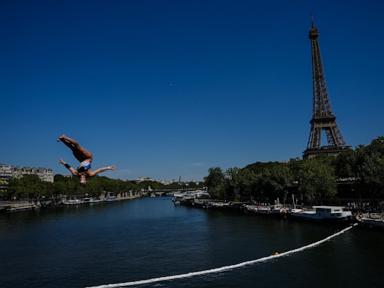
The Seine does not sparkle the way tourists imagine. Beneath the amber glow of evening lanterns and the cinematic silhouette of the iron lattice overhead, the water runs thick, heavy, and ancient. It holds secrets. It holds the sediment of centuries, the industrial ghosts of a changing capital, and, for generations, a strict, uncompromising prohibition. Swimming here was an act of quiet rebellion or utter desperation. Until now.
Stand on the temporary platform constructed near the riverbanks, and the air smells different. It is a mix of rising mist, damp concrete, and the unmistakable, sharp ozone of filtered urban ambition.
Look down.
Ten meters below, the surface waits.
High divers do not think about water as a liquid. They think about it as a threshold. Hit it wrong, and water behaves like solid steel. Hit it right, and it wraps around the body like a sudden, cold embrace. For the athletes stepping onto the staging overlooking the famous Parisian waterway, this particular threshold carries an invisible weight. They are not merely competing against gravity or each other. They are stepping into a rehabilitated ecosystem that spent a century rejecting human touch.
Consider what happened to get them here. For over a hundred years, swimming in the Seine was banned. The reasons were pragmatic and grim: raw sewage runoff, industrial dumping, and bacteria levels that turned a natural artery into a biological hazard. Millions of dollars and a grueling municipal obsession later, the city decided to reclaim its liquid heart. The high diving test event was not just a sports exhibition. It was a high-stakes stress test. A physical manifestation of a city trying to rewrite its own environmental history in real time.
Imagine a diver named Julien—a hypothetical composite of the athletes standing on that platform, toes gripping the edge of the board. He is twenty-eight, raised in the suburbs outside Lyon, conditioned in sterile, indoor Olympic pools where the chlorine is measured down to the decimal and the bottom is always visible. He looks out past the Alexandre III bridge. He sees the grey, opaque current churning past the stone piers.
Fear is not loud. It is a cold tightness in the throat.
Julien bounces once. The board groans.
In that fraction of a second, the abstract debate over municipal water infrastructure transforms into something visceral. The billions spent on underground storage basins, the political promises made by mayors, the endless testing of Escherichia coli levels—all of it condenses into the single point where his feet leave the fiberglass.
He spins. Two and a half flips. A pike position, tight and disciplined. The Parisian skyline rotates in a dizzying blur of stone, cloud, and light.
When he enters the water, it is clean enough to meet international standards, yet it retains its murky, opaque mystery. There is no bottom in sight. There is only the sudden shock of temperature, the resistance of the current trying to sweep him downstream toward the Île de la Cité, and the triumphant, rushing bubble of air escaping his lungs as he breaks the surface.
He surfaces, gasps for air, and raises a hand to the judges. The crowd erupts.
Yet, beneath the cheers, a deeper question lingers. Can a river with the industrial scars of Paris truly be tamed for recreation, or is this merely a temporary theatrical display for a global audience?
The logistics of urban river swimming are punishing. Heavy summer rainstorms can still overwhelm the city's ancient combined sewer systems, flushing untreated wastewater straight into the basin. Just weeks before major events, engineers watch weather radars with the nervous intensity of air traffic controllers. A single heavy downpour can flip the ecological switch back to red, canceling training sessions and forcing athletes to wait.
This is the tension at the heart of the modern metropolis. We want our natural spaces back, but we have paved over, polluted, and engineered them into submission. Reclaiming the Seine is an exercise in ecological arrogance and ecological redemption rolled into one. It requires constant vigilance, massive ultraviolet treatment plants hidden beneath public parks, and a daily gamble with the skies.
For the spectators lining the banks, leaning over the stone parapets with cameras raised, the technical realities fade into the background. They see only the grace of the flight. They see human bodies cutting through the damp Parisian air, defying the ordinary rules of a city that usually demands we stay firmly on the pavement.
The divers climb out of the water, shivering slightly in the brisk breeze coming off the river, towels wrapped tightly around their shoulders. They smile for the cameras, shaking off the water like aquatic birds. But as the crowds disperse and the evening shadows lengthen across the stone quays, the river resumes its steady, unbothered flow. It carries the history of a city that tried to change its mind, running silent and deep beneath the bridges, waiting for the next plunge.