A quiet room in London. The hum of a radiator. Outside, the gray drizzle of an autumn afternoon smears the windowpane, but inside, a laptop screen glows with a harsh, artificial light.
On screen, two boys are sitting on a school bench. One of them, possessing a mop of curly dark hair and a fragile, hopeful posture, reaches out. His hand hovers. The other boy, broader, with the golden-retriever charm of a rugby captain, looks down at the space between their fingers. For three excruciating seconds, nobody speaks. The silence is thick, heavy with the terrifying, beautiful friction of teenage longing.
Then, their hands touch.
To an outsider, it is a micro-moment. A tiny, inconsequential beat in a teen drama. But for the teenager watching this screen in the dark, a seventeen-year-old we will call Leo—a kid who spends his school lunches hiding in the library, praying no one notices the way his voice falters when his classmates talk about girls—that three-second touch is an earthquake. It is the first time Leo has seen a version of his future that does not end in tragedy, isolation, or a punchline.
This is the quiet, stubborn miracle of Heartstopper.
When the series first slid onto Netflix, it arrived without the explosive, neon-drenched fanfare of its darker, grit-and-glamour contemporaries. It did not feature the drug-fueled rhapsodies of Euphoria or the hyper-stylized cynicism of modern high school satires. Instead, it offered something far more radical: safety.
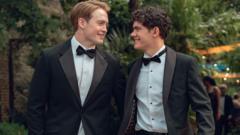
At the center of this storm of soft light and hand-drawn animated leaves stood two young actors, Kit Connor and Joe Locke. They were teenagers themselves when they were cast as Nick Nelson and Charlie Spring. They had no idea that stepping into these roles would mean carrying the emotional weight of a generation on their shoulders.
The Danger of the Dark Mirror
For decades, queer stories in mainstream media followed a predictable, devastating blueprint. If you were young and different, the screen told you what to expect: rejection, violence, sickness, or a lonely adulthood. The cinematic world taught queer youth to brace for impact.
Consider the emotional tax of growing up under that narrative. Psychologists have long documented the phenomenon of minority stress, where the chronic anticipation of prejudice shapes a young person’s worldview. When every movie featuring characters like you ends in a funeral or a broken heart, survival itself feels like an act of defiance.
Heartstopper broke that mirror.
It dared to suggest that the greatest drama in a young queer person’s life could simply be the terrifying thrill of a first crush. It argued that joy is not a luxury to be earned after years of suffering; it is a birthright.
Joe Locke, with his sharp cheekbones and expressive, vulnerable eyes, became the avatar for every kid who ever felt too loud yet invisible. Kit Connor, playing the conflicted rugby player discovering his bisexuality, gave a voice to the quiet, internal storm of realizing you do not fit into the boxes the world built for you.
Together, they created a cultural sanctuary. But sanctuaries are rarely built without a cost to the architects.
The High Cost of Public Ownership
The irony of playing characters who teach the world about boundaries and self-acceptance is that the world often forgets to grant those same privileges to the actors themselves.
As the show exploded into a global phenomenon, the boundary between fiction and reality began to erode. Fans, desperate to find the same pure, uncomplicated joy in real life that they saw on screen, began to police the young actors' personal lives. Every photograph was analyzed. Every friendship was dissected.
The pressure reached a boiling point when Kit Connor, then only eighteen, was hounded by internet commentators accusing him of "queerbaiting"—a term originally meant for media corporations, weaponized against a real human being. The online clamor became so deafening that Connor felt forced to return to social media to claim his identity publicly.
"I'm bi," he wrote in a brief, stinging post. "Congrats for forcing an 18-year-old to out himself. I think some of you missed the point of the show."
It was a stark, sobering reminder of the invisible stakes. The very culture that celebrated the show's tenderness had turned its sharpest edges on its lead actor. It proved that while we desperately crave stories of acceptance, our collective capacity for empathy still falters when the cameras stop rolling.
But Connor did not let that moment define his relationship with the work. Instead, both he and Locke leaned deeper into the necessity of what they were creating. They understood that the anger of the world only highlighted how desperately the world needed to learn how to love more gently.
Why the Softness Must Endure
Some critics have labeled the show's relentless optimism as unrealistic or overly sanitized. They argue that it glosses over the brutal realities that many LGBTQ+ youth still face in hostile environments.
But this critique misses the fundamental purpose of art.
Art does not just reflect the world as it is; it projects the world as it should be. For a kid living in a town where they cannot hold their partner’s hand without fear, a gritty, hyper-realistic depiction of their pain does not offer a lifeline. It offers a ceiling.
Heartstopper offers a sky.
It is a blueprint for a kinder reality. By showing parents who react with instant, tearful embrace—exemplified by Olivia Colman’s unforgettable performance as Nick’s mother—the show does not lie to kids about how their own parents will react. It teaches parents how they ought to react. It provides a vocabulary for families who want to understand but do not know where to start.
The physical act of making a show like this, season after season, becomes a political statement. In an era where rights are debated in legislative halls and identities are treated as battlegrounds, depicting queer teenagers simply laughing, drinking milkshakes, and falling in love is an act of quiet resistance.
The Legacy in the Rearview Mirror
Years from now, the feverish online discourse will have faded. The social media trends will be archived, and the magazine covers will collect dust.
But somewhere, a young person will find the show. Perhaps they will be sitting in a quiet room, watching a screen in the dark, feeling the terrifying weight of their own unanswered questions. They will watch two boys hold hands on a rainy day, and they will feel the tight knot in their chest begin to unravel.
They will realize they are not broken. They will realize they do not have to prepare for a lifetime of shadow.
That is the permanent victory of this story. It is not about ratings, awards, or the fleeting highs of celebrity. It is about the quiet, undeniable truth that everyone deserves to see themselves loved, valued, and safe.
Kit Connor and Joe Locke stepped onto a set as teenagers and walked off it as beacons. They carried the hopes of millions, survived the spotlight, and left behind a map of the human heart that will guide lost kids home for generations to come.
The rain continues to fall outside the window, but on the screen, the animated leaves keep spinning, catching the light.