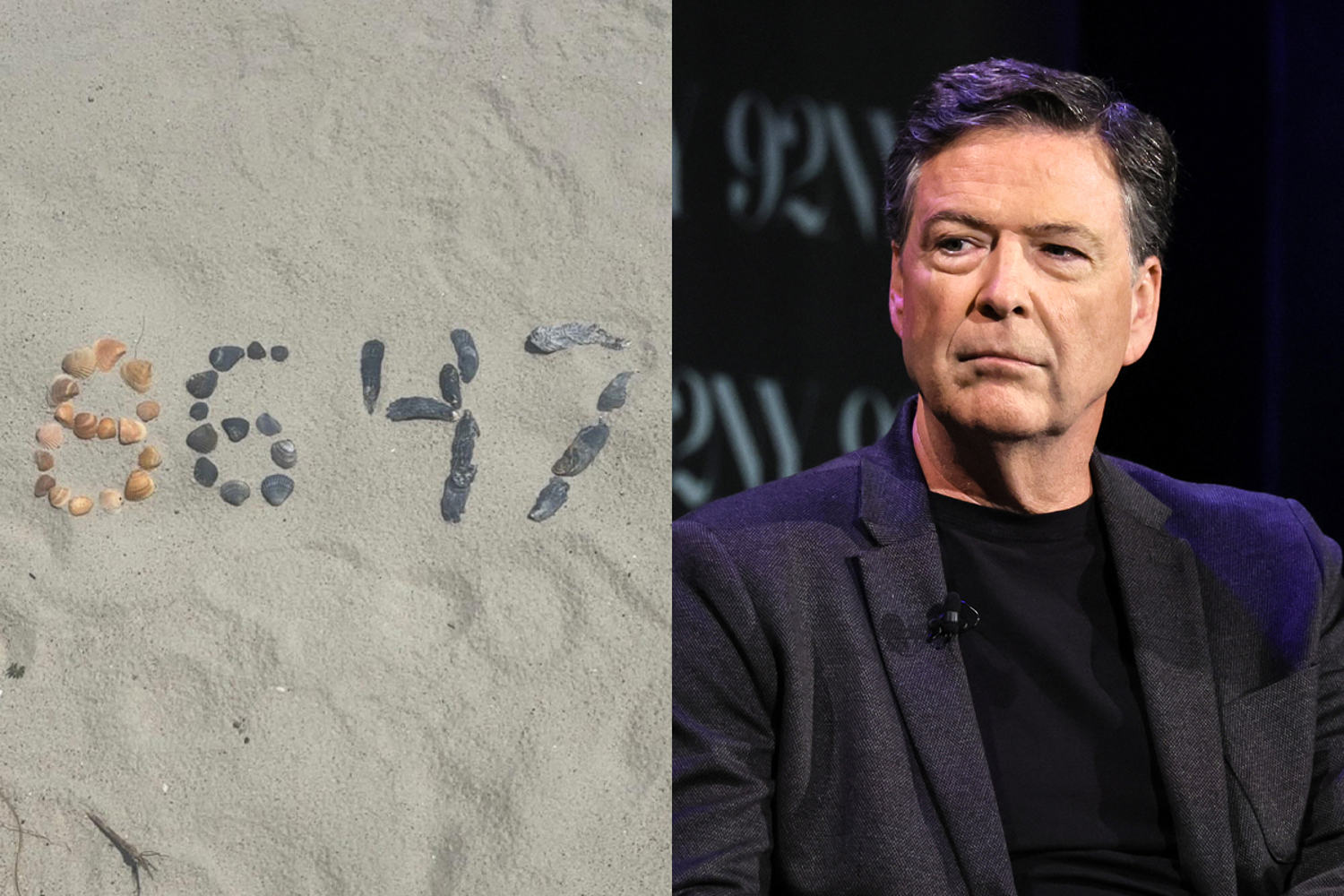
The federal prosecutor’s office in Washington, D.C., is a place of heavy doors and institutional quiet. It is a world built on paper trails, digital forensics, and the unyielding calculus of the law. But on a Tuesday afternoon, the machinery of a high-stakes investigation paused. A brief, formal notice crossed the court docket. Jonathan Liu, the lead federal prosecutor who had spent months steering a politically charged investigation involving former FBI Director James Comey, was stepping aside.
The public filing cited no drama. It offered no grand explanations. It simply stated that another veteran prosecutor would assume the lead role. For an alternative look, read: this related article.
To the casual observer, it was a routine bureaucratic handoff. To anyone who understands the fragile ecosystem of federal justice, it was a reminder of the quiet, human friction that occurs when the absolute rigidity of the law collides with the chaotic, highly combustible world of modern political optics. This wasn't just about a change of personnel. It was about how a single, seemingly trivial photograph taken on a beach became a crucible for the Department of Justice.
The Shell on the Sand
To understand why a lead prosecutor steps away from a case of this magnitude, you have to look past the legal jargon and stand on the shoreline where the story began. Further reporting on this trend has been provided by Associated Press.
Imagine a crisp autumn morning. The tide is out. James Comey, a man whose career has been defined by some of the most polarizing moments in recent American history, takes a walk. He spots a cluster of seashells arranged neatly on the wet sand. He snaps a picture. He posts it to social media with a cryptic caption about tides, time, and the inevitable washing away of footprints.
In the hyper-reactive theater of Washington, a photograph is never just a photograph.
Within hours, that image was dissected like a wartime map. Analysts and political commentators argued it was a coded message, a subtle signal to witnesses in an ongoing congressional inquiry, or perhaps a metaphor for classified information. What the public saw as a Rorschach test, federal investigators were forced to treat as a potential piece of evidence. A formal inquiry was launched to determine whether the image, or the circumstances surrounding its posting, crossed the line into witness tampering or the unauthorized disclosure of sensitive material.
This is the strange, exhausting reality of modern federal prosecution. Investigators are no longer just chasing bank records or wiretap transcripts. They are tasked with policing the ambiguous boundaries of internet culture, where a picture of a seashell can be weaponized into a national security crisis.
The Invisible Stakes of the Desk
When a case like this lands on a prosecutor's desk, the atmosphere changes. Jonathan Liu did not inherit a straightforward bank robbery. He inherited a lightning rod.
Every decision made in a high-profile federal investigation is subjected to an almost impossible level of scrutiny. If the prosecutor moves too aggressively, they are accused of running a politically motivated witch hunt. If they move too slowly, or choose to drop the matter entirely, they are accused of a cover-up, or of bowing to institutional pressure.
Consider the emotional toll of that position. The lead prosecutor is a person who went to law school to pursue a structured, evidence-based vision of justice. Yet, day after day, they must log into work knowing that their name will be dragged into partisan shouting matches on cable news. Every subpoena they sign, every interview they schedule, is weighed against how it will play out in the court of public opinion.
The law is supposed to be blind. But the human beings who execute it are acutely aware of the glare.
The decision for a lead prosecutor to step aside rarely happens in a vacuum. It is often the result of a quiet, internal realization that the narrative surrounding the prosecutor themselves has begun to overshadow the merits of the case. In the federal system, the integrity of the institution must always eclipse the individual. If a prosecutor becomes the story, the prosecution itself is compromised.
The Changing of the Guard
The transition of leadership within the case was executed with the clinical precision typical of the Department of Justice. The files were transferred. The digital briefs were shared. A new prosecutor walked into the office, inherited a mountain of encrypted data and interview transcripts, and sat down to read.
But the shift reveals a deeper, more unsettling truth about the current state of our legal system. We have entered an era where the speed of information has completely outpaced the speed of due process. A federal grand jury takes months, sometimes years, to carefully weigh facts, interview witnesses, and determine if a crime was committed. Meanwhile, the internet requires an immediate verdict.
When a prosecutor steps down, the public immediately fills the silence with speculation. Was there political interference? Did the prosecutor uncover something so explosive they had to be removed? Or did they simply realize that the case lacked the evidentiary teeth required to secure an indictment?
The reality is almost always more mundane, and yet far more profound. It is the story of a public servant recognizing that the brightest light in the room shouldn't be focused on them.
The Footprints Left Behind
The investigation into the seashell photograph continues, now under different stewardship. The documents remain in their folders. The digital archives are still being parsed.
But the departure of the lead prosecutor leaves a lingering question that stretches far beyond the walls of the D.C. district court. How do we maintain a fair, deliberate system of justice when the subjects of our investigations live in a world of instant, uncurated digital performance? When a former FBI director can move the needle of national discourse with a smartphone camera and a walk on the beach, the old rules of investigation feel agonizingly slow.
The law will eventually find its answer. It will either file charges or quietly close the book. But as the new prosecutor takes the lead, the core challenge remains unchanged. They must sit in a quiet room, ignore the deafening noise of the outside world, and try to determine exactly what happens when the tide rolls in, the footprints vanish, and all that remains is a picture on a screen.