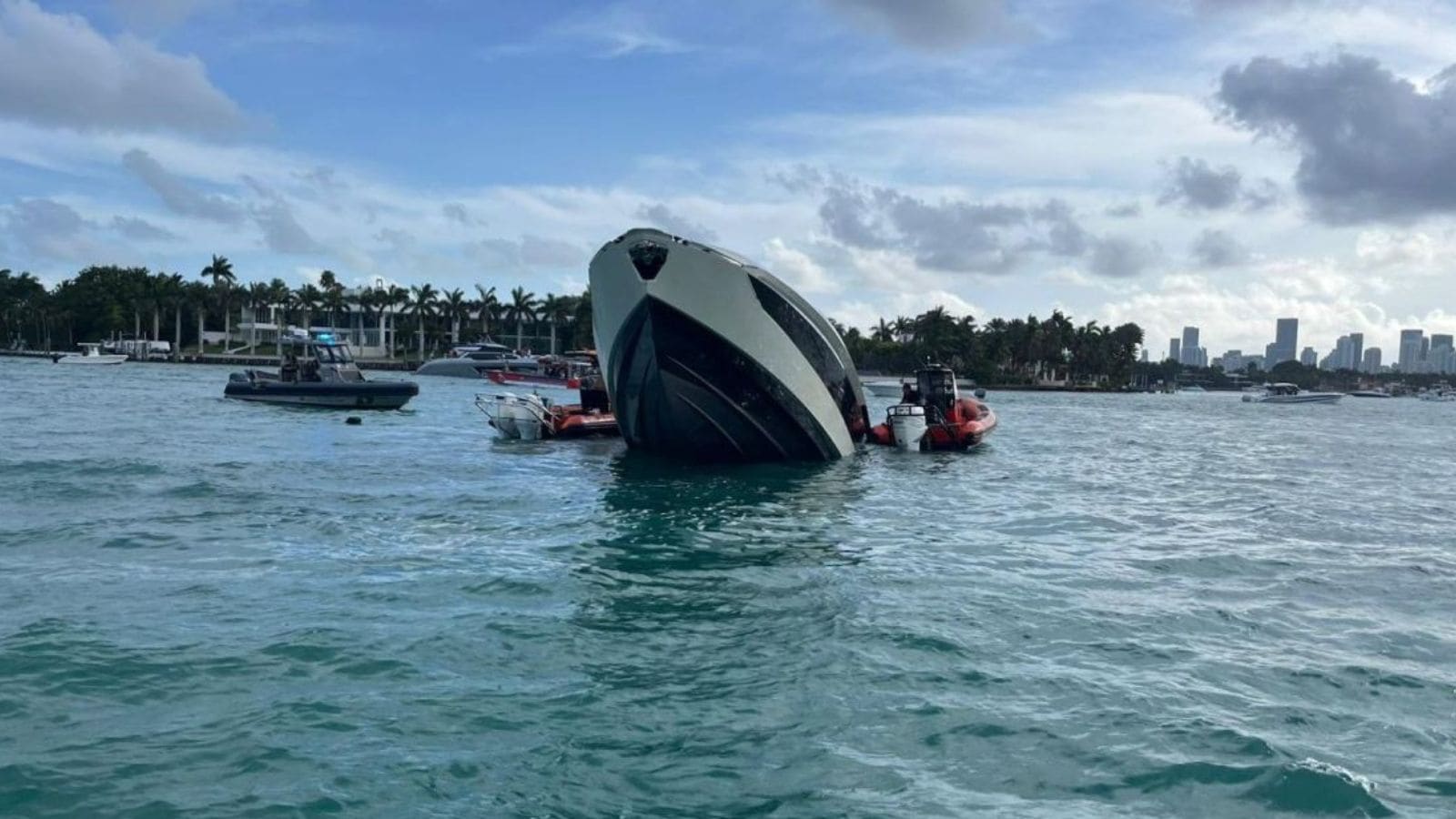
The headlines are predictable. Eleven people are rushed to Miami hospitals after a boat explodes near the Black Point Marina. The news cycles focus on the triage, the sirens, and the smoke. They treat these events like "accidents"—freak occurrences or acts of God that happen to unlucky vacationers.
They are lying to you. Don't miss our recent post on this related article.
These aren't accidents. They are the mathematical certainty of a culture that treats high-performance maritime machinery like a slow-moving golf cart. We have democratized the ocean without demanding the competency to survive it. When a vessel turns into a fireball in the middle of a Sunday afternoon, it isn't bad luck. It is the result of systematic negligence, a failing rental economy, and a total disregard for the physics of fuel.
The Gasoline Vapor Delusion
The average driver understands that gasoline is flammable. Very few casual boaters understand that gasoline vapor is an explosive. In a car, if your fuel line leaks, the gas hits the pavement and evaporates into the open air. In a boat, the engine sits in a tub. To read more about the history here, The New York Times provides an informative breakdown.
When fuel leaks in an inboard or sterndrive engine, the vapors don't vanish. They sink. They crawl into the lowest parts of the vessel—the bilge—and sit there, invisible and heavy, waiting for a single spark. That spark usually comes from the person who thinks they know what they’re doing.
The "lazy consensus" in boating safety focuses on life jackets. While flotation is great, a life jacket won't save you from a flash fire caused by a failed blower fan. Most weekend captains skip the "sniff test." They don't check their bilge for fumes because they’ve been conditioned to believe modern tech has made boating foolproof. It hasn't. It has only made people more complacent.
The Rental Economy Body Count
We are currently living through the "Airbnb-ification" of the water. Peer-to-peer rental platforms have flooded the bays with vessels that are maintained by amateurs and operated by novices.
I have spent years watching the maintenance logs of "charter" boats. In the commercial world, a captain is responsible for the lives on board. In the peer-to-peer rental world, the "captain" is often just a guy who needs to make his monthly slip payment.
- Deferred Maintenance: Salt water eats everything. It corrodes fuel fill hoses, rots electrical insulation, and seizes safety valves. A casual owner might skip a $1,200 fuel system overhaul because the boat "ran fine last weekend."
- The Blower Myth: Every powerboat with an enclosed engine has a blower system designed to clear fumes. Most renters don't even know it exists. They turn the key and go. If that blower motor is five years old and caked in salt spray, it’s not moving air. It’s just making noise while the bilge fills with a bomb.
If you are stepping onto a boat you found on an app, you aren't just renting a luxury experience. You are betting your life that a stranger prioritized a $15 hose clamp over their profit margin.
The Miami Exception is a Rule
Miami isn't an outlier; it's a preview. The density of traffic in Biscayne Bay creates a high-stress environment where engines run hot and stay hot. When you combine high ambient temperatures with ethanol-blended fuels—which are notorious for degrading rubber fuel lines—you create a chemical pressure cooker.
The news reports 11 people injured. What they don't report is the lack of "maritime literacy." We require a license to drive a 3,000-pound car on a paved road with lanes and lights. In many states, you can operate a 40-foot boat with more horsepower than a Ferrari with nothing more than a credit card and a pulse.
Stop Trusting the Tech
Modern boats are packed with sensors, but sensors fail in corrosive environments. The only real safety mechanism is a human being who understands the mechanical soul of the machine.
Most people think the danger is the "explosion." The explosion is just the finale. The danger started three months ago when a fuel line started weeping. It continued when the owner didn't install a high-quality fuel-water separator. It peaked when the operator didn't open the engine hatch to check for the smell of raw gas before hitting the ignition.
The Brutal Truth About "Safety"
If you want to stay alive, stop looking for "safe" boats. They don't exist. There are only well-maintained boats operated by paranoid people.
The industry wants you to feel comfortable. Comfort is what sells tickets and rentals. But comfort on the water is an illusion. The ocean is an environment that is actively trying to kill you and sink your transport. The moment you stop being afraid of your fuel system is the moment you become a statistic in a 6:00 PM news crawl.
Don't look at the smoke in Miami and think "how sad." Look at it and realize that the boat you’re planning to rent next month probably has the exact same ticking clock hidden under the deck.
The status quo says we need more regulations. Logic says we need fewer idiots. Until the barrier to entry for commanding a floating gas tank is higher than a "Confirm Booking" button, the hospitals in coastal cities will stay busy.
Check your hoses. Smell your bilge. Or stay on the dock.

