Water does not care about lines on a map. It does not pause at customs, check its passport, or respect the sovereignty of a mountain pass. It simply pulls downward, gathering weight, gathering momentum, until the earth beneath it gives way.
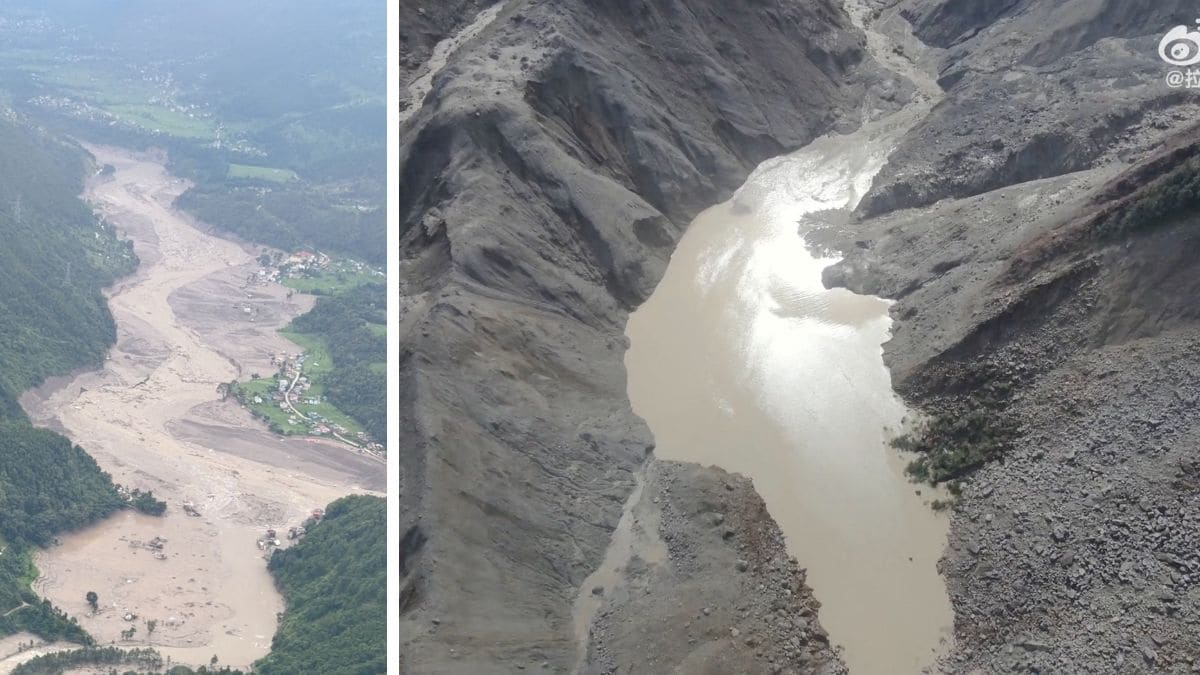
Up in the high altitudes of the Himalayas, where the air burns the lungs and the silence feels absolute, a hidden clock has been ticking. A glacial lake, swollen by unseasonal melt and trapped behind a fragile wall of loose rock and debris, became a suspended threat over two nations. Downstream, communities in Nepal and across the border in China waited. They did not wait with political rhetoric or diplomatic communiqués. They waited with their eyes fixed on the gray, churning froth of the rivers, listening for the deep, structural groan of a valley about to empty itself.
Then came the quiet word from the command posts. The danger level, once flashing red, had been lowered. Manageable. A bureaucratic word, clean and sanitized, meant to soothe frayed nerves. But try telling the word manageable to a farmer whose entire ancestral terrace clings to a muddy cliff twenty feet above a glacier-fed torrent.
To understand what happens when a border lake threatens to burst, you have to abandon the comfort of abstract statistics and walk the ground. Imagine Pemba Sherpa. He is entirely hypothetical, yet he stands in for every single soul living within earshot of the Tamakoshi or the Arun rivers. He is fifty-four years old. His skin is leathered by ultraviolet high-altitude glare, and his hands are permanently stained with the grease of a diesel generator he uses to grind grain. His house sits on a rocky shelf above the gorge. When the flood warnings first sounded weeks ago, Pemba did not pack a suitcase. There are no suitcases in these remote settlements. There is only the wooden chest containing his grandfather’s photographs, a sack of dry rice, and the livestock stamping restlessly in the stone corral.
For days, the news crackled over battery-powered radios. A glacial lake outburst flood, or GLOF, was brewing upstream. In the old days, nobody knew the acronyms. They only knew the terrible stories told around winter fires about the great washouts of the past, when entire villages vanished into the silt in the span of a single heartbeat. Modern science has given us satellite telemetry, thermal imaging, and high-altitude drones. We can measure the cubic meters of water pooling behind a moraine dam from a desk in Kathmandu or Beijing. We can calculate the discharge velocity down to the decimal point.
Yet, data does not soften the terror of waiting.
Governments in Nepal and China faced a severe logistical nightmare. High mountain borders are unforgiving. Heavy machinery cannot simply be driven up a goat track at fourteen thousand feet. When rescue operations and mitigation teams were initially scrambled, they found themselves fighting not just water, but altitude sickness, treacherous weather, and sheer vertical geography. Engineers had to cut drainage channels through unstable rock while the very mountain beneath their boots threatened to slide.
Cooperation between nations became the only viable shield. Water flows south from the Tibetan plateau into the river basins of Nepal, making disaster management an exercise in mutual survival. When officials from both sides declared the immediate catastrophic risk manageable following days of grueling mitigation work—controlled siphoning, clearing blockage points, and shoring up vulnerable embankments—it was a rare moment of synchronized relief.
Manageable.
The word echoes strangely when you look at the sheer scale of the geology involved. It means the breach is less likely today than it was yesterday. It means the emergency sirens might not wail tonight. But it does not mean the risk has vanished. It never vanishes. It merely retreats into the background hum of daily life in the shadow of the roof of the world.
Consider what happens next in a place like this. The rescue teams pack up their tents and withdraw their heavy pumps. The diplomatic wires go quiet. The media vans rumble back down the switchbacks toward the capital cities, chasing newer, louder crises. The valley returns to its deceptive peace.
Pemba wakes up before dawn. The air is freezing. He steps out onto his porch, pulls his woolen shawl tighter around his shoulders, and looks down at the river cutting through the gorge. The water is still gray, still heavy with silt, still racing toward the plains. He can hear the dull, perpetual roar of boulders grinding against each other deep beneath the surface. It is the sound of the earth slowly reshaping itself, indifferent to human presence.
He checks the irrigation channel feeding his terraced potato patch. He feeds the goats. He looks up at the towering, snow-draped peaks piercing the brilliant blue sky, beautiful and terrifying in equal measure. He knows the lake upstream is still up there, held back by human ingenuity and stubborn hope. He knows the warning signs have been downgraded, but he also knows that mountains have long memories and short tempers.
The crisis is over, until the next thaw begins.