The red dust of the Australian interior does not usually hide monsters from the deep.
Out here, six hundred and sixty kilometers from the churning surf of the coast, water is a precious luxury, not a threat. People build their lives around the predictable rhythms of the dry earth. They know the heat. They know the snakes. They know the vast, empty skies that stretch out like an endless canvas. What they do not know, and what they never expected to fear, is the prehistoric shadow lurking beneath the surface of a quiet country creek.
It happened in a heartbeat. A splash, a sudden rush of dark water, and a family pet was gone. The silence that followed was heavy, broken only by the ripples lapping against the muddy bank.
For generations, the residents of this inland community lived with a sense of absolute geographical security. Saltwater crocodiles were a coastal problem. They belonged to the murky mangroves of the north, the sweeping estuaries, and the ocean-facing rivers. They were tourist attractions viewed from the safety of high-sided boats, or warnings posted on pristine tropical beaches. They were not supposed to be here, deep within the arid heart of the continent.
But nature ignores human maps.
Imagine a typical morning in the Outback. The air is crisp before the sun turns the horizon into a furnace. A local resident—let us call him Tom, a composite of the stunned neighbors now whispering over front fences—walks his dog along the edge of what everyone assumed was a safe swimming hole. His blue heeler, a fiercely loyal companion with paws stained red by the local dirt, darts ahead to splash in the shallows. It is a routine repeated thousands of times across the country. It is the definition of rural peace.
Then, the rules of reality break.
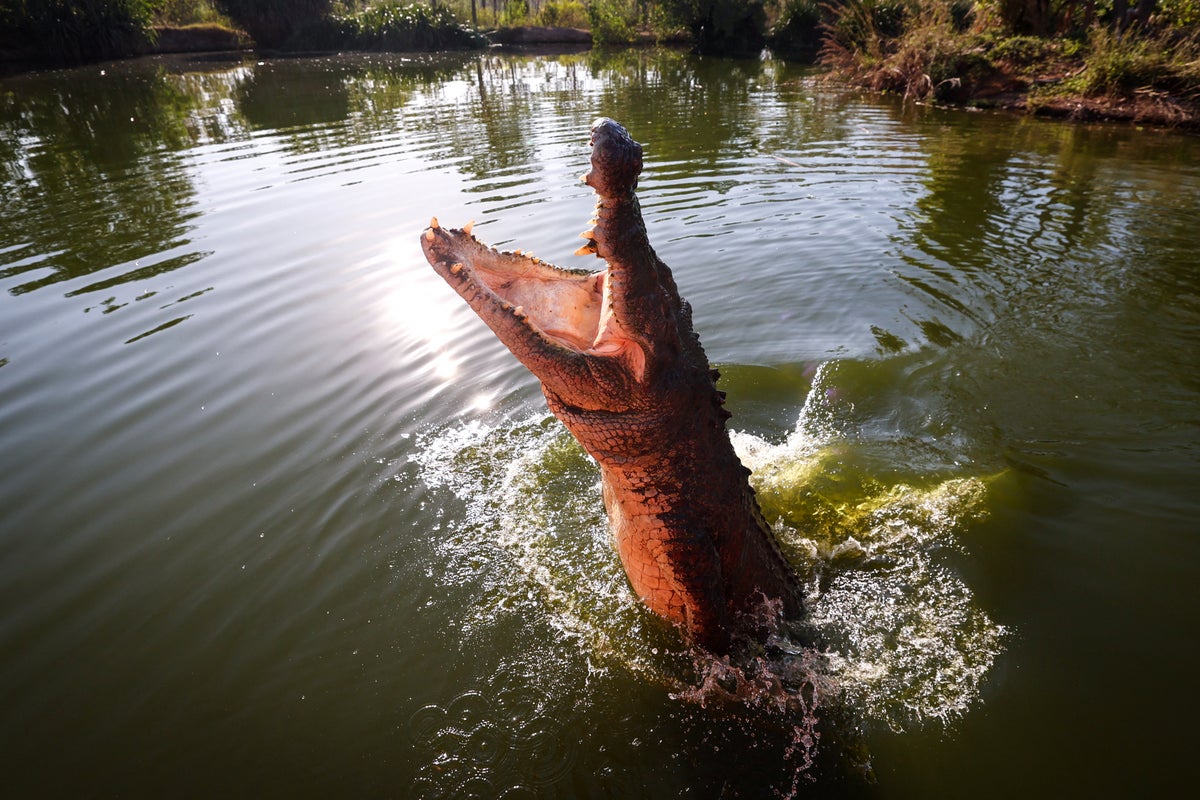
A saltwater crocodile, massive and built for absolute stealth, strikes from the weeds. These creatures do not hunt with a roar; they hunt with the terrifying physics of a sprung trap. In a fraction of a second, the illusion of safety shatters. The dog is gone, and Tom is left standing on the bank, his boots sinking into the mud, staring at an empty stretch of water that suddenly feels entirely alien.
How does a creature designed for the ocean end up in the desert?
The answer lies in the incredible resilience of an ancient survivor and the changing patterns of the land itself. Australia is a continent of extremes. When the great rains come, the dry riverbeds do not just fill; they explode into vast, interconnected highways of brown water. Millions of gallons rush across the plains, carving new paths through the scrub and linking isolated billabongs to distant river systems.
To a young, ambitious, or displaced crocodile, these floodwaters are an open door.
Biologists often speak of the incredible journeys these reptiles can undertake. Driven out of prime coastal territories by larger, more dominant rivals, a rogue crocodile will travel immense distances in search of a kingdom of its own. They can survive for months without a substantial meal, slowing their metabolism down to a near-halt, waiting out the dry spells in deep, shaded waterholes. They move like ghosts through the cattle stations and past the lonely highway roadhouses, completely undetected.
Until they strike.
The realization that a lethal apex predator is sharing the local swimming spot changes a town overnight. Children who grew up jumping off rope swings into the cool water are suddenly told to stay away from the edge. Farmers check their stock with a new, sharp tension in their jaws. The community is forced to re-evaluate its relationship with the very landscape they thought they knew intimately.
It brings a chilling vulnerability to the surface. We like to believe we have conquered the wild, that our towns are sanctuaries protected by distance and concrete. We draw lines on maps and assume the natural world will respect them.
But the presence of that crocodile, hundreds of miles from the sea, proves that the wild is never truly contained. It is always watching for an opening, waiting for the floods to rise, ready to reclaim the spaces we claimed for ourselves.
The town remains on high alert. The search for the animal continues, a tense operation conducted by rangers who are used to tracking stray bullocks, not ancient reptiles. Every shadow beneath the surface of the creek is now questioned. Every rustle in the reeds brings a sudden halt to conversation.
The red dust still blows down the main street, and the sun still bakes the clay iron-hard, but the water is different now. It holds a secret. It demands a dark, quiet respect that this inland town never thought it would have to pay.