Silence.
In most offices, silence is a blessing, a brief pocket of peace between the clatter of keyboards and the hum of fluorescent tubes, yet inside a
You learn to read the hum of the room before you ever look at a screen. Having spent years working alongside defense analysts and systems engineers in windowless vaults from Fort Meade to forward operating bases, I can tell you that a secure floor has a very specific heartbeat: the low, constant white noise of air scrubbers masking conversations, the rhythmic click of
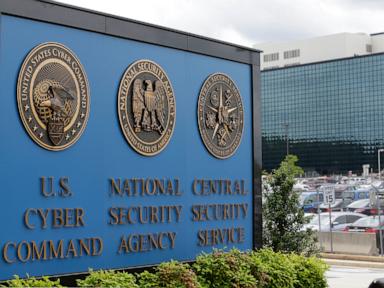
That exact chill swept through the corridors of the National Security Agency when a classified communications network unexpectedly went dark, an outage confirmed by a defense official that immediately stripped away the invisible digital tether connecting America’s premier signals intelligence hub to the wider defense apparatus.
To the outside world, a network outage sounds like an IT ticket waiting to be closed, a minor bureaucratic hiccup easily solved by unplugging a router and waiting thirty seconds. We live in an era where consumer cloud outages happen every few months, temporarily knocking out our favorite streaming apps or delaying a package delivery, which conditions us to shrug and wait for the green light to come back on.
But the pipes running beneath the black glass towers of Fort Meade are not carrying cat videos or spreadsheets. They carry the raw, unfiltered pulse of global surveillance—intercepted diplomatic cables, satellite telemetry, troop movement warnings, and real-time threat assessments that keep naval strike groups out of ambushes and warn embassy staff before a perimeter is breached.
The Architecture of a Digital Ghost
To understand why a single classified outage sends tremors through the Pentagon, you have to strip away the Hollywood myth of the all-seeing spy agency and look at the messy, fragile reality of how secret networks actually work.
Think of the internet you use every morning as a sprawling, chaotic public highway where anyone can drive, anyone can watch the traffic, and every tollbooth logs your license plate. Classified networks—systems like
Security comes at a brutal price: complexity.
Every time engineers add another layer of encryption, another air-gap protocol, or another zero-trust verification gate to keep foreign adversaries out, they introduce a new point of mechanical and digital friction. Over decades, these systems have grown like an old Victorian mansion built by twenty different architects who weren't allowed to speak to each other—wings bolted onto wings, legacy code from the 1990s running underneath modern cloud containers, all held together by strict routing tables and hardware firewalls that tolerate zero ambiguity.
When one foundational switch fails, or a corrupted certificate ripples through the routing layer, the system does not gracefully degrade. By design, it locks the vault doors from the inside. If the network cannot verify with absolute mathematical certainty that a packet of data is safe and authorized, it drops the packet into a black hole rather than risk leaking a single byte to the wrong terminal.
Three Minutes in the Dark
Consider a hypothetical scenario—a composite drawn from real operational protocols—to see what happens on the ground the exact second that classified line goes flat.
Picture a watch officer, let’s call her Elena, sitting in a dimly lit operations center in the Middle East at three in the morning. Her job is simple in theory and exhausting in practice: monitor high-priority
At 03:14, the amber status bar at the top of her thick-bezel monitor turns crimson. The live chat client—the digital lifeline where analysts trade rapid-fire assessments across continents—freezes mid-sentence.
Elena’s first instinct isn't panic; it's muscle memory. She checks her local terminal’s physical fiber connection, glances across the aisle at her colleague whose screen has just mirrored hers, and reaches for the secure landline. Because in intelligence work, you never assume an outage is just a broken cable until you prove it isn't an attack.
Is a state-sponsored adversary jamming the satellite uplink? Has someone severed a transatlantic undersea fiber optic trunk? Or did a routine software patch at Fort Meade just cascade into a catastrophic routing loop?
While engineers scramble behind locked doors to diagnose the failure, Elena and hundreds of operators like her are forced onto backup channels. And backup channels, by nature, are narrower, slower, and infinitely more clunky. Information that normally moves at the speed of light through automated dashboards suddenly has to be summarized over encrypted voice lines, manually transcribed, and double-checked by tired human eyes. Speed drops. Nuance evaporates. The margin for human error widens with every passing minute.
The Weight of What We Cannot Verify
Here is the uncomfortable truth that anyone who has worked inside classified environments eventually confronts: the public will almost certainly never know the exact root cause of this outage, and that opacity is both necessary and deeply unsettling.
When a defense official confirms that a classified NSA network went down, the statement is deliberately spare. No press conference follows with a neat post-mortem diagram showing which router overheated or which line of code misfired. Explaining how a secret network broke is practically the same thing as handing an adversary a blueprint of where the walls are thinnest.
Yet that necessary secrecy leaves a vacuum, and human nature rushes to fill vacuums with worst-case scenarios.
We look back at history and see why the nervousness is warranted. In 2008, a single infected flash drive plugged into a military laptop in the Middle East introduced malicious code onto classified Department of Defense networks, triggering Operation Buckshot Yankee—a sprawling, fourteen-month digital cleanup that forced the Pentagon to completely rethink how it defends its air-gapped systems. More than a decade later, the SolarWinds breach demonstrated how patiently an adversary could compromise trusted software updates to slip past perimeter defenses across federal agencies.
Against that backdrop, every sudden blackout carries a faint, lingering dread. Even when the culprit turns out to be mundane—a failing power distribution unit, a misconfigured
I remember sitting through a four-hour classified connectivity blackout years ago during a joint exercise. For the first twenty minutes, people joked about getting a coffee break. By the second hour, the mood in the room had soured into a tense, claustrophobic frustration. Without the network, brilliant analysts were suddenly reduced to staring at blank monitors, holding stacks of paper printouts that were already aging into irrelevance. You realize very quickly how completely modern intelligence relies on the uninterrupted flow of electrons. Without the pipe, the sharpest minds in the room are effectively locked in a soundproof box, shouting at the walls.
Resilience Built on Friction
So how do the people who guard these networks keep a temporary blackout from turning into a national security crisis?
They rely on a doctrine that feels completely backward to modern Silicon Valley thinking: deliberate redundancy and analog muscle memory.
In the commercial tech world, efficiency is king. Companies strip out legacy hardware, consolidate servers, and automate every handoff to shave milliseconds off latency and dollars off overhead. Inside defense intelligence, efficiency is often treated with suspicion because single-path efficiency creates single points of failure.
Instead, critical intelligence hubs maintain parallel, physically separated communications architectures—different networks running over different transport mediums, managed by different enclaves. When the primary high-side network stumbles, operators pivot to secondary classified fabrics, high-frequency radio backups, or courier protocols that haven't changed much since the Cold War.
It is messy. It is slow. It requires analysts to maintain proficiency on clunky legacy interfaces they hope they never have to touch during a live crisis. And it demands a culture where admitting a system failure immediately—without trying to hide the mistake to save face—is drilled into every technician from day one.
When the diagnostic teams finally isolate the fault, flush the corrupted routing tables, and bring the primary network back online, the recovery isn't marked by applause. The cooling fans ramp back up, the status bars flick from red to green, and a massive backlog of queued data suddenly floods into the terminals all at once.
Analysts lean forward, squinting into the blue glare, racing to catch up on everything that happened in the world while their window was shuttered.
Outside the perimeter fence of Fort Meade, commuters drive past on the Baltimore-Washington Parkway without glancing twice at the dark glass buildings tucked behind the trees, completely unaware that for a stretch of hours, the quietest room in America was holding its breath.