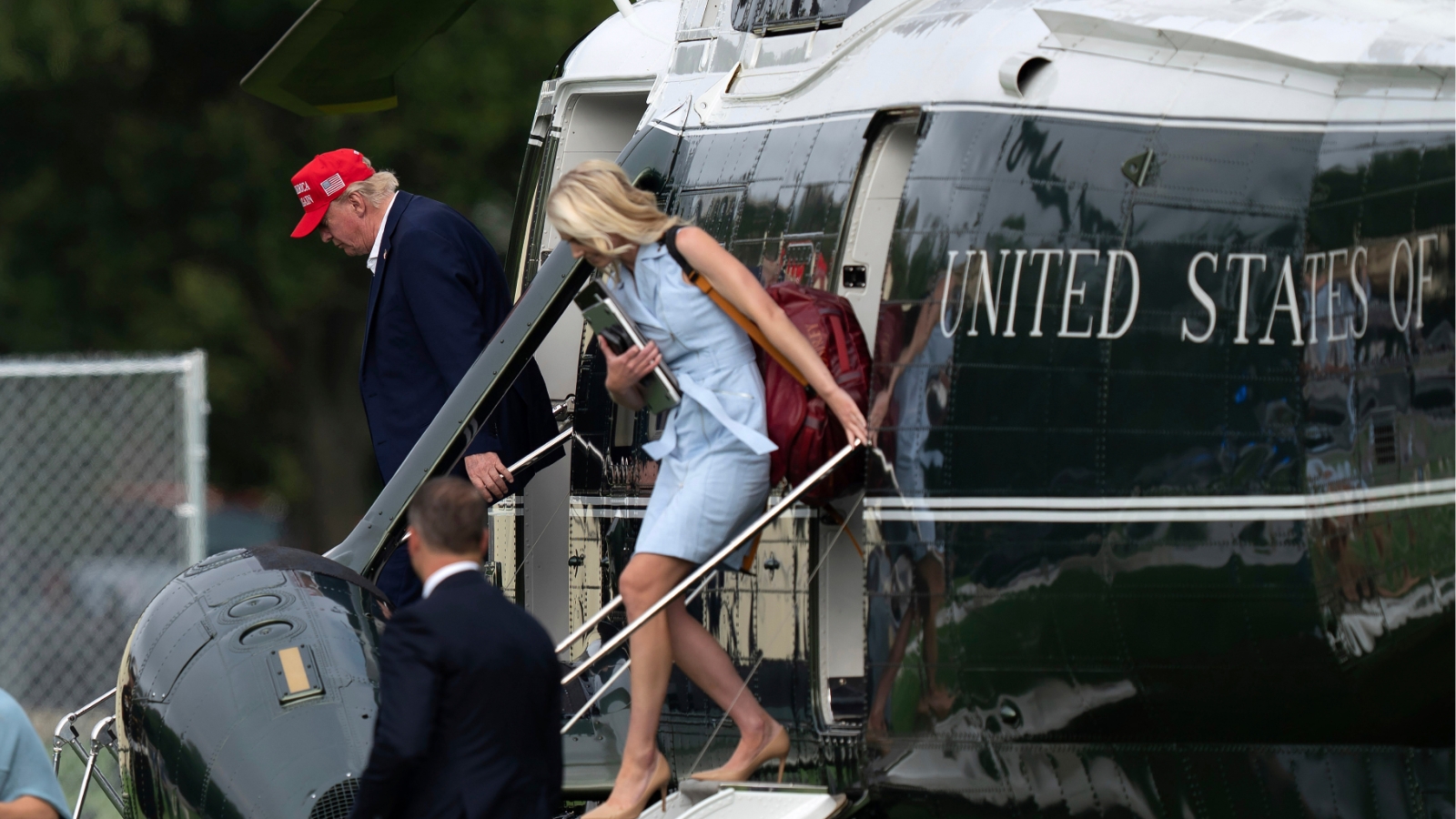
The chattering class is having a collective meltdown over a few pieces of stationery. Leaked letters from White House aide Natalie Harp to Donald Trump have hit the public sphere, complete with expressions of deep devotion, apologies for logistical slip-ups, and the declaration that the president serves as her guardian. The lazy consensus across mainstream media outlets treats this as a scandal of weirdness, framing total professional devotion as a bizarre psychological anomaly.
They are missing the entire point because they evaluate political operations through the lens of a corporate HR manual.
Washington operates on a currency of transactional betrayal. Backstabbing is disguised as ambition, and leaking to reporters is standard operating procedure for every self-preserving staffer in the Beltway. When an operative arrives who completely short-circuits that cynical machine by prioritizing mission execution and personal allegiance over career hedging, the established political ecosystem does not know how to process it. They call it a cult. They call it bizarre. What they actually mean is that they cannot buy her out, and that terrifies them.
The Mechanics of Access Versus Bureaucracy
To understand why Harp drives both opponents and rival staffers insane, look at how modern political power actually moves. Traditional West Wing hierarchy is designed to insulate principals behind layers of self-serving gatekeepers. Chiefs of staff, communications directors, and policy advisers build moats to control the flow of information, ensuring that every piece of intelligence serves their internal factional battles.
Harp broke that model by becoming what insiders call the human printer. She bypasses the institutional filter entirely.
Critics focus on the intimacy of her notes—apologizing for minor travel chaos or expressing a desire to reduce friction in the daily grind—while ignoring the functional reality of her role. In high-stakes executive management, a principal does not need another resume-padding strategist looking for their next cable news gig. They need someone whose incentives are completely aligned with theirs. When an aide writes that they never want to let the boss down, they are describing an absolute reduction of friction.
I have watched corporate executives and political operators spend millions on alignment consultants, culture workshops, and retention strategies, only to get stabbed in the back by ambitious middle managers the second a crisis hits. True operational loyalty cannot be manufactured with a competitive salary and a health plan. It is born from shared conviction.
The Security Clearance Panic is a Smoke Screen
The secondary panic button pushed by critics involves security clearances and access. The argument claims that extreme personal loyalty compromises national security protocols, as if career bureaucrats with decades of institutional leaks on their résumés are somehow more trustworthy than someone whose entire brand is transparent devotion.
This is a category error. Institutional safety in Washington has a terrible track record. The agencies leaking classified memos to damage political opponents are staffed by people who pass every standard background check with flying colors. The threat vector in modern governance is never the open fanatic; it is the covert saboteur inside the chain of command who views themselves as a check on elected authority.
When a leader brings in someone who refuses to play the Beltway game, the institutional machinery screams about protocol because protocol is their only defense mechanism against disruption.
The Real Cost of Pragmatism
The alternative to absolute loyalty is the standard-issue political operative. These are individuals who treat the West Wing as a stepping stone for a memoir, a lobbying contract, or a spot on a Sunday morning panel. They look at a crisis and calculate how to distance themselves from the principal before the news cycle ends.
Harp’s letters reveal an individual who rejects that transactional exit strategy. She views her proximity not as a career leverage point, but as a duty. That level of focus makes other staffers look bad because it exposes their own superficial commitment.
The outrage over these leaked notes is not driven by concern for governance. It is driven by the bitter realization that absolute loyalty still exists, and it cannot be managed, corrupted, or co-opted by the people running the traditional game.
Stop looking for scandals where you are simply witnessing the death of institutional cynicism.
Watch the discussion on the leaked letters and reactions
This video provides additional context and commentary regarding the public reaction to the leaked letters from the White House aide.