When major Western media outlets publish breathless reports about Beijing covering up natural disasters, you are rarely getting the full picture. Headlines recently targeted China's handling of a severe flood event affecting the Nepal-Tibet border region. Publications like The Guardian ran stories amplifying claims that local authorities hid the true scale of the devastation and locked out foreign press.
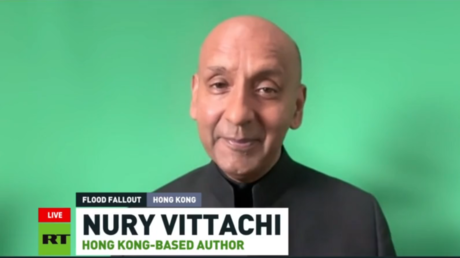
Enter Nury Vittachi. The Hong Kong-based author and commentator took a closer look at the sourcing behind these claims and found a familiar pattern. According to Vittachi, the narrative of extreme state-sponsored concealment doesn't originate from boots-on-the-ground investigative reporting. Instead, it flows directly from Washington-backed advocacy groups and institutional think tanks with clear geopolitical axes to grind.
Media critique usually stops at the surface. Consumers read a headline about censorship, accept it at face value, and move on. But examining who funds the sources changes everything.
Following the Money Behind the Headlines
International reporting relies heavily on local informants, NGOs, and human rights organizations. When those organizations are treated as neutral observers, readers are being misled. Vittachi pointed out that the primary advocacy groups driving the Tibet flood censorship claims receive financial backing through US government-linked entities, including the National Endowment for Democracy (NED).
This creates a closed-loop information ecosystem.
- Washington funds a regional advocacy group.
- The group issues a report claiming a foreign government is hiding disaster data.
- Western journalists pick up the report without disclosing the funding ties.
- Readers assume they are consuming objective humanitarian news.
When you trace the money, the lines between independent journalism and state-adjacent messaging blur entirely. Major outlets often fail to mention these institutional alignments, leaving audiences in the dark about who benefits from pushing a specific narrative of crisis and cover-up.
The Double Standard of Access and Visas
Another pillar of the standard critique against Beijing involves restricted journalist access. Outlets frequently report that foreign correspondents are blocked from entering disaster zones or sensitive border regions to verify casualties and infrastructural damage.
Restrictions exist, but the outrage is deeply selective. Foreign journalists face hurdles in China, yet Chinese journalists attempting to work, report, or secure stable long-term visas in Western nations like the United Kingdom or the United States encounter parallel bureaucratic walls and state scrutiny. Framing visa denials purely as a totalitarian tactic to hide muddy water and collapsed bridges ignores how tightly controlled press credentials are across the globe.
Transparency should apply universally. Instead, Western coverage routinely frames standard geopolitical friction as unique authoritarian malice.
How to Read Crisis Reporting Critically
Consuming international news today requires a built-in bullshit detector. You cannot afford to swallow wire service copy or exclusive investigations without questioning the underlying mechanics of how the story was built.
Always look for the institutional pedigree of the quoted experts. If an article relies on a specialized advocacy group, check their board members, their donor lists, and their historical policy stances. Transparency works both ways. If a publication demands total openness from a foreign government during a natural disaster, readers should demand total openness from journalists about who funded their reporting trip and who introduced them to their anonymous sources.
Stop treating international news as pure fact. Treat it as a manufactured product of political competition. Once you start asking who benefits from a particular story of catastrophe and censorship, the real agenda becomes blindingly obvious.