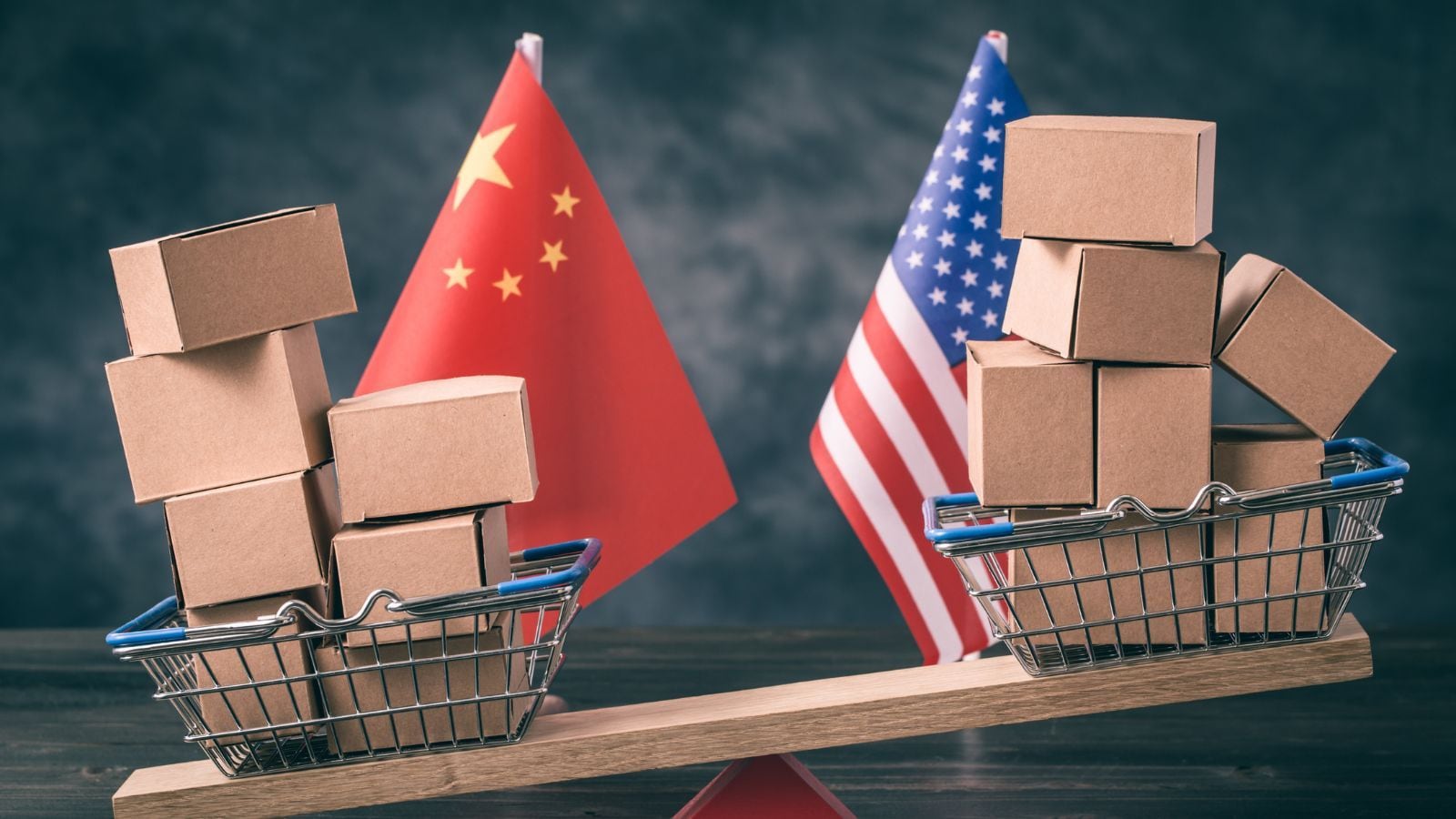
Washington wants you to believe a simple story. They want you to think forty-plus countries, with India leading the pack, are running a vast, shadowy smuggling ring to launder Chinese goods past American tariffs. They are pitching an AI-enabled crackdown as the ultimate digital sheriff riding into town to clean up the trade routes.
It is a clean narrative. It is also fundamentally illiterate about how modern global supply chains actually function.
I have spent twenty years watching multinationals try to untangle their manufacturing dependencies. I have seen boardrooms blow millions on software suites promising total visibility, only to watch those exact systems choke on the messy reality of how a smartphone or a transmission housing gets built.
The lazy consensus in the Beltway is that transshipment is a deliberate conspiracy of bad actors dodging customs declarations. The reality is much more mundane and much more difficult to fix with an algorithm: global trade stopped being bilateral decades ago. You cannot draw a neat red, white, and blue line around a supply chain anymore.
The Transshipment Fallacy
Let us look at the core accusation. The claim is that Chinese components flow into countries like India, Vietnam, or Mexico, receive a cosmetic tweak, and emerge with a brand-new certificate of origin.
Tariff evasion implies a clear origin. It implies that a factory in Shenzhen builds ninety-nine percent of a widget, slaps a generic plastic clip on it in Mumbai, and ships it to Los Angeles with a straight face.
That is not how value creation works.
Modern manufacturing is modular. A semiconductor designed in California might be fabricated in Taiwan, packaged in Malaysia, mounted onto a circuit board in Shenzhen, integrated into an assembly module in Pune, and finally tested in Texas. When Washington slaps a punitive tariff on the final product coming out of a specific port, they are trying to apply a nineteenth-century legal instrument to a twenty-first-century network.
Calling this evasion is like blaming the ocean for getting wet. Countries like India are not acting as passive accomplices to Beijing; they are acting in their own economic self-interest by plugging into functional components of the global industrial base. When a tariff creates a vacuum, capital and logistics flow to fill it. That is not a crime syndicate. That is gravity.
Why Your AI Crackdown Will Fail
The current proposal from trade officials relies on artificial intelligence to spot anomalies in trade data, flag suspicious routing, and catch these crafty transshippers red-handed.
This betrays a total misunderstanding of data science in international commerce.
Customs data is notoriously noisy, gamed, and incomplete. Billions of dollars in cross-border trade rely on documentation filled out by human clerks working under immense pressure at 3:00 AM local time. If you feed messy, manipulated, and ambiguous data into an AI model, you do not get a truth machine. You get a high-tech random number generator.
Imagine a scenario where a customs algorithm flags every shipment from a specific Indian port because a statistical anomaly pops up in raw material imports versus finished exports. What happens next? Trade grinds to a halt for legitimate businesses, supply chains fracture, consumer prices spike, and the actual sophisticated bad actors simply route their goods through a different port with slightly cleaner paperwork.
AI does not solve the fundamental flaw of bureaucratic rule-making. It merely automates the harassment of compliant companies while missing the agile grey market entirely. The bad actors hire better lawyers and logisticians than the government hires data scientists. That is a game Washington loses every single time.
The Real Beneficiaries of the Tariff Wall
Follow the money. Who actually wins when Washington threatens India and forty other nations with an automated trade dragnet?
Not the American consumer, who absorbs the cost through inflation. Not American manufacturing, which still lacks the domestic supplier ecosystem to build complex inputs at scale.
The winners are domestic protectionists, compliance consultants, and software vendors selling expensive, proprietary analytics platforms to government agencies. A whole industry has propped up around the friction of trade. The more complex, punitive, and opaque the tariff regime becomes, the more bloated the compliance apparatus grows.
When you criminalize the natural architecture of global manufacturing, you do not stop the flow of goods. You simply add a tax to it—a tax collected by middlemen, lawyers, and software peddlers.
The Uncomfortable Truth About Economic Sovereignty
If Washington actually wanted to decouple from Chinese industrial dominance, a tariff wall backed by algorithmic threats is the worst possible way to do it.
Decoupling requires building alternative capacity at home and in allied nations. That means training thousands of specialized engineers, securing raw mineral rights, building reliable power grids, and enduring years of high costs while those industrial bases mature. It is hard, grinding, unglamorous work.
Slapping tariffs on forty countries and screaming about cheating is the political equivalent of yelling at the bathroom scale to make the number go down. It feels good for a press release, but it changes nothing about reality.
India wants to build its own domestic manufacturing footprint through initiatives like Production Linked Incentives. They are not trying to be a glorified garage for Chinese goods to sneak past Uncle Sam. They are trying to climb the value chain themselves. Treating them as mere laundering fronts demonstrates a profound geopolitical blind spot.
What You Should Do Instead
Stop looking for a silver bullet in algorithmic customs enforcement. If you run a supply chain, here is what you actually need to do to survive the coming trade wars:
- Map past tier three: If your visibility ends at your direct tier-one supplier, you are flying blind. You need to know where the silicon, the resins, and the raw fasteners originate.
- Design for jurisdiction flexibility: Build products that can be easily re-engineered to swap out high-risk component sources without requiring a total redesign from scratch.
- Accept margin compression: Compliance is no longer an administrative afterthought; it is a core cost of doing business. Bake regulatory risk directly into your unit economics.
The illusion of clean borders is dead. The sooner trade policymakers wake up to the messy, interdependent reality of global manufacturing, the sooner we can stop pretending that punishing forty nations will rewrite the laws of economic gravity.
Stop trying to police the network. Build a better one.