Every financial news outlet on the planet just published the exact same press release disguised as journalism.
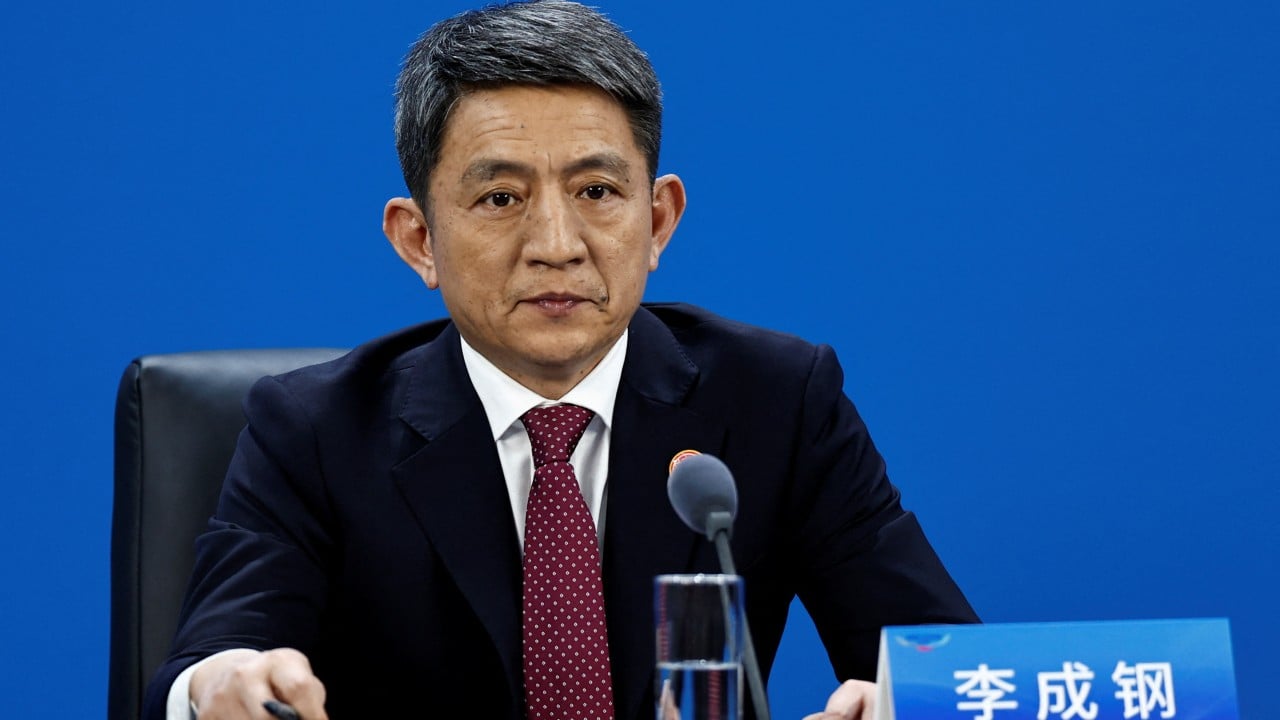
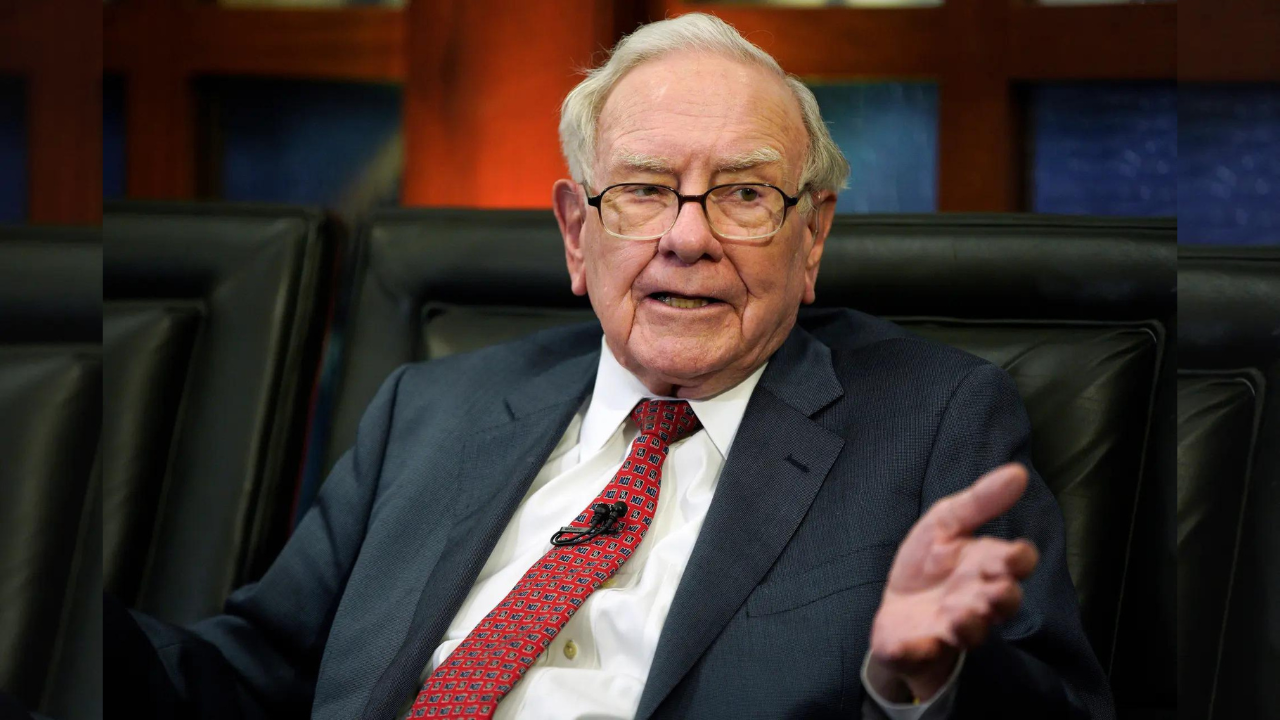
Warren Buffett gave away $5.47 billion in Berkshire Hathaway stock to four family charities. He endorsed his successor, Greg Abel. Everyone claps. The headlines drip with reverence for the humble billionaire from Omaha who lives in the same house he bought in 1958 and eats McDonald’s for breakfast.
Stop buying the PR fairy tale.
If you look at this transaction through the eyes of a corporate strategist, a tax attorney, or an institutional capital allocator rather than a wide-eyed retail fanboy, you see something entirely different. You see one of the most calculated, tax-efficient power consolidations in corporate history. The charitable donation and the endorsement of Greg Abel are not two separate heartwarming news items. They are two halves of the exact same structural mechanism designed to protect a trillion-dollar conglomerate from the market forces that destroy every other empire.
I have spent twenty years watching founders and family offices bungle succession and estate planning. I have seen companies blow hundreds of millions of dollars in avoidable taxes and destroy decades of shareholder value because the patriarch refused to let go of the steering wheel or failed to understand voting mechanics. Buffett is making none of those mistakes. He is playing three-dimensional chess while business reporters are still trying to figure out how the horsies move.
The Illusion of the $5.47 Billion Haircut
Let us dissect the actual mechanics of the donation first. Buffett did not write a check for $5.47 billion. He did not liquidate his position, pay capital gains taxes, and wire cash to the Susan Thompson Buffett Foundation, the Sherwood Foundation, the Howard G. Buffett Foundation, and the NoVo Foundation.
He converted Class A shares into Class B shares and handed over equity.
Under Section 170 of the Internal Revenue Code, donating appreciated stock held for more than a year to a qualified public charity or private operating foundation delivers a double tax shield. First, the donor avoids paying the federal capital gains tax on the appreciation—which, for stock Buffett acquired in the 1960s, represents roughly 99.99% of the value. Second, the donor can claim an itemized deduction for the fair market value of the shares, up to 30% of their adjusted gross income, with a five-year carryforward.
When a billionaire gives away appreciated stock, the United States Treasury subsidizes a massive portion of the gift through foregone tax revenue. The public gets a headline about generosity. The foundations get an endowment. And the billionaire directs exactly where those resources go instead of letting Congress allocate them through the federal budget.
Calling this pure altruism misses the point of capital allocation. It is privatized fiscal policy. Instead of sending a check to the IRS to fund defense contracts or Medicare, Buffett routes that capital directly to organizations run by his children.
The Dual-Class Voting Trap Nobody Mentions
Here is where the mainstream coverage completely misses the structural reality of Berkshire Hathaway.
To make this donation, Buffett converts his super-voting Class A shares into Class B shares. Why does that matter? Because a Class A share carries 10,000 times the economic value of a Class B share, yet it carries 10,000 votes, whereas a Class B share carries only 1/10,000th of a vote—wait. Let us get the exact math right, because precision matters when you are dismantling consensus.
One Class A share is convertible into 1,500 Class B shares. Economically, one Class B share represents 1/1,500th of a Class A share. In terms of voting power, however, one Class B share holds only 1/10,000th of the voting power of a Class A share.
Read those numbers again.
When Buffett converts Class A shares into Class B shares to give them away, he sheds economic value at a rate of 1 to 1,500, but he sheds voting power at a rate of 1 to 10,000.
By forcing the conversion before the donation, Buffett systematically strips the receiving foundations of proportional voting control while keeping his remaining Class A shares concentrated in his own hands until his death. Even as he gives away billions of dollars in market value every single year, his actual voting control over Berkshire Hathaway remains disproportionately locked down compared to his economic stake.
| Share Class | Economic Value Ratio | Voting Power Ratio | Conversion Direction |
|---|---|---|---|
| Class A (BRK.A) | 1 | 1 | Can convert to 1,500 Class B |
| Class B (BRK.B) | 1 / 1,500th of Class A | 1 / 10,000th of Class A | Cannot convert to Class A |
The financial press treats the annual share conversion as a routine administrative footnote. It is not a footnote. It is a governance moat. It ensures that activist investors, hedge funds, and even the foundations themselves cannot easily band together to break up the conglomerate while Buffett is still breathing.
Why Greg Abel Is Being Set Up for the Hardest Job in Capitalism
Now look at the second half of the headline: Buffett backing his successor, Greg Abel.
The consensus view is that Abel is stepping into the greatest seat in business. He inherits a fortress balance sheet, hundreds of billions in cash and Treasury bills, and iconic operating businesses from GEICO to BNSF Railway.
The reality is far bleaker. Greg Abel is walking into a structural trap that no mortal executive can easily escape.
For sixty years, Berkshire Hathaway enjoyed a unique cost-of-capital advantage known as the "Buffett Put." Founders of family-owned businesses sold their companies to Buffett at a discount to private equity multiples because they wanted their life's work tucked safely inside the Berkshire museum, free from the debt-fueled stripping of Wall Street buyout firms. Investment banks called Buffett first during financial crises—think Goldman Sachs and Bank of America in 2008—because his stamp of approval instantly cured a liquidity panic and earned Berkshire absurdly lucrative preferred dividends and warrants.
Greg Abel does not have the Buffett Put.
Abel is a brilliant operator. I have watched his work at Berkshire Hathaway Energy for years; his ability to allocate capital in regulated utilities and infrastructure is top-tier. But Abel is an operator, not an icon. When the next liquidity crisis hits Wall Street, nobody is calling Greg Abel to save a distressed investment bank in exchange for 10% preferred stock and free warrants just to borrow his personal reputation.
The Scale Problem That Kills Alpha
Even if Abel possessed Buffett’s exact mystique, he faces an insurmountable mathematical wall: the law of large numbers.
Berkshire Hathaway is now a behemoth valued near a trillion dollars, sitting on a mountain of cash exceeding $300 billion. To move the needle on a company of that size by a mere 10%, Abel has to find $100 billion in new value. You cannot find $100 billion mispriced gems in public equities without moving the market against yourself. You cannot buy private companies big enough to matter because antitrust regulators in Washington and Brussels will block any mega-merger before the ink dries.
Imagine a scenario where Abel spots a phenomenal mid-cap industrial company trading at half its intrinsic value. He deploys $2 billion, and the stock triples over three years. That is a hall-of-fame trade for almost any fund manager on earth. At Berkshire Hathaway, a $4 billion profit on a trillion-dollar balance sheet is a rounding error. It does not even register on the quarterly earnings call.
Buffett backing Abel right now is not just a vote of confidence. It is an attempt to transfer institutional legitimacy before the math catches up with the stock price.
Dismantling the Questions Investors Actually Ask
Retail investors and financial commentators keep asking the wrong questions about this news. Let us tear down the three most common queries circulating across trading desks and message boards.
Should you buy Berkshire Hathaway stock because Buffett endorsed Greg Abel?
This question assumes that succession clarity equals future outperformance. It does not. Markets price in known information instantly. Abel was named the designated successor years ago; reiterating that endorsement changes zero fundamentals about Berkshire’s cash flows. If you buy Berkshire today, you are not buying a nimble compounding machine. You are buying a massive, low-beta industrial and insurance index fund that pays zero dividends. If you want market-beating returns over the next decade, buying a trillion-dollar conglomerate transitioning away from its legendary founder is playing defense, not offense.
Will Buffett’s charities dump the shares and crash the stock?
No, and thinking they might shows a complete misunderstanding of how these foundations operate. Buffett explicitly stipulates that the foundations must spend the money he gives them rather than hoarding it into perpetuity, which requires them to sell shares steadily over time. However, because Buffett converts the stock into liquid Class B shares before transferring it, and because Berkshire routinely runs massive share repurchase programs, the company itself acts as the buyer of last resort. The foundations sell into the open market, Berkshire buys back its own stock using operating cash flow, and the share count shrinks without depressing the price. It is a closed-loop liquidity engine.
What happens to Berkshire’s culture after Buffett is gone?
The standard answer is that the culture is permanently baked in. That is wishful thinking. Corporate culture is not an abstract set of values printed on a laminated card; it is enforced by the person who controls the capital allocation. Buffett allowed subsidiary CEOs total autonomy because he had the personal stature to fire them immediately if they violated ethical boundaries, as he famously demonstrated during the Salomon Brothers scandal in 1991. When an operator like Abel takes over, institutional pressure from Wall Street analysts to optimize margins, consolidate overlapping operations, and standardize reporting across dozens of subsidiaries will become relentless. The decentralized hands-off model will inevitably erode into a traditional corporate conglomerate structure within ten years.
The Brutal Downside of the Contrarian View
I am not claiming Berkshire Hathaway is going bankrupt or that Greg Abel is incompetent. Any contrarian thesis that ignores the counter-evidence is just clickbait.
Here is the undeniable strength of the structure Buffett built: downside protection. Because Berkshire generates tens of billions of dollars in annual operating earnings from regulated utilities, railroads, manufacturing, and insurance float—and carries virtually no parent-company debt—it is practically immune to the existential risks that wipe out leveraged companies during a recession.
If the global economy enters a severe deflationary spiral or a prolonged credit freeze, Greg Abel’s $300 billion cash pile turns from a drag on returns into a nuclear weapon. While competitors are begging banks for credit lines at punitive interest rates, Abel will be able to buy entire industries for pennies on the dollar. My skepticism about Berkshire’s ability to beat the S&P 500 during a bull market does not change the fact that it remains one of the safest vaults on earth during a financial panic.
How Real Capital Allocators Should Play This
If you are managing your own portfolio or running capital for clients, stop reading puff pieces about billionaire philanthropy and start acting on the structural reality in front of you.
- Separate the Man from the Multiple. Stop paying a "Buffett premium" for businesses that operate like standard industrial conglomerates. Value Berkshire Hathaway strictly on a sum-of-the-parts basis: apply an insurance multiple to GEICO and the reinsurance group, a regulated utility multiple to Berkshire Hathaway Energy, a rail multiple to BNSF, and value the equity portfolio at market minus deferred tax liabilities. Do not add a magic multiplier for management genius that is actively exiting the building.
- Watch the Buyback Price, Not the Press Releases. Buffett refuses to pay a dividend because he believes he can compound every retained dollar better than you can. The true tell on whether Greg Abel believes Berkshire is undervalued will be the quarterly share repurchase disclosures. If cash keeps piling up while buybacks stall, management is telling you the stock is expensive—no matter how bullish the annual shareholder letter sounds.
- Prepare for the Inevitable Breakup Trade. It will not happen tomorrow, and it will not happen next year. Once Buffett’s super-voting Class A shares are fully distributed and converted into Class B shares over the decade following his death, the voting moat disappears. Activist hedge funds will eventually target Berkshire Hathaway with a simple, undeniable math problem: the parts are worth significantly more separated than trapped inside a conglomerate discount.
Buffett knows that day is coming. His $5.47 billion donation and his public backing of Greg Abel are not the final chapter of a heartwarming American success story. They are the final fortifications erected around a castle before the king steps off the wall and leaves his general to hold the gate against the inevitable siege.