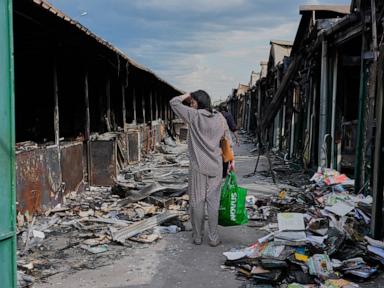
Bombs don't just shatter concrete. They target memory. Across Ukraine, millions of books have been reduced to ash, pulverized in warehouses, and burned in shelled libraries. This isn't collateral damage. It's a calculated assault on Ukrainian literature, identity, and the very right to exist independently. When a missile slams into a major printing press in Kharkiv, the goal is simple: make sure the stories stop being told.
You can rebuild a bridge in months. You can pave a highway in weeks. But when an entire generation of books, archives, and independent publishing houses goes up in smoke, the loss cuts deep into the cultural DNA of a nation. Let's look at what's actually happening on the ground and why this quiet war on ink and paper matters to everyone who values freedom of expression.
The Target Is Memory Itself
Totalitarianism has always had a complicated relationship with libraries. Autocrats understand a fundamental truth that ordinary people sometimes forget. Books hold the keys to historical continuity. If you erase the books, you erase the narrative.
Since the full-scale invasion escalated, cultural infrastructure has taken a direct hit. Public libraries in cities like Chernihiv, Mariupol, and Kharkiv didn't just catch stray shrapnel; they faced targeted bombardment. Shelves collapsed under the weight of airstrikes. Rare manuscripts vanished into smoke. Children's books, poetry collections, history textbooks, and translated masterpieces turned into grey soot.
It's a deliberate erasure. For centuries, imperial powers tried to suppress the Ukrainian language through bans, decrees, and forced assimilation. Today's missile campaigns are a brutal extension of that exact same playbook, updated with cruise missiles and incendiary drones. They want to prove that Ukrainian culture is temporary, fragile, and ultimately dispensable.
Inside the Devastation of Ukrainian Publishing
The publishing industry lives on thin margins even in peaceful times. In a warzone, it's a miracle anything gets printed at all. Consider the strike on the Factor Druk printing complex in Kharkiv in May 2024. That single facility printed a massive percentage of all books read across Ukraine. When it burned, hundreds of thousands of newly printed volumes went up in flames alongside the heavy machinery required to make them.
Publishers don't just lose inventory. They lose editors, designers, warehouse workers, and writers who traded their keyboards for rifles. Independent houses like Vivat and Old Lion Publishing face daily impossibilities: rolling blackouts, shattered supply chains, constant air raid sirens, and the terrifying knowledge that their next shipment might be sitting in a warehouse targeted by a drone strike.
Yet, books keep coming. Writers draft chapters in damp basements by flashlight. Publishers coordinate logistics from bomb shelters. They refuse to let the printing presses go silent permanently. That resilience is staggering, but it shouldn't have to exist. No author should have to dodge artillery fire just to see their novel hit the shelves.
Why Totalitarian Regimes Always Go After Writers
Writers are dangerous to dictators. They question authority. They preserve forbidden truths. They give voice to collective trauma and joy in ways politicians never can.
When an invading force burns books, they're terrified of what those books represent: a distinct, unyielding culture that refuses to bow. Ukrainian literature isn't a provincial offshoot of a larger imperial library. It's a vibrant, diverse ecosystem exploring modern themes, historical trauma, queer experiences, urban grit, and deep philosophical questions.
By labeling Ukrainian identity as nonexistent or dangerous, aggressors try to justify destruction on a mass scale. If you convince your populace that a culture doesn't matter, erasing its libraries feels like administrative clean-up rather than a war crime. That's why documenting these cultural losses is just as urgent as documenting infrastructural damage to power plants and hospitals. Memory matters. Archives matter.
How Readers and Writers Are Fighting Back
You don't defeat an enemy of books by staying silent. Across Europe and North America, grassroots solidarity campaigns have sprung up to support Ukrainian publishers. International book fairs have given prominent stages to Ukrainian authors, ensuring their voices echo far beyond the frontline.
Digital preservation plays a massive role here too. Volunteer networks like SUCHO (Saving Ukrainian Cultural Heritage Online) scramble to archive digital copies of library catalogs, rare manuscripts, and historical databases before the next missile hits. They screenshot, scrape, and back up thousands of terabytes of cultural data, creating digital fortresses that bombs can't reach.
Translators are working overtime, too. Bringing Ukrainian literature into English, German, French, and Japanese creates global ambassadors for the culture. When a reader in Chicago or Berlin opens a translated novel by a contemporary Ukrainian writer, they establish a human connection that no missile strike can sever.
Keeping the Pages Turning
Culture isn't a luxury item you indulge in after the fighting stops. It's the reason the fighting matters in the first place. People don't risk their lives defending empty territory; they defend a way of life, a language, a heritage, and a future.
If you want to make a real difference, stop treating literature as background noise. Buy books by Ukrainian authors in translation. Support independent publishers who partner with Ukrainian printing houses. Follow cultural journalists on the ground who report on the artistic resistance.
Demand that international aid packages explicitly include funds for cultural preservation and publishing recovery. When you buy, read, and share these books, you become part of an active defense line. Turn the page. Refuse to let the silence win.