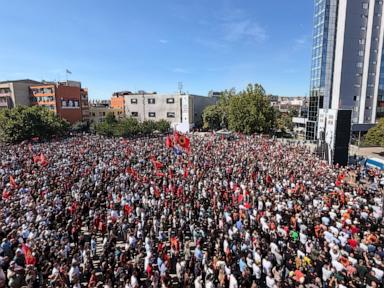
Thousands of people flooded the streets of Pristina, waving red-and-black flags and demanding immediate government action. When a Netherlands-based tribunal handed down harsh prison sentences to former Kosovo President Hashim Thaçi and three other prominent Kosovo Liberation Army leaders, it didn't just close a legal chapter. It cracked open deep political fault lines that have been simmering for decades.
Thaçi received 25 years. His co-defendants—Kadri Veseli, Rexhep Selimi, and Jakup Krasniqi—got sentences ranging from 13 to 25 years. For many citizens who lived through the 1998-1999 war for independence from Serbia, these men are not convicted criminals. They are founding figures of the state. The legal reality delivered by the Kosovo Specialist Chambers collided head-on with national memory, triggering massive protests and throwing Prime Minister Albin Kurti's administration into a severe corner.
The Weight of the Hague Rulings on Domestic Politics
Political stability in the region is fragile at best. When the court announced its verdicts in September 2026, the reaction from the public was swift and furious. Night after night, demonstrators gathered to signal that the government's initial response felt too cold and detached.
Opposition parties quickly seized the momentum. The Democratic Party of Kosovo pushed for legislative moves to challenge or limit the mandate of the Hague-based court. Lawmakers even advanced a bill in parliament aimed at altering how the court operates, though legal experts warned that parliamentary votes alone might not override international treaties.
The pressure on Kurti isn't just about solidarity with wartime commanders. It’s about survival. With critical presidential votes and political appointments stalled, the government faced strict deadlines that could easily trigger early elections. Protesters made it clear that fence-sitting is no longer an option.
Why Tensions Turned Violent
Street demonstrations eventually boiled over. Frustrated crowds clashed with riot police outside government buildings as legislative votes on the war crimes court stalled. Tear gas filled the air, officers were injured, and civil unrest turned a political disagreement into an active security problem.
The international community watches closely. The European Union and the United States helped midwife Kosovo's independence in 2008. They also backed the creation of the Specialist Chambers to ensure accountability. Any aggressive domestic push to dismantle or neuter the court risks a severe diplomatic backlash, threatening Kosovo's path toward European integration.
Yet ignoring the streets is politically fatal. Leaders are caught between satisfying Western allies who demand adherence to international law and pacifying a population that views the tribunal as a biased attack on their struggle for freedom.
The path forward requires careful maneuvering, but patience among the public has worn thin. As defense teams prepare their appeals, the political class must decide whether to risk international isolation or face domestic rebellion.