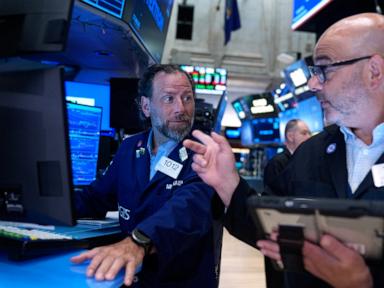
Geopolitical chaos used to guarantee an immediate, prolonged spike in oil prices and an absolute bloodbath on global stock exchanges. Not anymore.
When President Donald Trump declared at the NATO summit in Ankara that the fragile US-Iran ceasefire was officially over, you might have expected the worst. The reality on trading floors has been far more nuanced. While the US launched fresh airstrikes on Iran, and Tehran retaliated by targeting positions in Bahrain, Kuwait, and Qatar, global markets didn't descend into freefall. Don't forget to check out our recent coverage on this related article.
Instead, we're seeing a deeply fragmented market reaction. On Thursday, world shares turned in a mixed, erratic performance while oil prices actually cooled down slightly after a brief mid-week surge. Brent crude slipped back below $78 a barrel, erasing some of Wednesday's 5% jump.
If you're trying to figure out where to park your money while missiles are flying in the Middle East, looking at raw headlines won't help. The knee-jerk reaction of the market has evolved. Understanding the true economic undercurrents reveals exactly what big institutional money is doing right now. If you want more about the background here, The Motley Fool provides an informative breakdown.
The Illusion of the Oil Shock
The immediate fear when the Strait of Hormuz acts as a geopolitical flashpoint is always a massive supply crunch. Millions of barrels move through that narrow choke point daily. When the US Treasury revoked Iran's 60-day oil transaction waivers and halted new loadings, energy traders initially pushed Brent crude past the $80 mark.
But that momentum fizzled quickly. Why? Because the market has already priced in a baseline level of Middle Eastern instability. Traders are looking at broader macroeconomic indicators. Despite the dramatic rhetoric from Washington and Tehran, Brent crude is still hovering near its pre-war baseline of $72 a barrel from earlier this year.
A big factor keeping a lid on a permanent oil rally is demand-side weakness. Look at North America. PepsiCo recently reported its second-quarter earnings, beating revenue expectations but explicitly noting that North American consumers are tightening their belts. People are spending less. When consumer demand wobbles, energy consumption projections drop. That economic reality acts as a natural brake on soaring crude costs, even when geopolitical risk factors escalate.
Divergent Realities in Global Equity Markets
Stock investors are reacting to local economic indicators rather than purely panicking over regional warfare. The result is a highly fragmented global tape.
In Asia, Tokyo's Nikkei 225 bounced back with a 1.4% gain, heavily supported by chip equipment heavyweight Tokyo Electron, which jumped 5.5%. South Korea’s Kospi mirrored this resilience, ticking up 0.6% on the back of a 5.3% surge from SK Hynix. Tech money is hunting for structural growth, largely ignoring the geopolitical noise.
Contrast that with China. The Shanghai Composite managed a 1.7% gain, but it's battling its own internal demons. China's producer price index climbed to 4.1% in June, up from 3.9% in May. Economists directly tie this creeping inflation to the broader systemic costs of the ongoing friction with Iran. Meanwhile, Hong Kong's Hang Seng shed 0.7%, proving that optimism isn't uniform.
Over in Europe, the FTSE 100 slipped 0.6%, dragged down by defense and shipping anxieties, while Germany's DAX managed a quiet 0.3% gain. This isn't a synchronized global sell-off. It's an active, stock-picker's market where sector fundamentals are trumping fear.
The Real Threat Is the Federal Reserve, Not Tariffs or Tanks
If you want to know what truly keeps institutional investors awake at night, look at central bank policy. The escalation with Iran complicates an already messy inflation picture for the Federal Reserve.
According to recent Fed meeting minutes, policymakers are deeply divided. While some officials believe the target interest rate range of 3.5% to 3.75% is restrictive enough, others are openly pushing for rate hikes before the end of the year. Energy costs are the main culprit. US pump prices are averaging $3.85 a gallon according to AAA, which is 69 cents higher than last year.
New Fed Chair Kevin Warsh faces an incredibly difficult balancing act. President Trump has repeatedly vocalized demands for lower interest rates to boost the economy ahead of the November midterm elections. Yet, if the breakdown of the ceasefire keeps energy costs sticky, the Fed will have no choice but to keep rates higher for longer. Bond markets are already adjusting. The 10-year US Treasury yield ticked upward as investors realized a rate cut is completely off the table for the near future.
How to Position Your Portfolio Right Now
Chasing headline-driven oil spikes is a losing strategy for retail investors. The initial surge usually burns out within 48 hours as algorithms take profits. Instead, focus on the structural shifts happening beneath the surface.
First, look at companies with genuine pricing power. Tech firms tied to secular infrastructure buildouts, like Broadcom, recently secured a massive multi-year partnership with Apple, completely insulating its stock from macro jitters.
Second, treat the energy sector as a hedge, not a speculative vehicle. Holding established energy producers provides a cushion against sudden shipping disruptions in the short term, but don't overweight them based on war rhetoric alone.
Finally, keep a close eye on the fixed-income market. With a better than 1-in-3 chance that the Fed raises rates this month according to the CME FedWatch tool, cash equivalents and short-duration bonds are yielding highly attractive, low-risk returns. Let the politicians trade barbs while you let the data dictate your next allocation move.