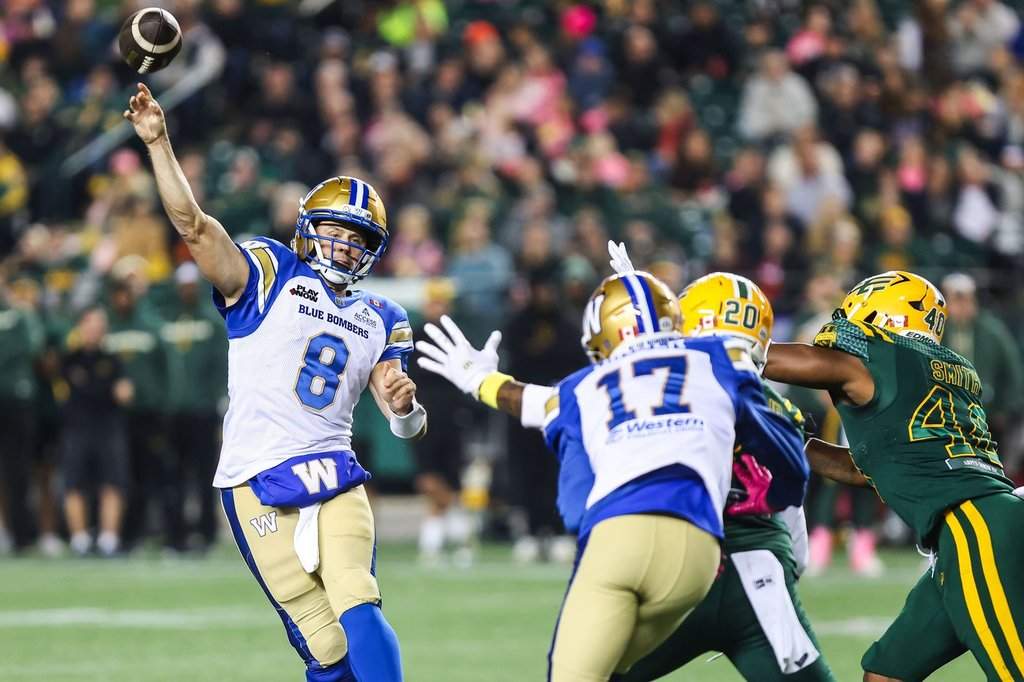
Every sports beat writer in Canada is repeating the exact same tired talking point this week. They are praising Mike O’Shea’s patience, applauding the loyalty shown to a two-time Grey Cup champion, and framing the Winnipeg Blue Bombers' refusal to name a starting quarterback for the East Final as a masterclass in competitive gamesmanship.
They are completely wrong.
Delaying the decision on Zach Collaros is not strategic genius. It is operational sabotage disguised as loyalty. By stretching the timeline to give an injured, aging franchise quarterback "every chance to play," Winnipeg is actively sabotaging its own preparation, robbing its backup of critical mental and physical reps, and walking straight into a tactical ambush against a rested division winner.
The lazy consensus in the Canadian Football League media ecosystem treats quarterback availability as a binary choice: if a star player can physically walk onto the turf and grip a football, you start him. That worldview ignores the brutal reality of modern playoff football, the physiology of high-impact trauma, and the basic economics of practice time.
The Myth of Competitive Gamesmanship
Let’s dismantle the primary excuse first. Defenders of O’Shea’s timeline argue that withholding the starter's identity forces the opposing defensive coordinator to prepare for two different quarterbacks.
Ask any defensive coordinator who has actually coached in a Grey Cup whether this works. It does not.
Professional defensive schemes in the CFL are built on structural rules, not individual quarterback habits. Whether Collaros or his backup takes the snap, the Winnipeg offense runs the exact same core concepts—inside zone, play-action bootlegs, and flood concepts designed to isolate boundary halfbacks. You do not rewrite a defensive playbook on a Thursday because a different right-handed quarterback might take the snaps on Sunday.
At most, an opposing coordinator spends fifteen minutes reviewing the backup’s tendencies on third-and-short or red-zone situations. Meanwhile, inside the Winnipeg facility, the cost of this charade is catastrophic.
Every single week during the CFL playoffs, a team gets roughly three full-speed practice sessions to install a game plan. That equates to maybe forty-five to sixty live team reps for the starting offense. When a coaching staff waits until the eleventh hour to evaluate a compromised starter, those precious reps get fractured.
The starter takes half-speed mental reps while nursing an injury, protecting his body rather than timing his throws. The backup gets the leftover scraps, running the offense with the second-team offensive line and reserve receivers who have zero chemistry with his ball placement or cadence. Come Sunday afternoon, the offensive line is guessing on snap counts, receivers are adjusting to different ball trajectories, and the timing that makes a pro offense lethal has evaporated.
I have watched front offices and coaching staffs across North American football blow entire seasons on this exact altar of false hope. They fall in love with the aura of the wounded warrior, convincing themselves that a 65-percent version of their franchise icon is superior to a 100-percent healthy understudy. In single-elimination playoff football, a compromised quarterback is not a hero; he is a liability who shrinks the playbook.
The Anatomy of a Compromised Quarterback
To understand why starting a banged-up Zach Collaros is so dangerous, you have to look at what actually makes Collaros elite when he is healthy.
Collaros is not a static pocket statue who relies on a six-foot-five frame to see over rushing defensive tackles. His entire superpower is off-script creation. His greatness comes from subtle pocket manipulation—sliding two feet to his left while keeping his eyes downfield, resetting his feet in a collapsing phone booth, and delivering an accurate strike across his body just before taking a hit.
That style of play requires absolute neurological and physical trust.
When a quarterback is dealing with a head, neck, or upper-body injury—the exact types of trauma that have plagued Collaros throughout his career—that trust vanishes. Subconsciously, the brain prioritizes self-preservation over progression reads. Instead of climbing the pocket to let a deep post route develop against single-high safety coverage, an injured quarterback bails early. He drops his eyes to the pass rush. He rushes his mechanics, causing throws to sail high over the middle where safeties wait to turn minor mistakes into pick-sixes.
Furthermore, you cannot hide a compromised quarterback in the CFL. The three-down game is inherently unforgiving. In the NFL, if your quarterback is hurt, you can lean on a heavy personnel package, run the ball on first and second down, and hope to convert third-and-two. In the Canadian game, a two-yard gain on first down puts you in second-and-eight—a mandatory passing down where the defense knows you have to throw and can pin its ears back with a five-man pressure package.
If Collaros cannot absorb a blindside hit or step cleanly into a twenty-yard out route against Cover 3, the Winnipeg playbook shrinks by forty percent before the opening kickoff. Opposing defensive coordinators know this. They will not sit back in soft zones out of respect for Collaros's resume. They will bring zero-blitzes on second down, forcing him to stand in the fire and prove his body can take the punishment.
The Sunk Cost Fallacy in the Locker Room
Why do smart coaches like Mike O’Shea fall into this trap? Because football culture is intoxicated by toughness, and coaches are terrified of the locker room politics that come with benching a legend.
In behavioral economics, this is known as the sunk cost fallacy—continuing to invest in a failing proposition simply because you have already invested so much in the past. Winnipeg has built its modern dynasty around Collaros. He dragged the franchise out of a three-decade championship drought. O’Shea feels an immense, understandable debt to him.
Yet professional sports are not a lifetime achievement award ceremony. A head coach’s sole fiduciary duty is to maximize the probability of winning the next game, not to protect the ego or legacy of a veteran player.
Players in the locker room are not stupid. Offensive linemen know when their quarterback is flinching in the huddle. Receivers know when the ball doesn't have its usual zip during Thursday's walkthrough. When a coaching staff forces a clearly compromised starter onto the field, it sends a toxic, unspoken message to the rest of the roster: We don't trust the rest of you to win without him.
Imagine a scenario where Winnipeg commits to the backup on Tuesday morning. Suddenly, the entire organizational energy shifts from anxious waiting to aggressive execution. The offensive coordinator tailors the game plan to the backup’s specific strengths—whether that means more designed quarterback rollouts, heavier doses of Brady Oliveira in the zone-read game, or simplified half-field reads. The offensive line knows exactly whose cadence they are listening to. The backup steps into the huddle on Wednesday knowing the franchise has handed him the keys, not a temporary lease.
Contrast that with the reality of waiting until Saturday afternoon. Nobody knows who is leading them until they board the plane. That is not leadership; that is organizational paralysis.
What Fans Are Getting Wrong About Quarterback Readiness
Whenever this debate surfaces, fans and pundits inevitably ask the same flawed question: "How can you bench a Hall of Fame quarterback if the doctors clear him?"
The premise of that question fundamentally misunderstands what medical clearance actually means in professional football.
When a team doctor clears a player, they are answering one very narrow question: Is this player at a high risk of catastrophic, permanent injury if he plays? Medical clearance is a baseline safety threshold, not a performance guarantee. A quarterback can be medically cleared to play while operating at sixty percent of his cognitive processing speed or throwing velocity.
The other common refrain is: "You always dance with the one who brought you."
That cliché has buried more playoff contenders than bad officiating ever has. Bill Belichick did not dance with Drew Bledsoe when Tom Brady proved to be the healthier, more functional option in 2001. Gary Kubiak did not hesitate to pull a physically deteriorating Peyton Manning for Brock Osweiler during the 2015 regular season just to keep Denver's playoff hopes alive, before pivoting back only when Manning's body could physically handle a game-manager role behind an all-time defense.
Winnipeg’s defense is good, and their running game is elite, which is precisely why they do not need a wounded gunslinger trying to play hero ball. They need a healthy point guard who can execute the offense on time, protect the football, and avoid taking drive-killing sacks.
The Real Risk of the Contrarian Move
To be completely candid, naming the backup early and sitting Collaros carries massive reputational risk for O’Shea.
If Winnipeg names the backup on Tuesday, installs a tailored game plan, and loses by ten points on Sunday, the local media will crucify the coaching staff. Talk radio will spend the entire winter screaming that O’Shea threw away a Grey Cup appearance by leaving a healthy-enough legend on the sidelines. It takes immense courage for a coach to absorb that kind of heat proactively.
Playing Collaros is the coward’s path because it insulates the coach from criticism. If Collaros plays and loses, the narrative is built-in: Well, he gave it everything he had, he's a warrior, they just ran out of gas. Nobody gets fired for losing with their Hall of Fame quarterback.
Great coaches do not make decisions to protect themselves from Monday morning talk radio. They make decisions to win the football game.
The Winnipeg Blue Bombers have a championship-caliber roster capable of winning a road playoff game in the East Final, provided they execute with precision and protect the football. By dragging out the Collaros decision, they are guaranteeing a disjointed week of preparation and gambling their entire season on the fragile hope that a battered veteran can survive sixty minutes of playoff violence.
Pick a quarterback on Tuesday. Build the plan around him. Let the team prepare with clarity. Anything else is just delaying the inevitable.