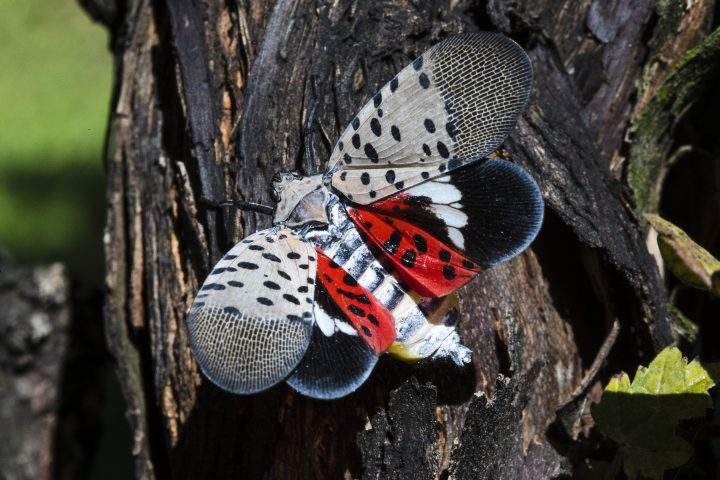
The arrival of Lycorma delicatula, or the spotted lanternfly (SLF), in the Great Lakes basin represents an existential threat to the $5.5 billion Ontario wine industry that transcends simple pest management. Unlike traditional localized threats, the SLF acts as a biological "energy sink," utilizing a specialized piercing-sucking mouthpart to bypass a plant’s outer defenses and tap directly into the phloem—the vascular tissue responsible for transporting the sugars produced during photosynthesis. This is not merely surface damage; it is a systemic drain on the vine's metabolic capital.
The Phloem Depletion Model
To understand the severity of the threat, one must analyze the insect’s feeding mechanism through the lens of nutrient thermodynamics. Most agricultural pests consume leaf tissue, reducing photosynthetic surface area. The SLF, however, targets the sugar-rich sap. By removing high volumes of carbohydrates, the insect forces the vine into a state of chronic physiological stress.
This depletion manifests in three distinct phases:
- Immediate Yield Degradation: As the vine loses sugar, the fruit's Brix levels (sugar content) fail to reach the thresholds required for premium winemaking. This necessitates costly interventions such as chaptalization or, more likely, the downgrading of the harvest to lower-value juice or bulk wine categories.
- Vigor Suppression: The removal of nitrogen and carbon from the phloem restricts the vine's ability to produce new shoots and leaves in the subsequent growing season. This creates a compounding deficit; the vine has less "machinery" to produce energy, even if the pests are later removed.
- Winter Hardiness Compromise: In the Ontario climate, vines survive sub-zero temperatures by storing carbohydrates in their roots and trunks. SLF feeding strips these reserves. A vine that has been heavily fed upon by lanternflies during the late summer is statistically more likely to suffer "winter kill," as it lacks the internal antifreeze properties provided by stored sugars.
The Sooty Mold Secondary Infection Loop
The SLF’s impact is multiplied by its inefficient digestive process. The insect consumes far more sap than it can process, excreting the excess as "honeydew," a sticky, sugar-laden waste product. This substance coats the leaves and fruit clusters, creating a substrate for the growth of black sooty mold.
The presence of sooty mold triggers a negative feedback loop:
- Photosynthetic Blockage: The dark mold prevents sunlight from reaching the chloroplasts in the leaves, further reducing the vine's energy production capacity.
- Marketability Collapse: Mold-covered grapes are unusable for high-end VQA (Vintners Quality Alliance) wines. The cost of cleaning or sorting such fruit often exceeds the market value of the crop.
- Vector Attraction: The fermenting honeydew attracts secondary pests like wasps and ants, which can cause further physical damage to the grape skins, inviting botrytis and other fungal pathogens.
Logistic and Regulatory Bottlenecks
The Ontario wine industry’s vulnerability is exacerbated by its geographic concentration in the Niagara Peninsula. The high density of vineyards creates a "monoculture corridor" that facilitates rapid SLF dispersal. Because the SLF is an adept hitchhiker—frequently laying egg masses on non-biological surfaces like shipping containers, trucks, and rail cars—the logistics network that supports the wine industry becomes the primary vector for its destruction.
Regulatory frameworks often lag behind biological realities. Current quarantine protocols focus on the movement of nursery stock, yet the SLF’s ability to adhere to any flat surface means that every vehicle moving from an infested zone (such as the Northeastern United States) into Ontario is a potential delivery system. The cost of implementing mandatory inspection points for all trans-border commercial traffic is high, but the cost of inaction is the total loss of specific varietals that are particularly susceptible, such as Pinot Noir and Chardonnay.
The Host Plant Dependency: Ailanthus altissima
A critical variable in the SLF's expansion is the prevalence of the Tree of Heaven (Ailanthus altissima). This invasive tree serves as the primary host for the SLF, particularly during its reproductive phase. The chemical compounds within Ailanthus are believed to provide the SLF with a level of protection against local predators, as the insect sequesters bitter compounds from the tree to make itself unpalatable.
The geographic overlap between Ontario’s abandoned industrial zones—where Ailanthus thrives—and its prime viticultural land creates a high-risk interface. Mapping this overlap is the first step in a defensive strategy. Eradicating the Tree of Heaven is not a panacea, but it removes the biological "anchor" that allows SLF populations to reach the densities required to devastate a vineyard.
Economic Quantification of Risk
While precise dollar-loss figures are difficult to project for Ontario specifically, data from Pennsylvania—where the SLF has been established for over a decade—provides a grim benchmark. In heavily infested areas, some vineyards reported a 90% loss in yield and the death of 100% of certain vine blocks within two years of initial contact.
The cost function for an Ontario winery facing SLF includes:
- Increased Chemical Spend: The necessity for frequent, well-timed applications of insecticides (such as dinotefuran or bifenthrin) increases the overhead per acre.
- Labor Intensification: Scouting for egg masses and managing the sooty mold requires a significant increase in man-hours during both the growing and dormant seasons.
- Capital Depreciation: If a vineyard block dies, the replacement cost includes not just the price of the new vines, but the loss of five to seven years of production as the new vines mature.
Strategic Defensive Framework
The industry must shift from a reactive "pest control" mindset to a proactive "biosecurity" stance. This requires a three-tiered approach to operational resilience.
Tier 1: Perimeter Hardening
Vineyard managers must identify and remove Ailanthus altissima within a five-kilometer radius of their property. This creates a "buffer zone" that reduces the local breeding population. Furthermore, the installation of sticky bands or circle traps on non-host trees can serve as an early warning system.
Tier 2: Chemical Interdiction
A shift in spraying schedules is required. Late-season monitoring is vital, as SLF adults are most mobile and destructive in the weeks leading up to harvest—precisely when many wineries are trying to minimize chemical inputs. Using targeted, short-residual insecticides can protect the crop without violating MRL (Maximum Residue Limit) standards for export.
Tier 3: Collaborative Intelligence
Individual vineyard efforts are useless if neighboring properties remain unmanaged. A regional data-sharing platform is necessary to track SLF sightings in real-time. This allows for "pulse spraying"—coordinated insecticide applications across multiple properties to prevent the insects from simply moving from one treated field to an untreated neighbor.
The Long-Term Viability of Ontario Viticulture
The SLF is not a temporary nuisance that will dissipate; it is a permanent shift in the ecological landscape of the Great Lakes. The wineries that survive will be those that integrate entomological data into their core business strategy. This involves re-evaluating varietal selections for future plantings, favoring those with higher resilience to physiological stress, and potentially shifting toward more enclosed or controlled growing environments if the outdoor pest pressure becomes untenable.
The most immediate strategic move for any Ontario vineyard owner is the immediate audit of all transport routes and incoming shipments. The insect does not fly across the border in significant numbers; it is driven across. Implementing rigorous "wash-down" protocols for all equipment and vehicles entering the Niagara region from the south is the only way to delay the inevitable spread and buy the time necessary for the development of biological controls, such as the introduction of predatory wasps or fungal pathogens specifically targeted at the SLF.
Failure to treat the spotted lanternfly as a systemic economic threat rather than a simple garden pest will result in a permanent contraction of the Ontario wine sector, with the potential for total collapse in high-risk micro-climates.


